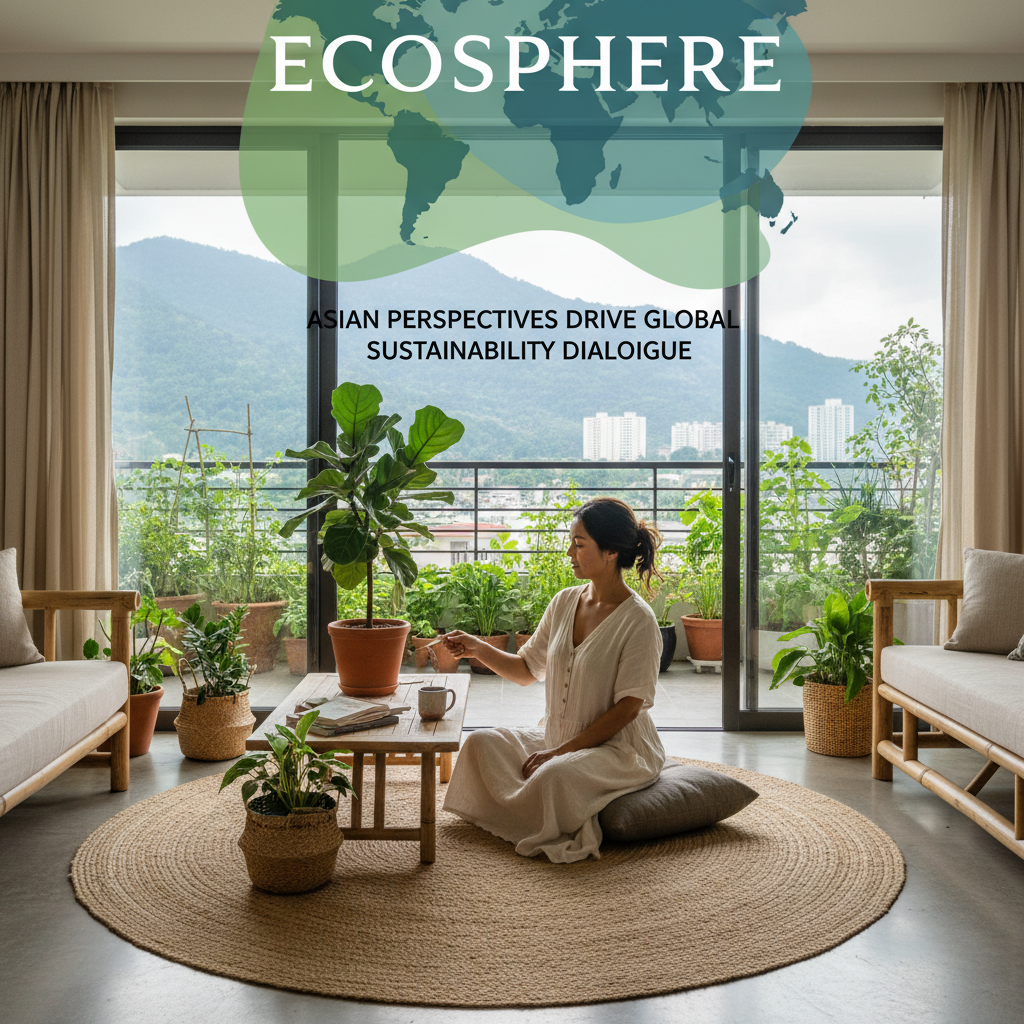
Asian Perspectives Drive Global Sustainability Dialogue
Key Takeaways
- Inaugural Charleston Conference Asia brought together global perspectives.
- Key themes included generative AI, equitable research access, and UN Sustainable Development Goals (SDGs).
- Conference emphasized unique Asian perspectives and case studies on these global issues.
- Promoting equitable research access is vital for democratizing knowledge and fostering global sustainable solutions.
- Integrating diverse viewpoints is essential for developing robust and adaptable sustainability strategies.
In an increasingly interconnected world, addressing global challenges like climate change and inequality requires a confluence of diverse voices and innovative solutions. The recent Charleston Conference Asia marks a significant step in this direction, bringing vital Asian perspectives to the forefront of discussions on generative AI, equitable research access, and the critical UN Sustainable Development Goals (SDGs).
For readers of GreenNest Living, this isn't just news about a conference; it's a powerful signal that the global conversation on sustainability is broadening, integrating essential viewpoints and strategies that are crucial for a truly sustainable future, right now.
TL;DR: Key Facts
- The inaugural Charleston Conference Asia recently convened, marking a new platform for global discourse.
- Core themes included the implications of generative AI in research and publishing.
- A significant focus was placed on ensuring equitable research access globally.
- The conference deeply explored the UN Sustainable Development Goals (SDGs).
- Discussions and case studies centered specifically on Asian perspectives, offering unique insights.
What Happened
The first-ever Charleston Conference Asia recently concluded, establishing a new forum for thought leaders and industry experts to address some of the most pressing global issues. Unlike its Western counterparts, this inaugural event was specifically designed to funnel Asian perspectives and localized case studies into the broader international dialogue.
The conference agenda was packed with discussions spanning three pivotal areas. First, participants delved into the burgeoning field of generative AI, examining its potential and pitfalls within the realms of research, content creation, and publishing. This included exploring how AI can accelerate discoveries, automate data analysis, and improve accessibility, while also considering ethical concerns and the energy footprint of such technologies.
Second, a strong emphasis was placed on equitable research access. This topic addressed the fundamental need to democratize knowledge, ensuring that research findings are not siloed but are readily available to researchers, policymakers, and communities worldwide, regardless of their geographical or economic standing. The goal is to break down barriers to information, fostering a more inclusive and effective global research ecosystem. Finally, and perhaps most directly relevant to our mission at GreenNest Living, the conference dedicated substantial attention to the UN Sustainable Development Goals (SDGs), exploring how these global blueprints for peace and prosperity can be achieved through collaborative efforts, leveraging technology, and ensuring fair access to information.
Why It Matters
For anyone committed to sustainable living, the Charleston Conference Asia's focus on the UN Sustainable Development Goals (SDGs), equitable research access, and generative AI, framed by Asian perspectives, is incredibly significant. The SDGs are not just abstract targets; they are a universal call to action to end poverty, protect the planet, and ensure that all people enjoy peace and prosperity. When a major conference places these goals at its core, it reinforces their urgency and galvanizes collective action within the academic and publishing worlds – spheres that are critical for disseminating knowledge and driving innovation.
The emphasis on equitable research access is a cornerstone of sustainable development. Imagine local communities in developing nations striving to implement sustainable farming practices but lacking access to the latest agricultural research, or coastal towns battling rising sea levels without current climate science data. Knowledge is power, and ensuring its free flow empowers communities globally to find and implement tailored sustainable solutions. It prevents a 'knowledge divide' that could exacerbate existing inequalities and hinder global progress towards the SDGs. By championing open and fair access, this conference contributes to building a more resilient, informed, and equitable world – a core tenet of sustainable living.
Furthermore, integrating Asian perspectives is not merely an act of inclusivity; it's a strategic necessity. Asia is home to over half the world's population and faces unique, often magnified, sustainability challenges, from rapid urbanization and pollution to biodiversity loss and climate vulnerability. Yet, it also boasts a rich tapestry of traditional wisdom, innovative grassroots solutions, and cutting-edge technological advancements. By centering these perspectives, the conference ensures that global sustainability strategies are not monolithic but are informed by diverse experiences and practical case studies, leading to more robust, adaptable, and globally relevant solutions for everyone.
What You Can Do
- Deepen Your Understanding of the SDGs: Explore the 17 UN Sustainable Development Goals. Understand how they interlink and how your personal actions and local community initiatives can contribute to their achievement.
- Support Open Access Initiatives: When sourcing information, prioritize publications and research platforms that advocate for open and equitable access to scientific and academic knowledge. Support institutions and policies that break down paywalls.
- Engage Critically with AI: Learn about generative AI tools and consider their ethical implications and environmental footprint. Advocate for responsible AI development that prioritizes sustainability, transparency, and accessibility.
- Seek Diverse Perspectives: Actively look for sustainable living insights from non-Western sources. Many innovative and traditional practices from Asia and other regions offer valuable lessons for global sustainability.
- Advocate for Localized Solutions: Recognize that 'one-size-fits-all' solutions rarely work in sustainability. Support and advocate for context-specific approaches to environmental and social challenges within your own community.
- Promote Knowledge Sharing: Share credible information about sustainable practices within your networks. Participate in local discussions or initiatives that foster knowledge exchange on environmental and social issues.
FAQs
Q: What are the UN Sustainable Development Goals (SDGs)?
A: The SDGs are a collection of 17 global goals set by the United Nations General Assembly in 2015 for the year 2030. They are a universal call to action to end poverty, protect the planet, and ensure that all people enjoy peace and prosperity.
Q: Why is equitable research access important for sustainable living?
A: Equitable research access ensures that vital scientific and academic knowledge is available to everyone, regardless of their location or economic status. This democratizes information, allowing communities worldwide to access data and solutions necessary for addressing local and global sustainability challenges, fostering innovation, and making informed decisions.
Q: How does generative AI relate to sustainable living?
A: Generative AI can be a powerful tool for sustainable living, capable of analyzing vast datasets to identify environmental patterns, optimize resource use, accelerate material science research, and even design more efficient systems. However, its development and operation also have environmental costs (e.g., energy consumption), requiring careful consideration of its sustainable and ethical application.
Sources
This article is based on reporting by Publishing Perspectives.
Original source
Publishing Perspectives
Author, Digital Entrepreneur & AI Creator
More from Sustainable Living
- UK Women's Prize Highlights Literature's Crucial Role in a Greener Future — May 14, 2026
- Unearthing Wisdom: Islamic Philosophy's Green Insights — May 13, 2026
- Literature's Mirror: UK Prize Reflects on Sustainable Living — May 12, 2026
- Prague Fair Uncovers Regional Keys to a Greener Literary Future — May 11, 2026
- Comics & Graphic Novels: Driving Sustainable Stories in Eastern Europe — May 10, 2026