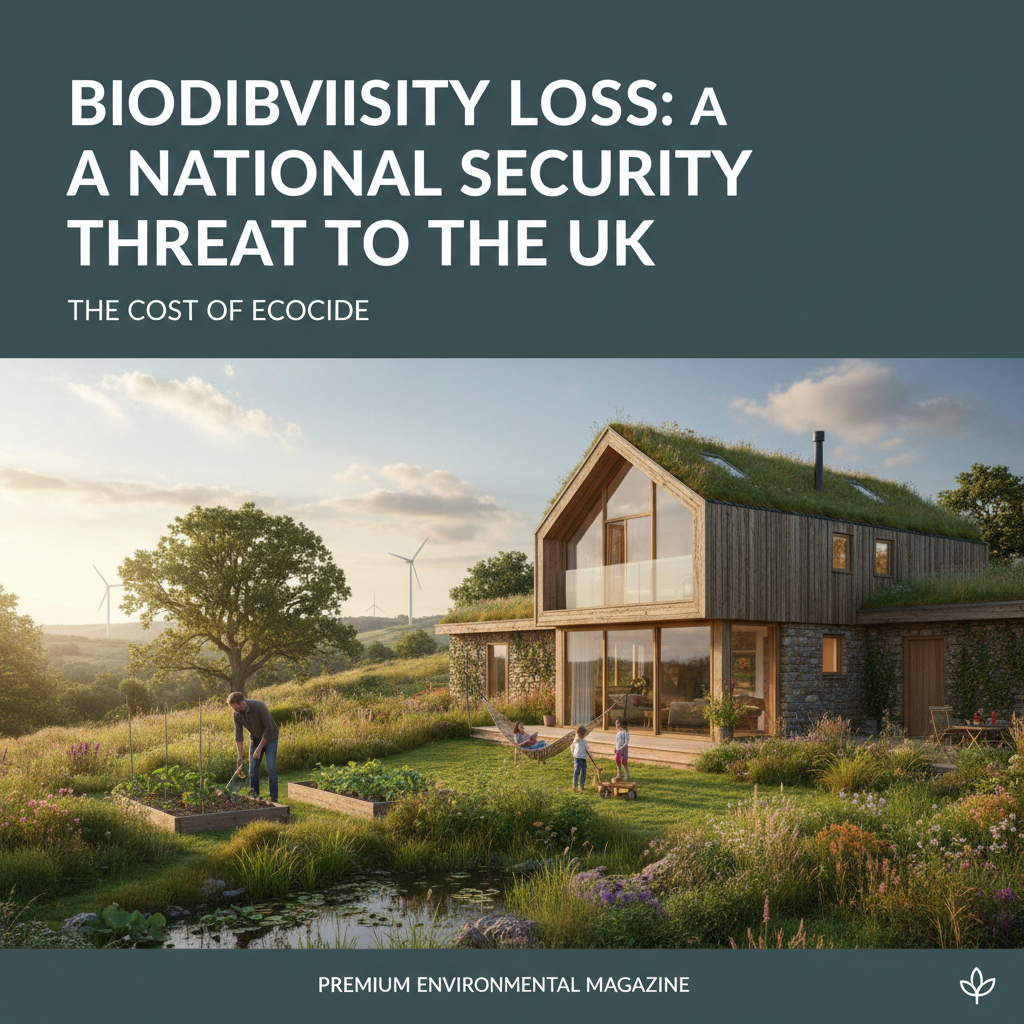
Biodiversity Loss: A National Security Threat to the UK
Key Takeaways
- UK intelligence chiefs warn biodiversity loss threatens national security.
- Risks include geopolitical instability, economic insecurity, conflict, and migration.
- Major intervention is needed to avert severe consequences.
- This elevates environmental degradation to a core national security concern.
- Ecological security is now recognized as vital for national stability.
The alarm bells are ringing, not just from environmental activists, but from the highest echelons of government. In a stark and unprecedented new warning, UK intelligence chiefs have declared that the accelerating loss of biodiversity poses a direct and severe threat to national security, demanding immediate and significant intervention. This isn't merely an ecological crisis confined to remote corners of the globe; it's a profound challenge to our collective stability, prosperity, and peace, with tangible impacts right here, right now, for everyone.
TL;DR: Key Facts
- UK intelligence chiefs have formally warned that biodiversity loss directly threatens national security.
- The warning highlights severe risks of increased geopolitical instability, economic insecurity, conflict, and migration.
- They emphasize that 'major intervention' is required to avert these cascading consequences.
- This assessment represents a significant shift, elevating environmental degradation to a core national security concern.
- The threat is comprehensive, impacting social, economic, and political stability both domestically and internationally.
What Happened
In an unprecedented and sobering move, the UK's intelligence agencies have formally acknowledged and warned that the rapid decline in global biodiversity is no longer merely an environmental concern, but a critical and escalating threat to the nation's security. This stark assessment by intelligence chiefs underscores a significant pivot in how governments worldwide are beginning to view ecological collapse – moving it from the periphery of policy discussions to the very core of national defense and strategic planning. The intelligence community, traditionally focused on conventional military threats, cyber warfare, and geopolitical rivalries, now explicitly recognizes the pervasive and destabilizing potential of widespread environmental degradation, signalling a fundamental re-evaluation of national risk.
The intelligence chiefs’ warning specifies that without 'major intervention' – a call for urgent, comprehensive action across all sectors – the UK faces escalating risks across several critical domains. These include increased geopolitical instability, as nations compete more fiercely for dwindling essential resources like water, food, and arable land, potentially leading to new regional conflicts or exacerbated existing tensions. They also highlight heightened economic insecurity, stemming from disrupted ecosystems that underpin vital supply chains, agricultural productivity, and natural disaster resilience. Furthermore, the report anticipates the potential for new conflicts arising directly from resource scarcity and mass migration waves fueled by environmental crises, creating complex humanitarian and security challenges. Their analysis suggests that these interconnected consequences could profoundly disrupt global order and directly impact the UK's interests, social cohesion, and overall safety. This reclassification of biodiversity loss as a national security issue compels a holistic, cross-governmental, and urgent response.
Why It Matters
For GreenNest Living readers, deeply invested in cultivating a sustainable lifestyle, this warning from intelligence chiefs isn't just another headline; it's a seismic revelation that directly impacts the very foundation of how we live and thrive. Biodiversity isn't an optional 'nice-to-have' or a niche interest for nature lovers; it is the fundamental living infrastructure that supports all human activity. It provides the clean air we breathe, the fresh water we drink, the fertile soil that grows our food, and the natural systems that regulate our climate and protect us from disease. When intelligence chiefs link its accelerating decline to national security, they are essentially confirming what environmental scientists have warned for decades: the stability of our societies, the resilience of our economies, and even our global peace are inextricably linked to the health and richness of our planet’s ecosystems.
This broader perspective urges us to move beyond viewing environmental issues as isolated problems, solvable with piecemeal solutions. The loss of a single species, the degradation of a forest, or the pollution of an ocean can have cascading ripple effects that destabilize entire regions, impacting resource availability, igniting competition among communities, and forcing mass displacement. For sustainable living, this means understanding that every local action – from how we consume to how we vote – has global implications. Protecting nature, therefore, is not merely an ethical imperative or a moral choice; it is a pragmatic, non-negotiable necessity for collective well-being and the very survival of prosperous societies. This report underscores that true national security in the 21st century is intrinsically ecological security, demanding a profound re-evaluation of how we prioritize, invest in, and protect our natural world for current and future generations.
What You Can Do
This urgent call to action from national security experts reinforces that each of us has a role to play in safeguarding our planet and, by extension, our collective future. Here’s how you can contribute to protecting biodiversity and promoting a more secure, sustainable world:
- Support Conservation Initiatives: Donate to or volunteer with organizations actively working on biodiversity protection, both locally and internationally. Your financial and practical support empowers on-the-ground conservation efforts, from habitat restoration to species protection programs.
- Advocate for Policy Change: Contact your elected officials at all levels of government to express your concern about biodiversity loss. Urge them to prioritize strong environmental protection policies, investment in nature-based solutions, and sustainable land-use planning that values ecological integrity.
- Reduce Your Ecological Footprint: Make conscious choices in your daily life to minimize your impact. Opt for sustainable food sources, reduce overall consumption, minimize waste, conserve energy, and choose eco-friendly transportation options. Every small action collectively contributes to a healthier planet.
- Champion Nature-Based Solutions: Support projects and policies that leverage natural processes to address societal challenges. This includes advocating for the restoration of wetlands for flood protection, reforesting degraded areas for carbon sequestration and habitat creation, and promoting regenerative agriculture.
- Educate and Engage: Share accurate information about the importance of biodiversity and its inextricable link to human well-being, economic stability, and national security with your friends, family, and community. An informed citizenry is a powerful catalyst for impactful change.
- Garden for Wildlife: Transform your garden, balcony, or even windowsill into a mini-ecosystem. Plant native species that provide food and shelter for local pollinators and wildlife, create a small water feature, and avoid the use of harmful pesticides. Even small green spaces can make a significant contribution to local biodiversity.
FAQs
Q: What exactly is biodiversity loss?
A: Biodiversity loss refers to the reduction or disappearance of biological diversity, which encompasses the variety of genes, species, and ecosystems on Earth. It means fewer different types of plants, animals, fungi, and microorganisms, and fewer healthy natural environments capable of sustaining complex life.
Q: How does biodiversity loss become a national security threat?
A: When ecosystems degrade, they can no longer reliably provide essential services like clean water, fertile soil, and climate regulation. This leads to critical resource scarcity, widespread food insecurity, increased vulnerability to natural disasters, and mass migrations. These interconnected factors can then exacerbate geopolitical tensions, create economic instability, and even ignite conflicts, thereby directly threatening a nation's stability and security.
Q: Is this only a problem for the UK, or is it global?
A: While the UK intelligence chiefs specifically highlighted risks to their nation's security, biodiversity loss is unequivocally a global crisis with far-reaching consequences for all countries. The interconnectedness of ecosystems and human societies means that local environmental degradation often has international ripple effects, making it a universal challenge requiring concerted global cooperation and action.
Sources
This article is based on reporting by Euronews Green.
Original source
Euronews Green
Author, Digital Entrepreneur & AI Creator
More from Sustainable Living
- UK Women's Prize Highlights Literature's Crucial Role in a Greener Future — May 14, 2026
- Unearthing Wisdom: Islamic Philosophy's Green Insights — May 13, 2026
- Literature's Mirror: UK Prize Reflects on Sustainable Living — May 12, 2026
- Prague Fair Uncovers Regional Keys to a Greener Literary Future — May 11, 2026
- Comics & Graphic Novels: Driving Sustainable Stories in Eastern Europe — May 10, 2026