Doomsday Glacier's Rapid Melt: Can a Wall Save Our Coasts?
Key Takeaways
- The 'Doomsday Glacier' (Thwaites) is melting faster, significantly contributing to global sea level rise.
- Its full collapse could lead to several meters of global sea level increase, impacting billions.
- Radical engineering solutions, like a 150-meter underwater wall, are being explored to mitigate the collapse.
- This situation highlights the urgent need for global climate action and aggressive emissions reduction.
- Coastal communities and global ecosystems face significant threats from rising oceans, underscoring the importance of sustainable practices.
The colossal Thwaites Glacier, chillingly nicknamed the 'Doomsday Glacier,' is accelerating its melt, pushing us closer to critical sea level rise thresholds. This isn't just a distant problem; its rapid disintegration demands immediate attention as communities worldwide brace for unprecedented coastal changes. Its fate is inextricably linked to our collective future, underscoring the urgent need for robust climate solutions and sustainable practices.
TL;DR: Key Facts
- The 'Doomsday Glacier' (Thwaites) in West Antarctica is melting at an accelerating rate, faster than previously projected.
- It currently contributes a significant four percent of annual global sea level rise.
- A complete collapse of the Thwaites Glacier could lead to several meters of global sea level increase over centuries.
- Radical engineering interventions, such as constructing a 150-meter-high underwater wall, are being explored as a desperate measure to stabilize it.
- The glacier is a critical indicator of climate change's impact on polar ice sheets and global ocean levels.
What Happened
The Thwaites Glacier, an immense ice mass located in West Antarctica, is demonstrating an alarming and accelerating rate of melt. Known ominously as the 'Doomsday Glacier' due to its potential for catastrophic collapse, it is particularly vulnerable because a significant portion of its grounding line – the point where the ice meets the seabed – lies below sea level. This allows warm ocean currents to erode the glacier from below, weakening its structure and speeding up its retreat. Recent data indicates its disintegration is gaining pace, leading scientists to revise previous melt rate predictions upwards, signaling a more precarious situation than once understood.
Its current contribution to global sea level rise stands at a significant four percent annually, a figure that is projected to grow. The primary concern is not just its ongoing melt, but its potential for a complete, irreversible collapse. Such an event could trigger a much larger and more rapid increase in global sea levels, potentially by several meters over centuries. This would inevitably reshape coastlines worldwide, displacing millions of people, inundating major cities, and severely impacting critical infrastructure and ecosystems across the globe.
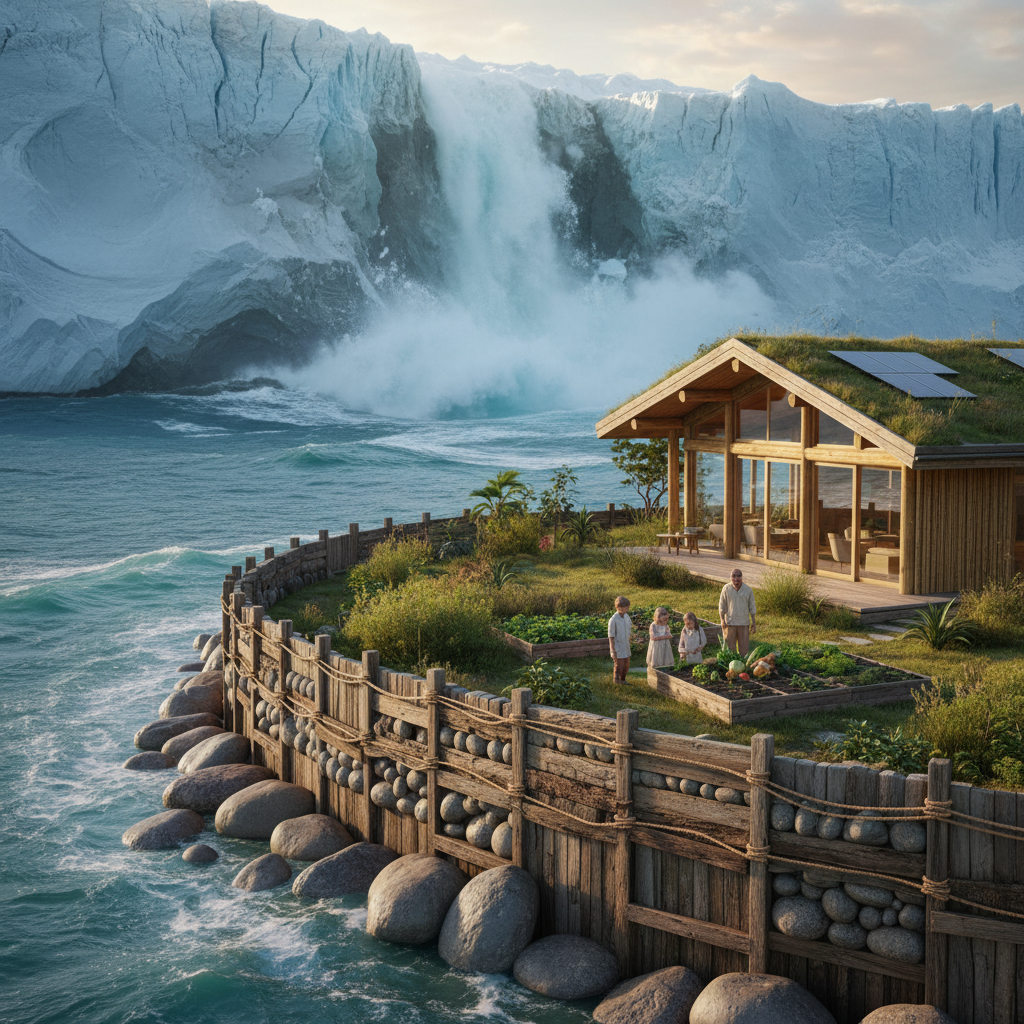
In a testament to the severity and urgency of the situation, engineers and scientists are even contemplating extreme interventions to slow its demise. One radical proposal involves constructing a colossal 150-meter-high underwater wall on the seabed in front of the glacier. The aim of this unprecedented engineering feat would be to physically block warm ocean currents from reaching the glacier's vulnerable underbelly, thereby stabilizing the ice. While such a project presents immense logistical, financial, and environmental challenges, its very discussion underscores the profound sense of urgency and the almost unfathomable scale of the threat posed by the 'Doomsday Glacier.'
Why It Matters
For GreenNest Living readers, the accelerated melt of the 'Doomsday Glacier' is a stark, tangible reminder of the climate crisis unfolding in real-time, far from our daily lives yet profoundly impactful. This isn't an abstract scientific projection; it's a direct threat to the sustainable living we champion. Rising sea levels don't just mean losing beachfront property; they threaten freshwater sources, displace coastal communities, destroy vital ecosystems like wetlands and mangroves, and exacerbate the destructive power of extreme weather events. Ultimately, this makes our planet less habitable for all species, directly undermining our efforts for a balanced, sustainable existence.
The fact that scientists are even considering a colossal, 150-meter wall to barricade a glacier speaks volumes about the magnitude of the environmental challenges we face. It’s a desperate measure that highlights the potential consequences of insufficient preventative action and emphasizes the immense cost—both financial and ecological—of allowing climate change to escalate unchecked. It challenges our perception of what's possible and what's necessary, pushing us to question if we're truly doing enough to mitigate these existential risks. This 'wall' concept is a symbol of how far we might have to go to correct environmental imbalances we've created.
This news should galvanize us to redouble our efforts towards a truly sustainable future. It underscores the interconnectedness of global ecosystems and human well-being, demonstrating that what happens in Antarctica has profound repercussions on every shore. From our energy choices and consumption patterns to our advocacy for greener policies, every action contributes to the overall health of the planet. Ignoring the warning signs from the Thwaites Glacier means accepting a future defined by forced migration, resource scarcity, and unprecedented environmental degradation – outcomes diametrically opposed to the principles of mindful, sustainable living that GreenNest Living advocates.
What You Can Do
- Advocate for Policy Change: Contact your elected officials to support policies that aggressively reduce carbon emissions, invest in renewable energy infrastructure, and fund climate research and adaptation strategies.
- Reduce Your Carbon Footprint: Make conscious choices to lower your personal energy consumption. Opt for public transport, cycling, or electric vehicles, reduce air travel, and prioritize locally sourced, seasonal goods to minimize transportation emissions.
- Support Climate Science & Conservation: Donate to reputable organizations funding glaciology research, climate advocacy, and coastal conservation and restoration efforts, which help protect vulnerable ecosystems.
- Educate & Discuss: Share accurate, science-backed information about climate change with friends, family, and your community to foster greater awareness, encourage dialogue, and inspire collective action.
- Invest Sustainably: Consider ethical investing in companies that align with sustainable practices and environmental responsibility, and divest from industries heavily reliant on fossil fuels.
- Prepare Your Community: If you live in a coastal or vulnerable area, understand local risks associated with sea level rise and advocate for resilient infrastructure, emergency preparedness, and adaptation planning within your community.
FAQs
Q: What is the 'Doomsday Glacier'?
A: The 'Doomsday Glacier' is the nickname for the Thwaites Glacier, an enormous and highly unstable ice mass in West Antarctica. It's one of the fastest-melting glaciers globally, and its potential collapse poses a significant threat to global sea levels.
Q: How much will sea levels rise if it completely melts?
A: If the Thwaites Glacier completely melts, it alone could contribute several meters to global sea level rise over centuries. Its collapse could also destabilize neighboring ice sheets, potentially leading to even greater sea level increases.
Q: Is building a wall a realistic solution?
A: While proposed by scientists, building a 150-meter underwater wall to slow the glacier's melt is an extreme, unprecedented engineering challenge. It presents immense logistical, financial, and ecological hurdles, highlighting the direness of the situation rather than offering an easy fix.
Sources
This article is based on reporting by Euronews Green.
Original source
Euronews Green
Author, Digital Entrepreneur & AI Creator
More from Sustainable Living
- UK Women's Prize Highlights Literature's Crucial Role in a Greener Future — May 14, 2026
- Unearthing Wisdom: Islamic Philosophy's Green Insights — May 13, 2026
- Literature's Mirror: UK Prize Reflects on Sustainable Living — May 12, 2026
- Prague Fair Uncovers Regional Keys to a Greener Literary Future — May 11, 2026
- Comics & Graphic Novels: Driving Sustainable Stories in Eastern Europe — May 10, 2026