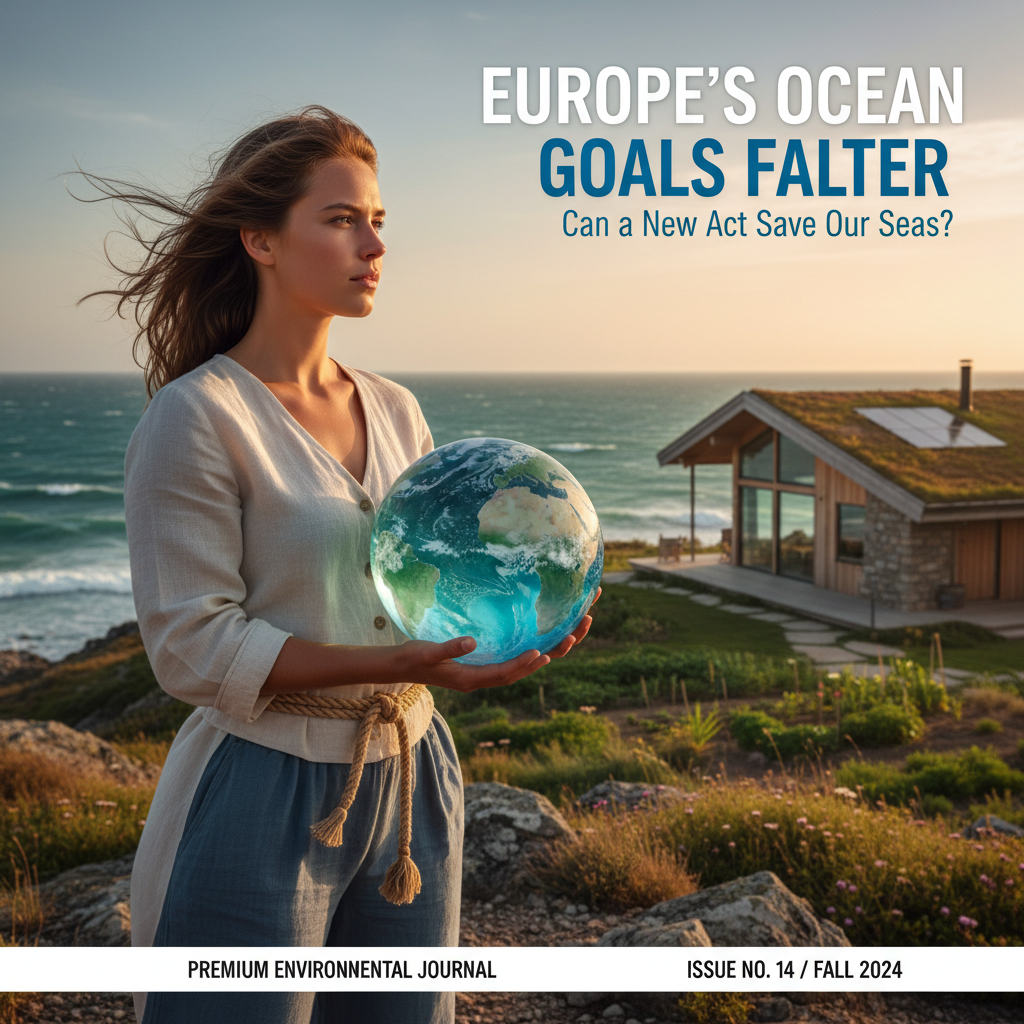
Europe's Ocean Goals Falter: Can a New Act Save Our Seas?
Key Takeaways
- Europe's 30x30 ocean protection targets are falling short.
- European Ocean Days in March will tackle critical marine issues.
- A potential 'Ocean Act' is being discussed to strengthen ocean conservation.
- Sustainable fishing and infrastructure security are key concerns.
- The outlook for European ocean health remains 'not that optimistic'.
The health of our oceans is not just an environmental concern; it’s a cornerstone of sustainable living, impacting everything from climate regulation to the food we eat. As Europe's ambitious 30x30 conservation goals struggle, the urgency for concrete action has never been higher, bringing critical marine issues into sharp focus just ahead of European Ocean Days this March.
TL;DR: Key Facts
- Europe's 30x30 targets, aiming to protect 30% of land and sea by 2030, are reportedly faltering.
- Ocean issues, including sustainable fishing quotas and the security of undersea cables, will be prominently discussed at European Ocean Days in March.
- There is growing discussion about the potential for a new 'Ocean Act' to bolster protection for Europe's marine ecosystems.
- The sentiment regarding the progress on ocean conservation in Europe is described as "not that optimistic."
What Happened
Reports indicate that Europe's significant commitment to protect 30% of its land and sea by the year 2030 is currently off track. This shortfall in achieving the '30x30' biodiversity goals has raised alarms among environmentalists and policymakers alike, highlighting a critical need for intensified efforts in marine conservation.
Against this backdrop, the upcoming European Ocean Days in March are set to serve as a pivotal platform for addressing the multifaceted challenges facing Europe's waters. The agenda for these discussions is broad, encompassing complex issues from the implementation of effective sustainable fishing quotas, which are vital for the long-term health of marine populations, to the unexpected but increasingly relevant topic of safeguarding critical undersea infrastructure, such as internet cables, from potential sabotage.
The urgency of these issues has led to calls for more robust legislative frameworks. A key point of discussion will be the potential for a comprehensive 'Ocean Act.' Such a piece of legislation aims to consolidate and strengthen existing regulations, providing a more cohesive and impactful approach to marine protection across the continent. However, despite these discussions and initiatives, the prevailing mood regarding the outlook for Europe's oceans is described as "not that optimistic," underscoring the deep-seated challenges and the slow pace of progress.
Why It Matters
For readers of GreenNest Living, the precarious state of Europe's oceans and the faltering 30x30 goals are not just distant policy debates; they directly impact the planet we inhabit and the quality of sustainable life we strive for. Our oceans are indispensable life-support systems, regulating global climate, providing vital food sources, and hosting an incredible array of biodiversity. When these systems are under stress, it reverberates across all aspects of ecological and human well-being, from the seafood on our plates to the stability of our global climate.
The struggle to meet conservation targets speaks volumes about the challenges inherent in balancing economic interests with environmental imperatives. Sustainable fishing, for example, is not just about preserving fish stocks; it's about ensuring the livelihoods of fishing communities and maintaining the delicate balance of marine ecosystems. The discussion around an 'Ocean Act' represents a critical opportunity for improved environmental governance and accountability, pushing for more effective, legally binding commitments that can genuinely turn the tide for our marine environments. It's a call to action for stronger policies that reflect the true value of our natural resources and secure them for future generations.
What You Can Do
- Educate Yourself on Sustainable Seafood: Use guides from organizations like the Marine Stewardship Council (MSC) or Monterey Bay Aquarium Seafood Watch to make informed choices that support healthy fish populations and responsible fishing practices.
- Reduce Your Plastic Footprint: Opt for reusable bags, bottles, and containers. Participate in local cleanups to prevent plastic from reaching our waterways and oceans.
- Support Ocean Conservation Organizations: Donate or volunteer with groups dedicated to marine protection and advocacy, helping them fund research, policy work, and on-the-ground conservation efforts.
- Advocate for Stronger Policies: Contact your elected representatives to express your concern about ocean health and encourage them to support robust environmental legislation, including initiatives like the proposed 'Ocean Act.'
- Choose Responsible Coastal Tourism: If you visit coastal areas, choose tour operators and accommodations that demonstrate a commitment to marine conservation and sustainable practices.
- Participate in Citizen Science: Join local efforts to monitor water quality, conduct beach surveys, or contribute to marine data collection, helping scientists understand and protect our oceans.
FAQs
Q: What are Europe's 30x30 goals?
A: The 30x30 goals are ambitious targets set by the European Union to legally protect 30% of its land and sea areas by the year 2030, as part of a broader biodiversity strategy to halt biodiversity loss.
Q: What is an 'Ocean Act'?
A: While still conceptual, an 'Ocean Act' would likely be a comprehensive piece of legislation aimed at strengthening and unifying existing laws to better protect Europe's marine environments, ensuring sustainable use and conservation of ocean resources.
Q: Why are undersea cables mentioned in relation to ocean health?
A: Undersea cables are vital infrastructure for global communication. Their mention highlights the broader array of challenges impacting oceans, including geopolitical tensions and potential sabotage, which can indirectly affect marine environments and conservation efforts by diverting resources or creating new threats.
Sources
This article is based on reporting by Publishing Perspectives.
Original source
Publishing Perspectives
Author, Digital Entrepreneur & AI Creator
More from Sustainable Living
- UK Women's Prize Highlights Literature's Crucial Role in a Greener Future — May 14, 2026
- Unearthing Wisdom: Islamic Philosophy's Green Insights — May 13, 2026
- Literature's Mirror: UK Prize Reflects on Sustainable Living — May 12, 2026
- Prague Fair Uncovers Regional Keys to a Greener Literary Future — May 11, 2026
- Comics & Graphic Novels: Driving Sustainable Stories in Eastern Europe — May 10, 2026