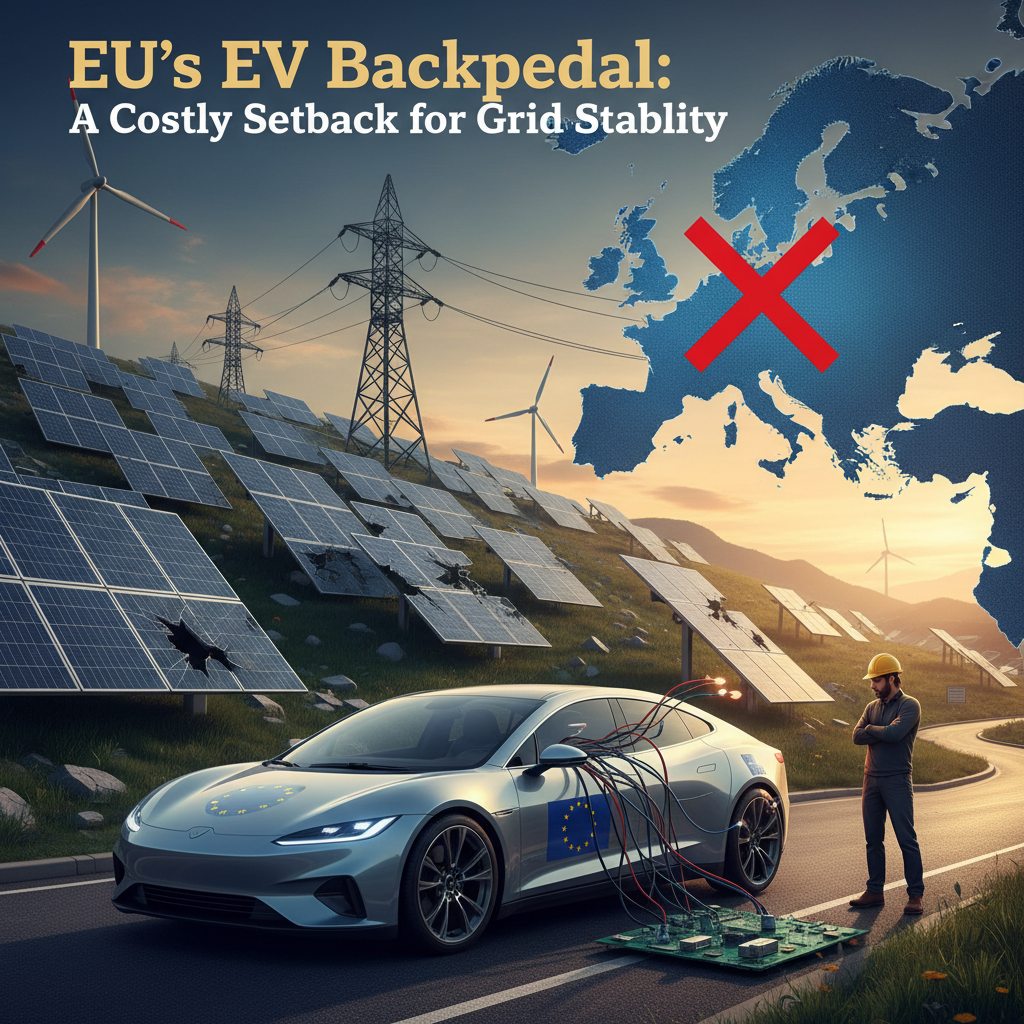
EU's EV Backpedal: A Costly Setback for Grid Stability
Key Takeaways
- EU considering scaling back EV targets.
- This could necessitate 150 new power plants.
- EVs are crucial 'batteries on wheels' for grid balancing.
- Policy reversal makes renewable integration more expensive.
- Highlights the interconnectedness of green tech and policy.
The ambitious push for electric vehicles (EVs) in Europe is facing a critical juncture, with potential policy reversals threatening to undermine not just climate goals, but the very stability and cost-effectiveness of its evolving energy grid. At a time when grid modernization is paramount for integrating intermittent renewable sources, any move to slow EV adoption carries far-reaching and expensive consequences.
This development highlights a crucial, often overlooked, aspect of the green transition: EVs are more than just cleaner cars; they are mobile energy storage units, indispensable for balancing the electricity network. Undermining their deployment could force a costly return to outdated solutions, directly impacting everyday citizens and the future of sustainable energy in Europe.
TL;DR: Key Facts
- The EU is considering scaling back its electric vehicle targets, which could delay the transition to sustainable transport.
- This policy reversal might require the construction of 150 new power plants to maintain grid stability.
- Electric vehicles (EVs) act as 'batteries on wheels,' providing crucial flexibility and storage capacity for grids reliant on intermittent renewable energy sources.
- Sidelining EVs' grid contribution would make integrating renewables far more expensive and complex for Europe's electricity system.
- The shift could lead to higher costs for consumers due to the need for new, traditional power generation infrastructure.
What Happened
Reports indicate that the European Union is currently evaluating proposals that could lead to a significant scaling back of its ambitious electric vehicle (EV) adoption targets. These targets are critical for the bloc's broader climate goals, aiming to reduce carbon emissions from the transport sector and accelerate the shift towards sustainable mobility. Such a policy adjustment would represent a notable departure from previous commitments and could alter the trajectory of EV penetration across member states.
The immediate and stark consequence of reducing EV targets is the projected need for an estimated 150 new power plants. This requirement arises because a slower EV rollout diminishes the grid's access to what are effectively 'batteries on wheels.' Modern electricity grids, especially those integrating large amounts of solar and wind power, demand flexible storage and balancing solutions to manage fluctuations in supply and demand. EVs, with their substantial battery capacities, are poised to offer this crucial service through vehicle-to-grid (V2G) technology, where they can store excess renewable energy and feed it back during peak demand or low generation periods.
Therefore, if fewer EVs are on the road, the grid loses a vital, distributed energy storage asset. To compensate for this missing flexibility and maintain a stable electricity supply, the system would be forced to rely on conventional, often fossil-fuel-based, power plants, or invest heavily in other forms of static energy storage – a much more costly and less sustainable alternative. This directly translates into increased infrastructure spending and potentially higher energy prices for European consumers, essentially raising the cost of achieving a renewable-powered future.
Why It Matters
This potential EU policy shift is not merely about car sales; it strikes at the heart of the Green Tech transition and the future of our energy infrastructure. For GreenNest Living readers, it underscores a critical truth: sustainable living is deeply interconnected. Electric vehicles are foundational to integrating renewable energy effectively. Without a robust fleet of EVs, the grid loses its most dynamic and distributed storage solution, making the integration of intermittent solar and wind power far more challenging and expensive. This means slower decarbonization, higher energy bills, and a heavier reliance on traditional, emissions-intensive power generation.
From a Green Tech perspective, this situation highlights the immense value of EVs beyond just emissions reduction. They represent a decentralized, flexible energy asset that can smooth out demand peaks, absorb excess renewable generation, and provide ancillary services to the grid. Undermining EV adoption means foregoing these crucial grid services, effectively removing a key technological piece from the puzzle of a resilient, renewable energy system. It forces a more centralized, infrastructure-heavy approach, contradicting the decentralized nature often celebrated in green energy innovation.
Ultimately, this decision will reverberate through the economy and environmental policy. It demonstrates how policy hesitation in one sector (transport) can trigger costly ripple effects in another (energy infrastructure). For citizens, it means not only the potential for higher energy costs but also a slower transition to a cleaner, more stable energy future. It’s a stark reminder that the full potential of green technologies can only be realized through integrated policy-making that recognizes their systemic benefits.
What You Can Do
- Advocate for Strong EV Policies: Contact your elected officials and local representatives to express support for robust electric vehicle adoption targets and policies that incentivize EV ownership and infrastructure.
- Consider an EV for Your Next Vehicle: If feasible, exploring electric vehicle options can contribute directly to grid flexibility, especially if equipped with Vehicle-to-Grid (V2G) or Vehicle-to-Home (V2H) capabilities.
- Support Renewable Energy Development: Invest in renewable energy providers, or if available, participate in community solar programs to bolster the very systems EVs are designed to support.
- Learn About Grid Modernization: Educate yourself on how smart grids and distributed energy resources (like EVs) contribute to a stable and sustainable energy future.
- Demand Integrated Policy-Making: Encourage leaders to adopt a holistic view of green technologies, understanding how advancements in one sector (e.g., EVs) can profoundly benefit another (e.g., grid stability).
- Reduce Overall Energy Consumption: The most fundamental step is to reduce your personal and household energy use, easing the demand on the grid regardless of its generation source.
Ciro's Take
As someone deeply invested in the promise of a sustainable future, watching the EU potentially backpedal on EV targets is incredibly disheartening. It feels like a fundamental misunderstanding of how green technologies work in concert. We're not just swapping gasoline for electricity; we're fundamentally rewiring our energy systems, and electric vehicles are central to that transformation, acting as dynamic, mobile storage. To intentionally slow this progress, thereby forcing the construction of 150 conventional power plants, is not just expensive but short-sighted and frankly, baffling. It’s a missed opportunity to leverage existing technology for a more resilient and renewable grid, and it signals a dangerous erosion of foresight in climate policy that we, as environmental advocates, must actively challenge.
FAQs
Q: What does 'batteries on wheels' mean in this context?
A: 'Batteries on wheels' refers to electric vehicles whose large onboard batteries can be used not only to power the car but also to store excess renewable energy from the grid and feed it back during times of high demand or low renewable generation, thus helping to balance the grid.
Q: Why would slashing EV targets require 150 new power plants?
A: A significant reduction in EV targets means fewer electric cars available to act as distributed energy storage and grid balancers. Without these 'mobile batteries' to help manage the intermittent nature of renewable energy sources (like solar and wind), the grid would need to rely more heavily on traditional, often fossil-fuel-based, power plants to ensure a stable and consistent electricity supply, necessitating the construction of more such plants.
Q: Is the challenge of balancing the grid with renewables unique to the EU?
A: No, the challenge of balancing electricity grids as they integrate more intermittent renewable energy sources is a global issue. While the specific numbers and policy implications vary, many regions worldwide are exploring solutions like battery storage, smart grids, and the integration of electric vehicles to maintain stability and reliability.
Sources
This article is based on reporting by CleanTechnica.
Original source
CleanTechnica
Author, Digital Entrepreneur & AI Creator
More from Green Tech
- Mexico Hits 5 GW Distributed Solar: A Green Energy Milestone — June 8, 2026
- CATL's Lithium-Air Leap: Unlocking Future Energy Density — June 7, 2026
- China's Used EV Market Booms: A Green Tech Milestone — June 6, 2026
- Colorado Blocks Xcel Gas Plan: A Win for Clean Energy — June 5, 2026