EV Batteries & Heat: A Climate Change Conundrum
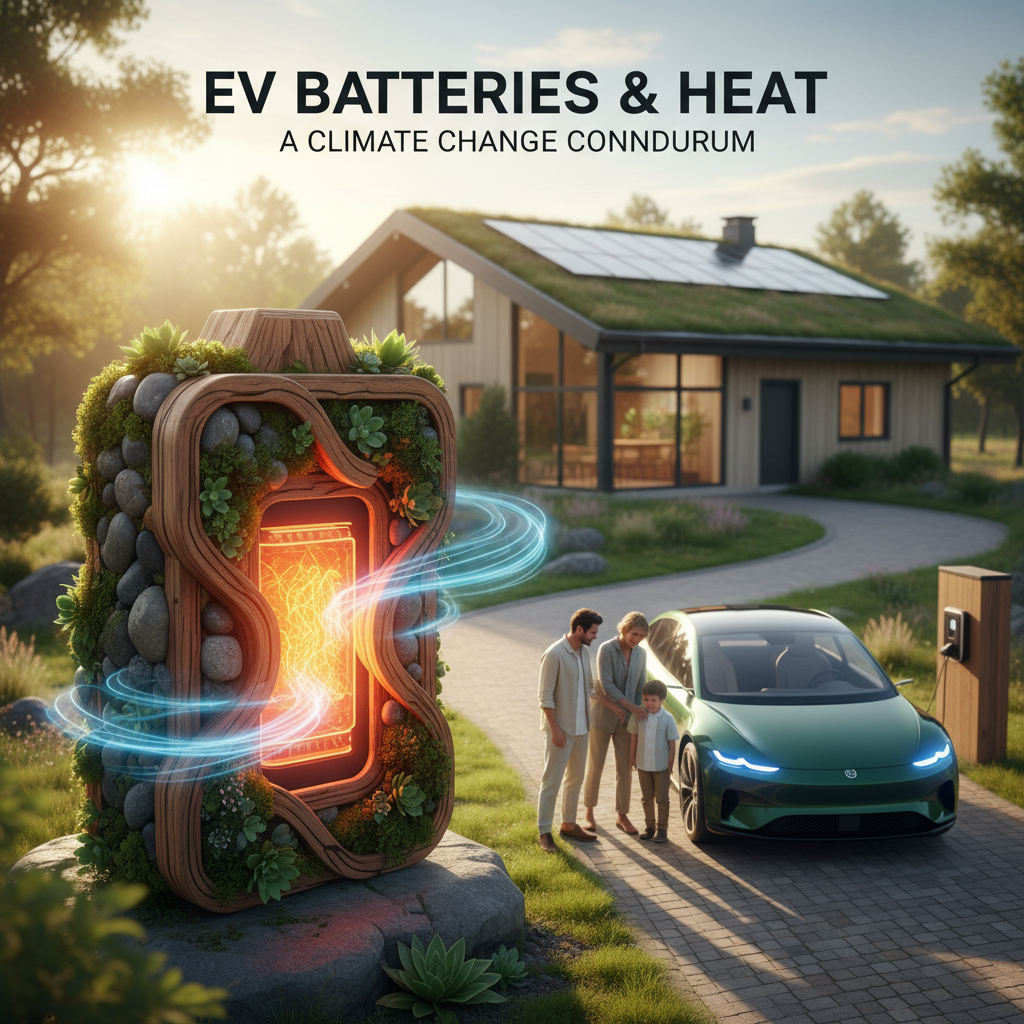
Key Takeaways
- Warmer temperatures accelerate EV battery degradation.
- This reduces battery lifespan and performance over time.
- The issue is a 'make-or-break' for widespread EV adoption.
- Technological solutions are vital to mitigate heat effects.
- Proper battery thermal management is key for EV sustainability.
As temperatures soar globally, a silent threat emerges for one of our most promising solutions to climate change: electric vehicles. New insights reveal that the very climate crisis EVs are designed to combat could be prematurely degrading their critical battery life, raising urgent questions about their long-term effectiveness and our sustainable future.
TL;DR: Key Facts
- Rising global temperatures accelerate electric vehicle (EV) battery degradation.
- Heat stress reduces battery lifespan and overall performance, impacting vehicle range and power.
- This challenge is a "make-or-break" factor for widespread consumer adoption of EVs.
- Technological innovation in battery design and thermal management is crucial to mitigate these heat effects.
- Understanding and proactive management of battery thermal conditions are key to ensuring EV sustainability.
What Happened
Recent observations highlight a significant, under-discussed challenge facing the burgeoning electric vehicle market. The core technology powering these green vehicles – their sophisticated lithium-ion batteries – is proving vulnerable to the escalating effects of climate change. Specifically, warmer environmental temperatures are directly implicated in accelerating the degradation process of EV batteries. This means that as global temperatures continue to rise, the lifespan and efficiency of electric vehicle batteries could be significantly compromised, reducing their effectiveness and value over time.
The report frames this issue as a critical juncture for the electric vehicle industry and consumers alike, calling it a “make-or-break” factor for people considering the switch from traditional internal combustion engine vehicles. The promise of EVs as a cornerstone of sustainable transportation hinges not just on their immediate production and adoption, but crucially on their durable, long-term performance under evolving climatic conditions. If batteries degrade too quickly, the initial economic and environmental benefits of EVs diminish, potentially deterring the widespread adoption essential for meeting climate goals.
This degradation isn't just about losing a few miles of range; it impacts the overall economic viability and environmental footprint of an EV. A shorter battery life implies more frequent and costly replacements for owners, alongside an increased demand for the raw materials necessary for new battery production. It also places a greater burden on future recycling infrastructure. Such challenges could significantly dilute the perceived “green” credentials of these vehicles, making their full lifecycle sustainability a more complex proposition.
Why It Matters
For readers of GreenNest Living, this isn't merely a technical problem for automakers; it represents a fundamental challenge to the very foundation of sustainable living. Electric vehicles are championed worldwide as a primary tool in our collective efforts to decarbonize transportation and combat climate change. If the very environmental crisis we are striving to avert ends up undermining the core technology of our most promising solution, we face a deeply unsettling circular problem. This issue underscores the complex, often unforeseen, and highly interconnected nature of environmental challenges and our technological responses to them.
The longevity and efficiency of EV batteries are intrinsically linked to their overall environmental footprint. A battery that degrades quickly necessitates more frequent replacement, leading to intensified demand for critical minerals like lithium, cobalt, and nickel. This increased demand drives more energy-intensive mining and manufacturing processes, and ultimately, contributes to a larger waste stream. This effectively dilutes the significant environmental benefits offered by EVs over their lifetime, potentially transforming what is intended as a solution into yet another resource-intensive problem. True sustainable living isn't just about adopting new technologies; it demands ensuring those technologies are genuinely resilient and sustainable throughout their entire lifecycle, especially in a world grappling with the direct impacts of climate change.
This situation demands a more holistic and forward-thinking approach to sustainable technology development. It compels us to look beyond immediate emissions reductions and critically assess the resilience, durability, and resource efficiency of our solutions in a rapidly warming world. For environmentally conscious consumers, it means becoming well-informed about battery care and demanding innovation and transparency from manufacturers. For policymakers and industry leaders, it necessitates substantial investment in research and infrastructure that supports battery longevity, advanced thermal management, and robust, responsible end-of-life battery recycling. Only by addressing these challenges head-on can we ensure that our commitment to electric mobility truly serves our long-term environmental goals.
What You Can Do
To maximize your EV's lifespan and contribute to greater sustainability:
- Prioritize Thermal Management: When researching and purchasing an EV, actively inquire about and prioritize models equipped with advanced battery thermal management systems (liquid cooling is generally more effective than air cooling) to ensure battery longevity, especially in warmer climates.
- Optimize Charging Habits: Avoid the extremes of charging. For daily driving, aim to keep your battery charge between 20% and 80%. Regularly charging to 100% or letting it frequently drop below 20% can accelerate degradation.
- Minimize Extreme Temperatures: Whenever possible, park your EV in shaded areas during hot weather or in a garage during extreme cold to shield the battery from temperature extremes that cause stress.
- Utilize Pre-conditioning Features: Make use of your EV's pre-conditioning function while it's still plugged in. This brings the battery to an optimal operating temperature before driving, reducing stress, particularly in very hot or cold conditions.
- Stay Informed on Battery Tech: Continuously educate yourself on advancements in battery technology and best practices for EV care to ensure you're adopting the most effective strategies for maximizing your vehicle's lifespan and environmental benefit.
- Advocate for Sustainable Infrastructure: Support policies and investments in charging infrastructure that prioritizes battery health, such as smart charging solutions, and robust, accessible recycling programs for EV batteries at their end-of-life.
FAQs
Q: How exactly does heat affect EV batteries and lead to degradation?
A: High temperatures accelerate undesirable chemical reactions inside the battery cells. These reactions can lead to faster degradation of the electrolyte, electrodes, and separators, reducing the battery's ability to hold charge, its overall capacity, and its lifespan.
Q: Are all EV batteries equally susceptible to heat degradation, or do some handle it better?
A: Not all EV batteries are equally susceptible. Factors like the specific battery chemistry (e.g., Lithium Iron Phosphate (LFP) vs. Nickel Manganese Cobalt (NMC)), the overall battery pack design, and especially the sophistication of the vehicle's thermal management system (e.g., active liquid cooling vs. passive air cooling) play a crucial role in how well a battery resists heat-induced degradation.
Q: What role does charging play in battery heat generation and degradation?
A: Both charging and discharging generate heat within a battery. Fast charging (particularly DC rapid charging) typically generates more heat than slower AC charging. While convenient for long trips, frequent fast charging, especially when combined with high ambient temperatures, can contribute significantly to accelerated battery degradation over time.
Sources
This article is based on reporting by Publishing Perspectives.
Original source
Publishing Perspectives
Author, Digital Entrepreneur & AI Creator
More from Sustainable Living
- UK Women's Prize Highlights Literature's Crucial Role in a Greener Future — May 14, 2026
- Unearthing Wisdom: Islamic Philosophy's Green Insights — May 13, 2026
- Literature's Mirror: UK Prize Reflects on Sustainable Living — May 12, 2026
- Prague Fair Uncovers Regional Keys to a Greener Literary Future — May 11, 2026
- Comics & Graphic Novels: Driving Sustainable Stories in Eastern Europe — May 10, 2026