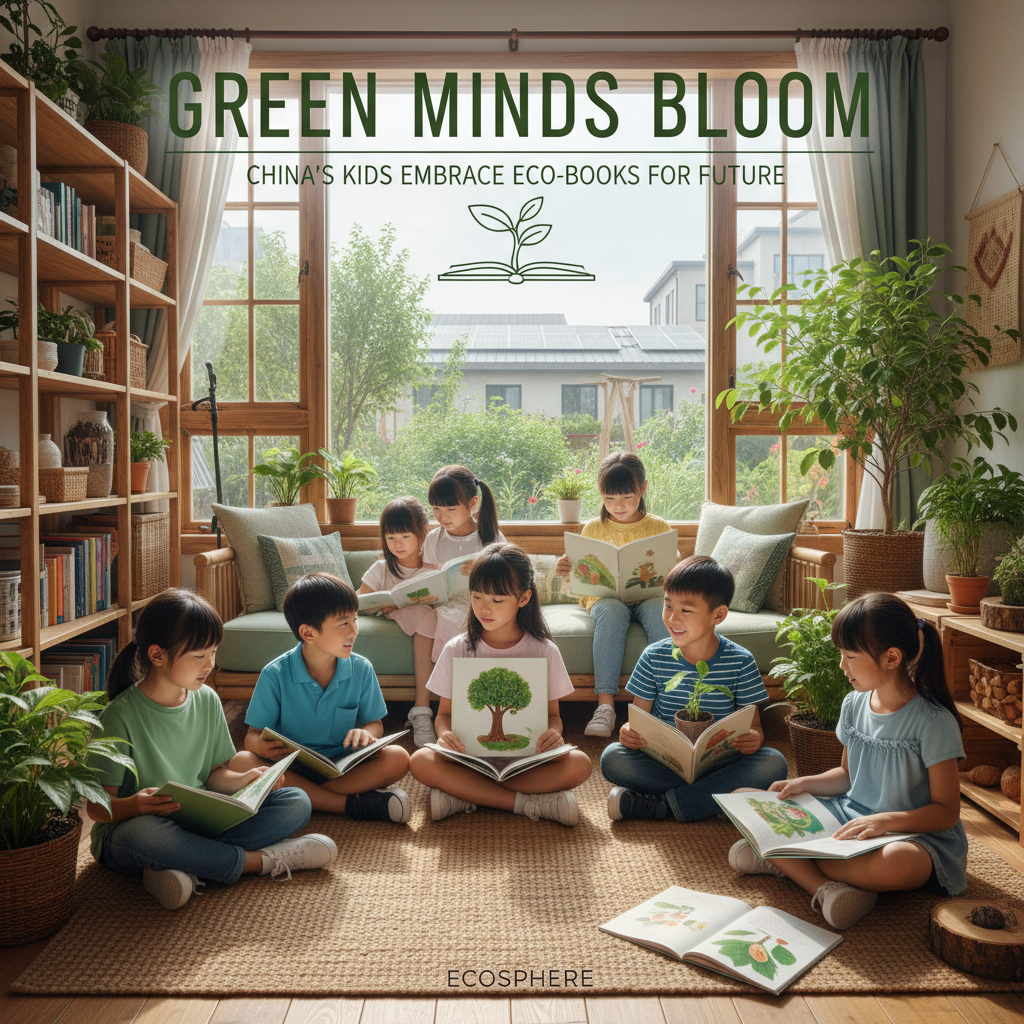
Green Minds Bloom: China's Kids Embrace Eco-Books for Future
Key Takeaways
- China's children's book market is booming in science and nature categories.
- The growth is driven by a focus on ecological education for globally-minded youth.
- Chinese publishers are actively seeking relevant content internationally.
- This signifies a strategic investment in environmental awareness from an early age.
- The trend holds global importance for fostering sustainable habits and solutions.
In an era where environmental consciousness is paramount, a significant and hopeful trend is emerging from China: a robust demand for science and nature books among its youngest readers. This development isn't just about literary tastes; it signals a foundational shift towards nurturing ecological literacy in the next generation, a critical step for our planet's future, mirroring GreenNest Living's core values.
TL;DR: Key Facts
- China's children's book market is currently thriving, specifically with science and nature titles.
- This growth is attributed to a focus on fostering 'ecological education' for young, globally-minded Chinese readers.
- Publishers like Phoenix Fine Arts Publishing are actively seeking and supporting content that aligns with this environmental educational mission at international book fairs.
- The trend indicates a strategic investment in environmental awareness and scientific literacy from an early age across a significant global population.
What Happened
The children's book market in China is experiencing a remarkable boom, particularly within the categories of science and nature. This surge isn't a mere passing fad; it represents a concerted effort to instill critical environmental awareness and scientific understanding in young minds from an early age. According to Wang Linjun, President of Phoenix Fine Arts Publishing, there is a clear strategic imperative behind this trend: to foster 'ecological education for a new generation of globally-minded Chinese readers.' This forward-thinking approach underscores a deep commitment to preparing children for the complex environmental challenges and opportunities of the future.
This commitment is so strong that Chinese publishers are actively engaging on the international stage to acquire and develop relevant content. Phoenix Fine Arts Publishing, for example, is attending prestigious events like the Bologna Book Fair with the explicit goal of finding books that align with this educational mandate. Their proactive presence underscores a strategic approach to curating materials that can shape children's perspectives on the environment and their place within a global ecosystem. By focusing on high-quality, engaging content, these publishers aim to make environmental learning both accessible and inspiring.
The focus is not just on factual information but on cultivating a broader sense of environmental responsibility and interconnectedness. By introducing complex ecological concepts and the wonders of the natural world through accessible literature, these publishers are laying groundwork for future generations to become more informed, compassionate, and proactive stewards of the Earth. This strategic pivot highlights a recognition within the publishing industry of its vital role in contributing to societal values and educational priorities, ensuring that children grow up with a profound respect for nature and a desire to protect it.
Why It Matters
This burgeoning trend in China holds immense significance for sustainable living on a global scale. When the world's most populous nation prioritizes ecological education for its children, it's not merely a local publishing story; it's a powerful signal of a growing worldwide commitment to environmental stewardship. For readers of GreenNest Living, this isn't just encouraging news; it's a testament to the transformative power of education in driving systemic change. Investing in nature and science books for children means cultivating a generation that understands ecosystems, climate change, and the interconnectedness of all life from a young age. This foundational knowledge is crucial for developing sustainable habits, informed decision-making, and innovative solutions for future environmental challenges, ultimately contributing to a healthier planet for everyone.
Furthermore, this movement emphasizes the critical role of literature in shaping environmental values. Books offer an intimate and accessible way to introduce complex topics like biodiversity, conservation, and resource management. By making these subjects engaging and relatable through storytelling and captivating illustrations, publishers are helping to demystify environmental science and make it a part of children's everyday understanding. This early exposure builds empathy for the natural world, fosters a sense of responsibility, and can inspire lifelong passion for environmental protection. It's about nurturing not just readers, but future environmental leaders, scientists, and conscientious citizens who will advocate for and implement sustainable practices.
The 'globally-minded' aspect of this initiative is particularly resonant with GreenNest Living's vision. Environmental challenges transcend national borders, and solutions require international cooperation. By fostering a global perspective from childhood, these books are preparing children to engage with environmental issues as universal concerns, encouraging cross-cultural dialogue and collaboration. This approach aligns perfectly with our ethos: that sustainable living is a collective journey, and that global awareness is key to achieving a truly resilient and thriving planet. It reminds us that environmental education is not a luxury, but an absolute necessity, and that its impact can ripple across generations and continents, creating a ripple effect of positive change.
What You Can Do
Here's how you can embrace and contribute to this vital shift towards ecological education within your own community and family:
- Curate a Nature-Focused Home Library: Seek out science and nature books for the children in your life. Look for titles that explore local ecosystems, explain natural phenomena, and promote environmental ethics and conservation.
- Support Eco-Conscious Publishers: When purchasing books, research publishers committed to sustainable practices and those with strong environmental education lists. Your thoughtful buying choices send a powerful message to the industry.
- Engage with Nature through Books: Read nature books with children, then extend the learning by going outdoors. Visit a local park, plant a seed, or observe wildlife to connect book knowledge with real-world experiences.
- Advocate for Environmental Education: Talk to local schools and libraries about incorporating more science and nature-focused literature into their collections and curricula. Support initiatives that prioritize ecological literacy for all ages.
- Share Your Passion: Be a role model! Share your own enthusiasm for nature and sustainability with children. Discuss environmental news, participate in local clean-ups, and demonstrate eco-friendly habits in your daily life.
- Utilize Library Resources: Explore your local library's collection of children's science and nature books. Librarians are excellent resources for finding age-appropriate and engaging titles that inspire environmental curiosity and a love for the natural world.
FAQs
Q: Why is ecological education for children so important for sustainable living?
A: Early ecological education builds a foundational understanding of natural systems, fosters empathy for the environment, and equips future generations with the knowledge and values needed to make sustainable choices and address global environmental challenges effectively.
Q: How does this trend in China relate to me, a reader in another part of the world?
A: This trend highlights a global movement towards prioritizing environmental literacy. It encourages readers everywhere to support similar initiatives in their own communities and to recognize the universal importance of educating children about sustainability, transcending geographical boundaries.
Q: What types of books fall under "science and nature" for children?
A: These include a broad range of titles such as vibrant picture books about animals and plants, non-fiction works explaining ecosystems, climate, and conservation, engaging experiment books, inspiring biographies of naturalists, and even fiction that subtly weaves in strong environmental themes and messages.
Sources
This article is based on reporting by Publishing Perspectives.
Original source
Publishing Perspectives
Author, Digital Entrepreneur & AI Creator
More from Sustainable Living
- UK Women's Prize Highlights Literature's Crucial Role in a Greener Future — May 14, 2026
- Unearthing Wisdom: Islamic Philosophy's Green Insights — May 13, 2026
- Literature's Mirror: UK Prize Reflects on Sustainable Living — May 12, 2026
- Prague Fair Uncovers Regional Keys to a Greener Literary Future — May 11, 2026
- Comics & Graphic Novels: Driving Sustainable Stories in Eastern Europe — May 10, 2026