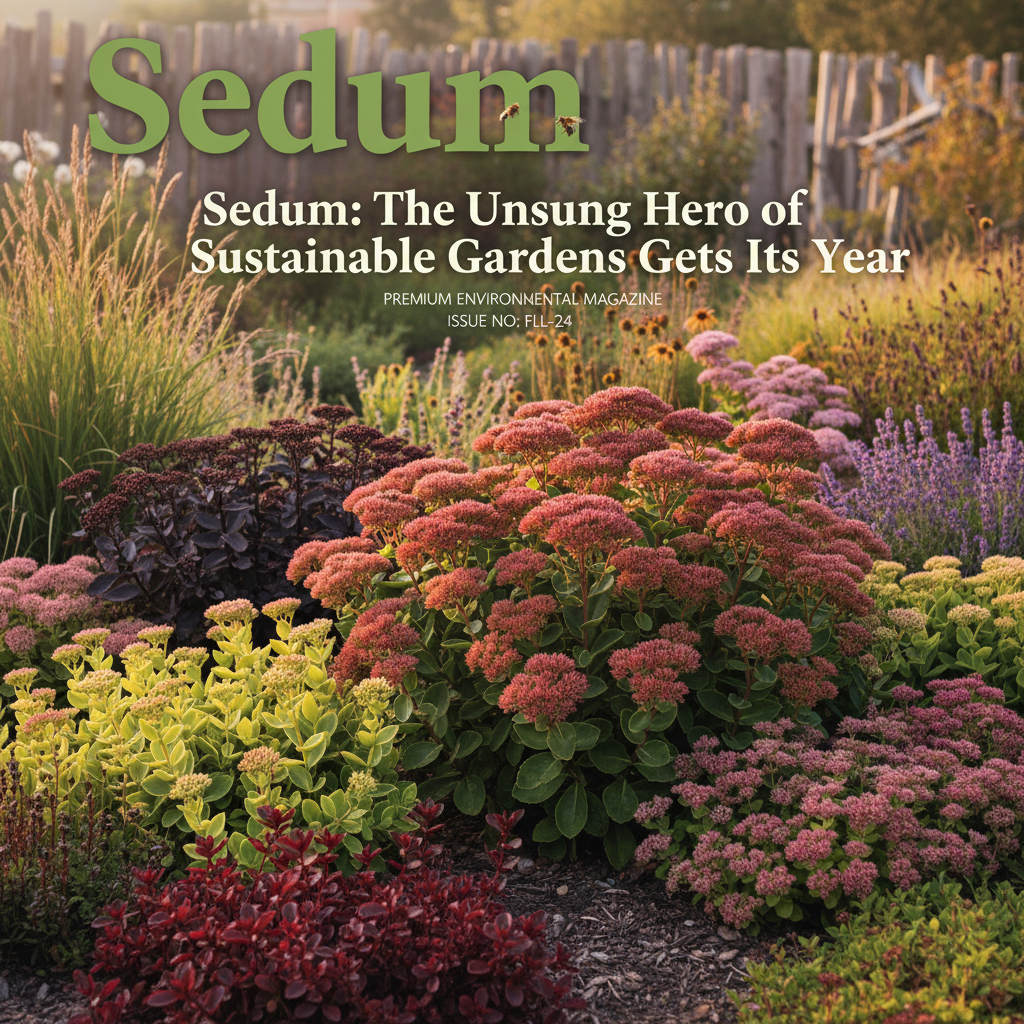
Sedum: The Unsung Hero of Sustainable Gardens Gets Its Year
Key Takeaways
- National Garden Bureau named 2026 the Year of the Sedum.
- Sedums are highly durable, versatile, and low-maintenance plants.
- New varieties of Sedum are continually emerging, expanding their appeal.
- Their resilience makes them ideal for sustainable and ecological garden designs.
- Sedums offer beauty without demanding excessive resources, benefiting both gardeners and the environment.
Sedum: The Unsung Hero of Sustainable Gardens Gets Its Year
In the evolving world of sustainable gardening, some plants stand out for their resilience, beauty, and minimal demands. This week, the spotlight shines on one such plant that's finally receiving its well-deserved recognition: Sedum. Its designation as the 'Year of the Sedum' for 2026 isn't just an announcement; it's a validation of its crucial role in creating eco-conscious, thriving landscapes.
TL;DR: Key Facts
- The National Garden Bureau has officially named 2026 the 'Year of the Sedum'.
- Sedums are celebrated for their exceptional durability and versatility in various garden settings.
- Gardeners and experts alike note a growing appreciation for Sedum, fueled by the continuous emergence of new varieties.
- These succulents are highly valued for being low-maintenance, drought-tolerant, and adaptable to many climates.
- Their rising popularity signifies a broader trend towards selecting resilient and resource-efficient plants for modern gardens.
What Happened
A recent spotlight from Gardenista highlights the burgeoning admiration for Sedum, a plant long cherished by those in the know for its robust nature and diverse forms. The most significant news cementing its growing stature is the National Garden Bureau's official designation of 2026 as the 'Year of the Sedum'. This announcement isn't made lightly; it signals a collective acknowledgment of a plant that is increasingly proving its worth in gardens across the nation.
Gardeners are finding themselves increasingly drawn to Sedums, incorporating them into a wide array of garden designs, from rockeries to borders and containers. This appreciation, as noted by enthusiasts, continues to grow alongside the constant development and introduction of new varieties. These emerging forms offer an even wider palette of colors, textures, and sizes, expanding Sedum's appeal and utility in the landscape.
The core reasons for this rising devotion are clear: Sedums are remarkably durable, incredibly versatile, and generally forgiving plants. These characteristics make them an ideal choice for both seasoned gardeners looking for reliable performers and newcomers seeking success with minimal fuss. As environmental concerns drive more sustainable gardening practices, Sedum's inherent low-resource needs make it an obvious and celebrated choice.
Why It Matters
For GreenNest Living readers, the 'Year of the Sedum' isn't just about a plant; it's a powerful affirmation of shifting priorities in gardening towards sustainability and resilience. Sedum's prominence underscores a critical movement away from high-maintenance, resource-intensive gardening towards practices that embrace nature's own efficiencies. These plants thrive where others struggle, demanding less water, fewer amendments, and minimal fuss, making them perfect for drought-prone regions or for gardeners seeking to reduce their environmental footprint.
Furthermore, the rise of Sedum varieties speaks to innovation within horticulture focused on ecological benefits. Many Sedums are excellent for pollinators, providing late-season nectar when other sources are scarce. Their ability to cover ground effectively also makes them valuable for erosion control, especially on slopes or in challenging urban environments. By choosing Sedum, gardeners aren't just planting a pretty flower; they're investing in ecological stability, biodiversity, and a more robust garden ecosystem.
This recognition also democratizes gardening. Sedums are inherently forgiving, allowing gardeners of all skill levels to achieve beautiful, successful outcomes. This accessibility is key to fostering a wider engagement with sustainable practices. When gardening is less intimidating, more people are likely to participate, leading to more green spaces, healthier environments, and a greater appreciation for the natural world around us. Embracing Sedum is embracing a future where beauty and ecological responsibility go hand-in-hand.
What You Can Do
- Explore Varieties for Your Zone: Research the vast array of Sedum species and cultivars to find those best suited for your local climate and garden conditions, considering mature size and sun exposure.
- Integrate into Diverse Designs: Use Sedums in rock gardens, along sunny borders, as groundcover, or in containers to add texture, color, and a drought-tolerant element to your landscape.
- Reduce Water Consumption: Leverage Sedum's natural drought resistance to minimize irrigation needs in your garden, especially in hot, dry spells, contributing to water conservation efforts.
- Support Pollinators: Plant Sedums to provide vital nectar sources for bees and butterflies, particularly in late summer and fall when many other flowers have faded.
- Consider Green Roof Applications: For advanced projects or small sheds, investigate using Sedum varieties in green roof installations to insulate, manage stormwater, and create habitat.
- Prepare for 2026: Stay tuned for more information and special events as the 'Year of the Sedum' approaches, offering opportunities to learn more and acquire unique varieties.
Ciro's Take
As an environmental advocate, I find the National Garden Bureau's decision to name 2026 the 'Year of the Sedum' particularly inspiring. It's not just about a plant; it’s about a paradigm shift. For too long, our gardens have often demanded more than they give back, guzzling water and labor. Sedum, with its understated beauty and incredible tenacity, represents a quieter, more respectful approach to gardening. It's a testament to the idea that sustainable living doesn't mean sacrificing aesthetics; it means choosing plants that thrive in harmony with our environment. This recognition feels like a hopeful nod towards a future where resilience and ecological integrity are as celebrated as vibrant blooms.
FAQs
Q: What makes Sedum so durable and low-maintenance?
A: Sedums are succulents, meaning they store water in their leaves, stems, and roots. This adaptation makes them highly drought-tolerant and able to withstand periods of neglect. They generally require minimal fertilization and are resistant to many common pests and diseases, contributing to their low-maintenance nature.
Q: Are all Sedums the same, or are there different types?
A: Sedum is a very diverse genus with thousands of species and cultivars. They range from low-growing groundcovers (often called 'stonecrop') to taller, upright varieties (sometimes called 'Hylotelephium'). They come in various leaf shapes, colors, and bloom times, offering a wide array of options for different garden uses.
Q: When is the best time to plant Sedum?
A: Sedums are quite adaptable, but the best times to plant them are typically in spring after the last frost, or in early fall, allowing them to establish roots before extreme heat or cold. They generally prefer well-draining soil and plenty of sunlight to thrive.
Sources
This article is based on reporting by Gardenista.
Original source
Gardenista
Author, Digital Entrepreneur & AI Creator
More from Garden & Plants
- Stay Tick-Safe: Essential Protection for Your Sustainable Garden — June 13, 2026
- June's Green Embrace: Discovering Gardens & Local Harvests — June 12, 2026
- Tiny Terrace Thrives: Post-Winter Strategies for Urban Pots — June 11, 2026
- June's Vibrant Call: Embracing Seasonal Beauty for Sustainable Outdoor Living — June 10, 2026