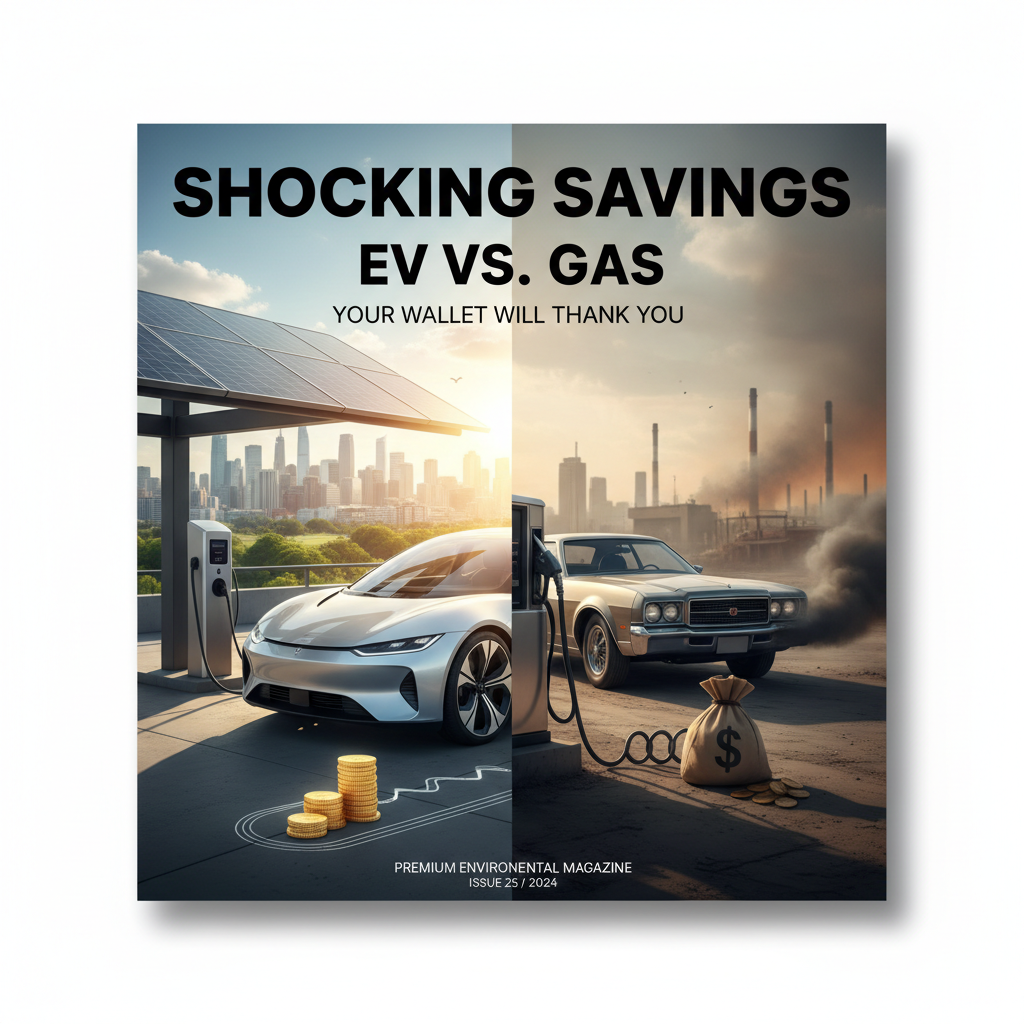
Shocking Savings: EV vs. Gas, Your Wallet Will Thank You
Key Takeaways
- EVs drastically cut annual 'fuel' costs compared to gasoline cars.
- Kia EV6 nearly 8x cheaper to energize annually than Toyota C-HR to fuel.
- Hyundai IONIQ 5 also showed significant savings over Santa Fe in previous comparisons.
- Real-world data highlights immediate financial benefits beyond environmental advantages of EV ownership.
- Economic factors are increasingly accelerating widespread EV adoption among consumers.
In an era where every penny counts, understanding your vehicle's true running costs is more crucial than ever. For many, the choice between an electric vehicle (EV) and a traditional gasoline car often boils down to upfront price, but a recent head-to-head comparison shines a blinding light on the dramatic long-term savings EVs offer, particularly at the 'pump'. This isn't just about environmental impact; it's about practical, everyday economics that can significantly lighten your financial load.
As gas prices continue their unpredictable dance, the financial advantage of going electric has never been clearer, presenting a compelling case for sustainability that directly benefits your bank account right now.
TL;DR: Key Facts
- A Toyota C-HR costs an estimated $1,523 annually to fuel with gasoline.
- A Kia EV6 costs an estimated $205 annually to energize with electricity.
- The Kia EV6 is nearly 8 times cheaper to 'fuel' than the Toyota C-HR.
- Previous comparisons showed similar stark differences, like the Hyundai IONIQ 5 vs. Hyundai Santa Fe.
- These figures highlight a significant financial incentive for consumers to switch to electric vehicles.
What Happened
CleanTechnica recently published a compelling financial comparison between two popular vehicles: the gasoline-powered Toyota C-HR and the electric Kia EV6. The author meticulously calculated the estimated annual 'fuel' costs for each, revealing a stark contrast that underscores the economic benefits of electric vehicle ownership. According to their analysis, the Toyota C-HR would set an owner back approximately $1,523 per year in gasoline expenses.
In sharp opposition, the electric Kia EV6 required an estimated annual cost of just $205 for its electricity. This monumental difference illustrates that powering an EV can be nearly eight times cheaper than fueling a comparable gasoline car over the course of a year. This detailed look follows an earlier comparison from the same author, which showcased similar dramatic savings when pitting a Hyundai IONIQ 5 against a Hyundai Santa Fe, further solidifying the financial argument for transitioning to electric mobility.
Why It Matters
For GreenNest Living readers, this isn't just an interesting data point; it's a game-changer for sustainable living and personal finance. The most immediate impact is on your wallet. By significantly reducing annual 'fuel' costs, EVs offer a tangible path to greater financial freedom, buffering households from volatile fossil fuel markets. This economic incentive is often the strongest driver for adoption, proving that going green doesn't have to be a sacrifice – it can be a smart financial decision.
From a broader Green Tech perspective, these cost comparisons accelerate the transition to a cleaner energy grid. As more consumers opt for EVs due to these compelling savings, it increases demand for renewable electricity, fostering greater investment in solar, wind, and other green power sources. It also reduces our collective reliance on fossil fuels, directly contributing to lower carbon emissions and cleaner air in our communities.
Ultimately, this shift represents a democratization of sustainable transport. When electric vehicles become not just an eco-conscious choice but also the most economically sensible one, they become accessible to a much wider demographic. This empowers more individuals to participate in the sustainable movement, driving innovation in battery technology, charging infrastructure, and grid management, paving the way for a more resilient and environmentally friendly future for everyone.
What You Can Do
- Calculate Your Potential Savings: Use online tools or dealership resources to estimate your annual electricity costs for an EV based on your driving habits and local electricity rates. Compare this to your current gasoline expenses.
- Research EV Models and Incentives: Explore various EV models that fit your lifestyle and budget. Don't forget to look into federal, state, and local incentives (tax credits, rebates) that can significantly lower the upfront purchase cost.
- Assess Charging Options: Understand your home charging options (Level 1 vs. Level 2) and the public charging infrastructure available in your area. Many employers also offer workplace charging.
- Consider Used EVs: The used EV market is growing, offering more affordable entry points into electric vehicle ownership without sacrificing significant savings on 'fuel'.
- Advocate for EV-Friendly Policies: Support local and national initiatives that promote EV adoption, such as expanded charging networks, time-of-use electricity rates, and continued purchase incentives.
Ciro's Take
As an environmental advocate, it’s easy to focus on the planet's health when discussing electric vehicles. But for real, impactful change, we must also speak the language of personal economics. This CleanTechnica comparison isn't just about numbers; it's a potent reminder that sustainability and financial savvy are not mutually exclusive – in fact, they're increasingly intertwined. When the cost to 'fuel' an EV is nearly eight times less than its gasoline counterpart, it transforms the conversation from a moral imperative to a practical no-brainer. This shift empowers individuals to make choices that benefit both their household budget and the environment, accelerating the adoption of green tech far beyond what any environmental plea alone could achieve. For me, seeing these tangible savings makes the future of sustainable living feel not just possible, but incredibly appealing and accessible to all.
FAQs
Q: Are all EVs this much cheaper to 'fuel' than gasoline cars?
While exact figures vary by model, electricity rates, and driving habits, the general trend shows that EVs are significantly cheaper to energize annually than gasoline cars are to fuel, often by a factor of 3 to 10 times.
Q: What about the higher upfront cost of an EV?
While EVs can have a higher sticker price, federal tax credits, state rebates, and local incentives can significantly reduce this. When combined with long-term 'fuel' savings, lower maintenance costs, and potential resale value, the total cost of ownership (TCO) often makes EVs competitive or even cheaper than gasoline cars over time.
Q: Is charging an EV always cheaper than buying gasoline?
Generally, yes, especially when charging at home during off-peak hours. Public fast charging can sometimes be comparable to gasoline costs for a short period, but for the vast majority of miles driven, home charging provides substantial savings.
Sources
This article is based on reporting by CleanTechnica.
Original source
CleanTechnica
Author, Digital Entrepreneur & AI Creator
More from Green Tech
- Smart Cars: A Data Privacy Nightmare? — May 23, 2026
- Geely's European Leap: Ford Factory Sale Reshapes EV Map — May 22, 2026
- Hyundai Supercharges India's EV Future with Expanded Research — May 21, 2026
- Ontario's Grid Puzzle: Hydrostor vs. BESS Reality Check — May 20, 2026