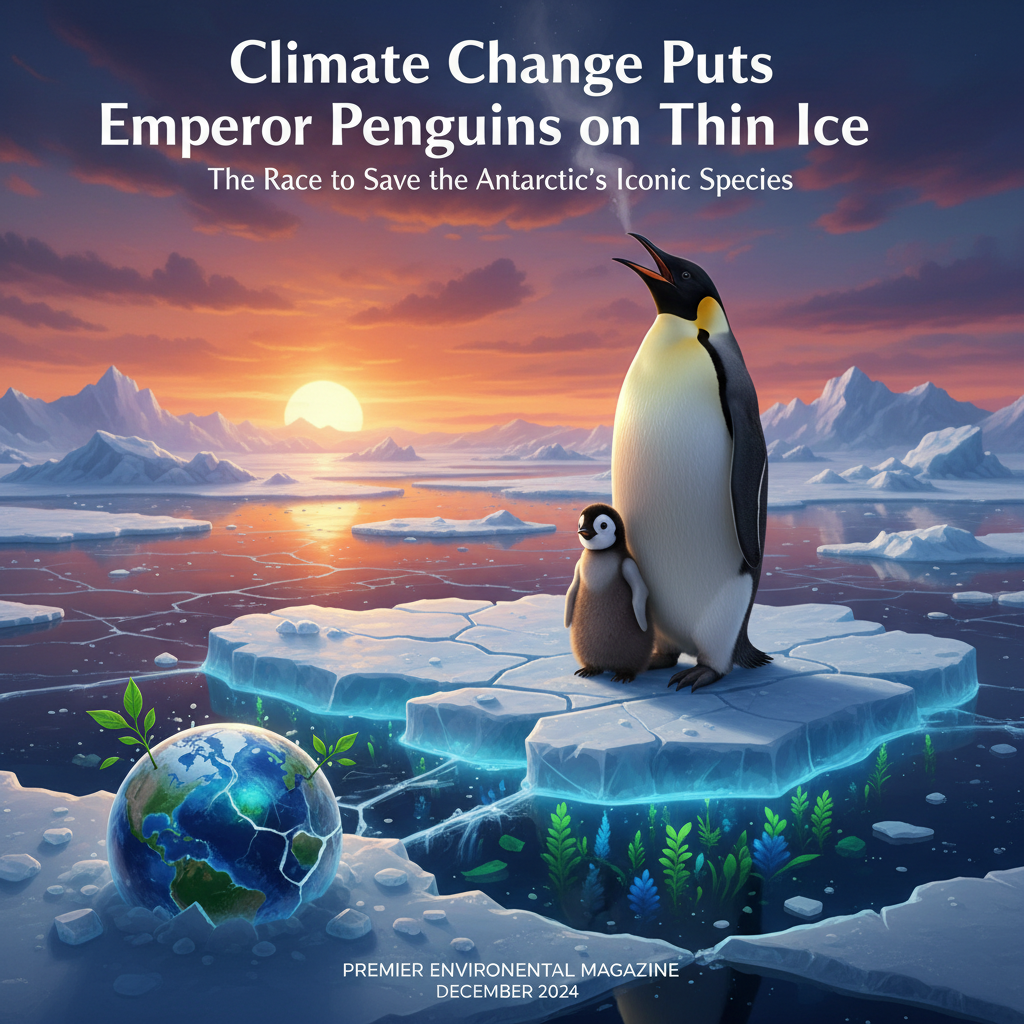
Climate Change Puts Emperor Penguins on Thin Ice
Key Takeaways
- Emperor penguins face a new serious threat.
- This threat comes from melting Antarctic sea ice.
- The melting is due to climate change.
- Researchers used satellite technology to confirm this risk.
- Their breeding and feeding grounds are directly impacted by ice loss.
Right now, an iconic species in one of Earth's most remote habitats is facing an existential crisis. A groundbreaking new study reveals that Emperor penguins, symbols of the Antarctic wilderness, are now gravely imperiled by rapidly melting sea ice – a direct consequence of escalating climate change. This isn't just a distant problem; it’s a stark reminder of how our planet's delicate balance impacts every living creature, from wild animals to our beloved pets.
TL;DR: Key Facts
- Emperor penguins are facing a serious new threat to their survival.
- The threat stems from the rapid melting of Antarctic sea ice.
- This sea ice loss is directly attributed to ongoing climate change.
- Researchers used satellite technology to confirm this increasing risk.
- The loss of stable sea ice directly impacts their breeding success and access to food.
What Happened
A recent scientific study has brought alarming news regarding the survival of Emperor penguins. Published insights reveal that these majestic birds are facing a significant new threat directly linked to the rapid melting of Antarctic sea ice. This environmental degradation is a direct consequence of global climate change, presenting an unprecedented challenge to the species' long-term viability.
Researchers employed advanced satellite technology to monitor sea ice conditions and penguin colonies across the Antarctic continent. Their findings indicate a critical loss of the stable sea ice platforms that emperor penguins rely on for their entire life cycle. These platforms are essential for breeding, raising their young, and accessing crucial feeding grounds. The disappearance of this vital habitat disrupts their reproductive success and diminishes their ability to forage, pushing the species closer to the brink.
Why It Matters
While Emperor penguins might seem far removed from our daily lives and the care of our household pets, their plight serves as a critical barometer for the health of our entire planet. For GreenNest Living readers, particularly those passionate about animal welfare, this news underscores a profound truth: all life is interconnected. The stable climate and healthy ecosystems that penguins depend on are the same fundamental elements that support the well-being of our dogs, cats, and other companion animals, even if indirectly.
The melting Antarctic sea ice is not merely an isolated environmental crisis; it's a potent symptom of a global climate imbalance that threatens biodiversity across all biomes. When critical habitats vanish for species like the Emperor penguin, it signals a systemic stress that will inevitably ripple through food chains and natural cycles, impacting everything from fish stocks to air quality. For pet parents, this means understanding that the environmental choices we make at home and globally contribute to the health of the planet our pets inhabit. A stable, healthy environment is paramount for preventing diseases, ensuring clean water and air, and maintaining the sustainable availability of pet food resources – aspects crucial for holistic pet care.
Moreover, the narrative of a species struggling due to habitat loss should resonate deeply with anyone dedicated to the well-being of animals. It inspires a broader ethic of care that extends beyond our homes to encompass all living creatures. By addressing climate change and promoting sustainability, we are not just saving distant penguins; we are fostering a healthier world for our own pets and ensuring a future where all life can thrive, including our cherished companions.
What You Can Do
Here’s how you can contribute to protecting our planet and all its inhabitants, directly and indirectly benefiting even the smallest members of your family:
- Reduce Your Carbon Pawprint: Evaluate your household's energy consumption. Switch to renewable energy sources if possible, use energy-efficient appliances, and unplug electronics when not in use. Consider walking or biking with your pet instead of driving for shorter distances.
- Support Sustainable Pet Brands: Choose pet food, treats, and toys from companies committed to ethical sourcing, sustainable packaging, and environmentally friendly production methods. Look for certifications that guarantee responsible practices and minimize environmental impact.
- Minimize Waste: Opt for reusable pet items (e.g., washable pee pads, refillable water bowls) and biodegradable pet waste bags. Compost pet-safe food scraps, and properly recycle pet product packaging to reduce landfill waste.
- Advocate for Climate Action: Engage with your local representatives and support policies that address climate change. Join or donate to reputable environmental conservation organizations working to protect vulnerable species and habitats, including those in polar regions.
- Educate and Inspire: Share the plight of species like the Emperor penguin with friends and family. Discuss the connection between global environmental health and the well-being of all animals, including our pets, fostering a sense of collective responsibility.
- Conserve Water at Home: Simple actions like fixing leaky faucets, installing low-flow fixtures, and being mindful of water usage when washing your pet or their items can make a difference in local and global water resources, which are increasingly strained by climate change.
FAQs
Q: How exactly does melting sea ice affect emperor penguins?
A: Emperor penguins rely on stable sea ice platforms for critical life stages including breeding, molting, and raising their chicks. Without stable ice, their breeding colonies can fail, leading to drowning or freezing of chicks, and adults struggle to access their primary food sources like krill and fish.
Q: Are other species affected by melting sea ice?
A: Yes, many polar species are severely impacted. Polar bears, various seal species, and other penguin species (like Adélie penguins) all depend on sea ice for hunting, breeding, resting, and protection from predators. The entire polar ecosystem is threatened by its loss, affecting biodiversity at all levels.
Q: What's the biggest contributor to climate change impacting sea ice?
A: The primary driver of global climate change and the subsequent melting of polar ice is the emission of greenhouse gases. This largely stems from human activities such as the burning of fossil fuels (coal, oil, and natural gas) for electricity generation, transportation, industrial processes, and deforestation.
Sources
This article is based on reporting by The Animal Reader.
Original source
The Animal Reader
Author, Digital Entrepreneur & AI Creator
More from PetCare
- Rescue Dogs: Nurturing a New Beginning in Your Green Home — May 14, 2026
- Beagle Rescue: Unmasking the Ethics of Pet Product Testing — May 13, 2026
- Fresh Home, Happy Pup: Sustainable Ways to Beat Pet Odors — May 11, 2026
- Green PetCare: The Truth About Vaseline and Your Dog — May 10, 2026
- Mass Beagle Rescue Shines Light on Ethical Pet Sourcing — May 9, 2026