Texas Book Ban Battle: A Threat to Informed Green Futures
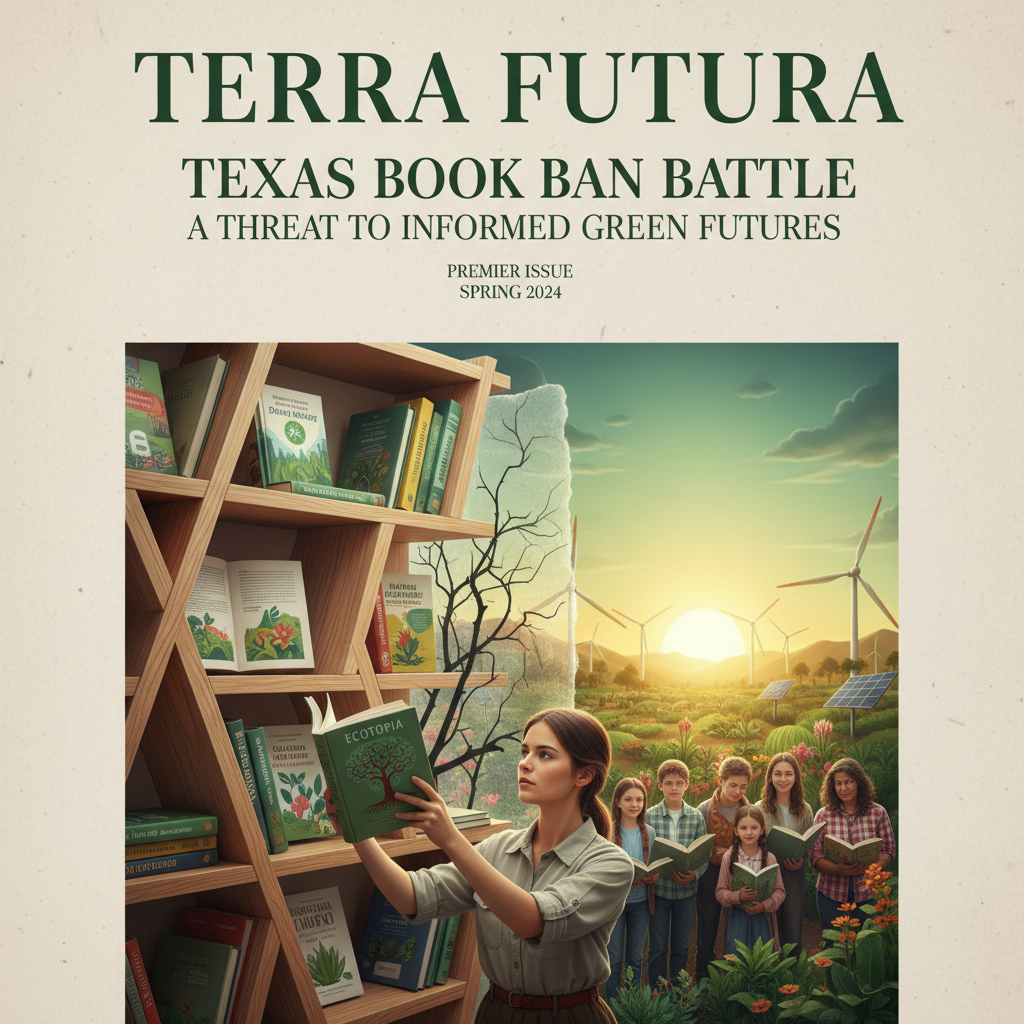
Key Takeaways
- Texas seeks to reinstate H.B. 900, a law requiring book vendors to rate books for schools.
- Vendors must bear the expense of reviewing and rating all books for 'sexual content.'
- The law was previously ruled unconstitutional, raising concerns over free speech.
- Publishers and booksellers are alarmed, fearing censorship and disproportionate burden.
- The effort is seen as a significant threat to intellectual freedom and access to information.
In an era where access to information and diverse perspectives is paramount for navigating complex global challenges, any threat to intellectual freedom sends a ripple through society. When that threat comes from legislation impacting what books students can access, the implications for an informed, critically thinking populace — essential for building a sustainable future — become profoundly concerning. Texas's recent move to resurrect a previously deemed 'unconstitutional' book rating law represents just such a development, extending its shadow far beyond the walls of schools and libraries.
TL;DR: Key Facts
- Texas is attempting to reinstate H.B. 900, a law requiring book vendors to review and rate all books for 'sexual content' before selling them to school libraries.
- The law mandates that vendors bear the entire financial and logistical burden of this review process.
- H.B. 900 was previously blocked by courts and declared 'unconstitutional' due to concerns over free speech.
- Publishers, booksellers, and freedom-to-read advocates are unified in their alarm over this development.
- The resurgence of this law signals a tense and unwelcome challenge to intellectual freedom in the U.S. book industry.
What Happened
After more than two years since its initial passage, Texas is once again making headlines for its controversial H.B. 900. This legislation, which aims to regulate the types of books available in public school libraries, requires any bookstore or vendor supplying books to Texas schools to meticulously review and assign ratings for 'sexual content' to every single title. Crucially, the law places the immense financial and logistical burden of this exhaustive review process squarely on the shoulders of the booksellers and publishers themselves, rather than on the state or school districts.
This re-emergence of H.B. 900 is a deeply unwelcome development for advocates of intellectual freedom, publishers, and booksellers alike. The law had previously faced significant legal challenges and was blocked by federal courts, with judges ruling it unconstitutional due to its vague definitions and its potential to infringe upon First Amendment rights. The current effort by Texas to appeal and resurrect this legislation signals a persistent push to control information access, raising serious concerns about censorship and its chilling effect on the availability of diverse educational materials.
Why It Matters
At GreenNest Living, we understand that true sustainable living isn't just about recycling or eating locally; it’s fundamentally about fostering an informed, engaged, and critically thinking citizenry. The attempt to resurrect H.B. 900 in Texas, while ostensibly focused on 'sexual content,' strikes at the very heart of this principle. When access to a wide array of books and ideas is restricted, it inherently limits our collective ability to understand, discuss, and innovate solutions for environmental and social challenges. Sustainable progress requires an open marketplace of ideas, where difficult topics are explored, diverse perspectives are heard, and critical thinking is encouraged, not stifled.
Such legislation creates a chilling effect that extends far beyond the explicit targets of the law. Publishers and booksellers, fearing legal repercussions and the prohibitive costs of review, may opt to self-censor, leading to a narrower selection of books available to schools. This could inadvertently remove titles discussing complex topics like environmental justice, the socio-economic impacts of climate change, indigenous environmental knowledge, or even foundational science texts that might be deemed controversial by some. Limiting these resources directly impairs the ability of young minds to develop a holistic understanding of our planet and the interconnected systems that define sustainable living.
Moreover, true sustainability demands empathy, understanding of different cultures, and a broad worldview. Books are powerful tools for cultivating these qualities. By restricting access to diverse narratives and challenging ideas, H.B. 900 risks fostering a generation less equipped to engage with the nuanced realities of global sustainability, less empathetic to different experiences, and less prepared to advocate for a just and green future. This isn't merely a debate about school libraries; it's a debate about the intellectual health of our society and its capacity to adapt and thrive sustainably.
What You Can Do
Protecting intellectual freedom and access to diverse knowledge is a vital component of fostering a sustainable society. Here’s how you can make a difference:
- Stay Informed Locally: Educate yourself about book challenges and censorship efforts in your own community, school district, and state. Knowledge is your first line of defense.
- Support Intellectual Freedom Organizations: Contribute to or volunteer with groups like the American Library Association (ALA), PEN America, or the National Coalition Against Censorship, who actively defend the freedom to read and intellectual inquiry.
- Engage with Diverse Literature: Actively seek out and read books that offer different perspectives, challenge your thinking, and explore complex environmental and social issues. Discuss them with others.
- Champion Libraries and Independent Bookstores: These institutions are crucial bastions of intellectual freedom. Support them through patronage, volunteering, and advocacy.
- Advocate for Open Access: Contact your local, state, and federal representatives to express your support for policies that protect intellectual freedom, promote diverse collections, and ensure open access to information for all.
- Vote for Informed Leadership: Support candidates who understand the value of a comprehensive education, intellectual freedom, and the critical role of diverse information in a functioning, forward-thinking society.
Ciro's Take
As an environmental advocate, I find the resurgence of Texas's H.B. 900 deeply unsettling. My work constantly reminds me that our biggest environmental challenges are also intellectual and societal ones, requiring an informed public capable of critical thought and empathetic understanding. When we limit access to books, we don't just shield students from uncomfortable topics; we rob them of the tools to navigate a complex world, to question, to innovate, and to ultimately champion a sustainable future. A truly green world is one built on knowledge, diversity of thought, and unencumbered access to information – not on fear or censorship. This isn't just about books; it's about the very intellectual soil from which a sustainable society must grow.
FAQs
Q: What is H.B. 900?
A: Texas House Bill 900 is a law attempting to require book vendors to review and rate all books sold to school libraries for 'sexual content' at their own expense before they can be purchased by schools.
Q: Why is this considered a threat to sustainable living?
A: Sustainable living relies on an informed citizenry capable of critical thinking, accessing diverse perspectives, and understanding complex environmental and social issues. Restricting books limits access to the knowledge, ideas, and empathy crucial for addressing these challenges effectively and fostering a resilient, progressive society.
Q: How can I help protect intellectual freedom in my community?
A: You can help by staying informed about local book challenges, supporting your local libraries and independent bookstores, engaging with diverse literature, and advocating for policies that promote open access to information. Supporting organizations like the ALA or PEN America is also impactful.
Sources
This article is based on reporting by Publishing Perspectives.
Original source
Publishing Perspectives
Author, Digital Entrepreneur & AI Creator
More from Sustainable Living
- Booker Winner: A 1930s Taiwan Travelogue & Sustainable Living — May 26, 2026
- Knowledge for a Greener Future: University Presses Thrive — May 25, 2026
- Storytel's Digital Push: What It Means for Green Reading — May 24, 2026
- Brazil's Publishing: AI & Digital Reshape Sustainable Reads — May 23, 2026