The Incredible Dog Nose: Understanding Their Scent World
Key Takeaways
- Dogs perceive the world primarily through their incredibly powerful sense of smell, far surpassing human capabilities.
- Their olfactory system is a biological marvel, allowing them to detect scents from impressive distances and pinpoint subtle nuances.
- Engaging your dog's nose through scent work and natural exploration is vital for their mental stimulation and overall well-being.
- Understanding canine olfaction fosters a deeper human-animal bond and can help address behavioral challenges.
- Embracing natural enrichment tied to their sense of smell promotes sustainable and fulfilling pet care practices.
Unleashing the Scent-sational World of Your Canine Companion
As humans, our perception of the world is predominantly shaped by sight and sound. We navigate, learn, and connect through visual cues and auditory signals. But imagine a world where the air tells a story, where every breeze carries a narrative, and where the ground beneath your feet holds a complex history. This is the world your dog inhabits, a truth beautifully highlighted in a recent article from Whole Dog Journal titled "How Far Can a Dog Smell?".
At GreenNest Living, we champion a holistic approach to sustainable living, and that extends to our beloved pets. Understanding our dogs' innate biology and their primary way of experiencing the world isn't just fascinating—it's fundamental to providing them with the richest, most fulfilling, and naturally sustainable lives possible. The Whole Dog Journal piece serves as a powerful reminder: for our canine companions, smell isn't just a sense; it's their super-sense, their defining lens on reality.
Let's dive deeper into the extraordinary realm of canine olfaction, exploring how far a dog's nose truly can reach, why it matters, and how we can better integrate this understanding into our daily lives to foster a deeper, more empathetic human-animal bond.
The Olfactory Marvel: A Biological Blueprint for Scent Detection
The assertion that "your dog’s nose is a marvel of biology" is no exaggeration. Compared to our paltry 6 million olfactory receptors, dogs boast an astounding 220 million to 300 million, depending on the breed. This isn't just a numbers game; it's about superior engineering. Their snouts are designed like intricate scent-collection devices.
- Specialized Airflow: When a dog inhales, a fold of tissue just inside their nostrils separates air into two distinct paths: one for respiration and one for olfaction. This means they can breathe and smell simultaneously without diluting the scent information. When they exhale, air exits through side slits, allowing fresh scents to enter without disturbing the inhaled ones.
- Advanced Olfactory Bulb: The brain region responsible for processing smells, the olfactory bulb, is proportionally much larger in dogs than in humans. This allows for far more detailed and nuanced interpretation of scent data.
- Vomeronasal Organ: Also known as Jacobson's organ, this specialized sensory organ located just above the roof of their mouth detects pheromones, providing crucial information about other animals' reproductive status, emotional state, and even individual identity.
- Independent Nostril Movement: A dog can move each nostril independently, allowing them to pinpoint the direction of a scent source with incredible accuracy, almost creating a "stereo" scent map.
This biological toolkit means dogs don't just smell odors; they deconstruct them. They can identify individual components of a complex scent mixture, detecting specific molecules at concentrations that are undetectable to humans, often in parts per trillion.
Beyond the Backyard: The Remarkable Reach of a Dog's Nose
The Whole Dog Journal article provocatively states that dogs are "capable of detecting scents that are miles away." While this might sound like science fiction, it's rooted in the incredible sensitivity and persistence of scent molecules, combined with environmental factors.
How does this work? Imagine a single molecule of a particular scent. As it disperses in the air, its concentration decreases. For humans, once it drops below a certain threshold, it vanishes. For dogs, that threshold is significantly lower. Environmental factors like air currents, temperature, and humidity play a crucial role. A scent dispersed by wind can travel remarkable distances, and a dog's nose, finely tuned to variations in concentration, can follow that trail.
Real-world applications powerfully illustrate this capability:
- Search and Rescue: Dogs can locate missing persons by following scent trails that are days old and have traveled for miles, even through water.
- Wildlife Detection: Conservation dogs track endangered species by their scat or scent marks across vast landscapes.
- Medical Detection: Dogs are trained to detect minute volatile organic compounds associated with certain diseases, like cancer or diabetes, from breath or urine samples.
- Explosives and Narcotics: The ability to detect specific molecular signatures in incredibly low concentrations is vital for security and law enforcement.
This isn't just about detecting a strong odor close by; it's about perceiving the faint whisper of a scent from a distant source, understanding its direction, and often, its age. It truly means their world is an open book of olfactory information, far beyond our comprehension.
Harnessing the Power: Enrichment, Understanding, and Sustainable Pet Care
Given this profound insight into our dogs' primary sense, how can we, as responsible and sustainably-minded pet parents, enrich their lives?
The answer lies in embracing and encouraging their natural scenting behaviors. Instead of trying to suppress their instinct to sniff, we should actively provide opportunities for them to use their incredible noses:
- "Sniffari" Walks: Ditch the brisk, goal-oriented walk occasionally. Let your dog lead. Allow them to stop, sniff, and investigate for as long as they like. This isn't just a walk; it's a mental workout and their version of reading the daily news.
- Scent Games: Simple "find it" games with treats hidden around the house or yard are incredibly stimulating. Snuffle mats, puzzle toys that dispense treats, and even hiding their kibble instead of using a bowl can turn mealtime into a fulfilling foraging activity.
- Nose Work Classes: Consider enrolling in a formal nose work or K9 Nose Work class. These teach dogs to find specific target odors, providing immense mental exercise and building confidence. It's a wonderful bonding activity.
- Exploring New Environments: Introduce your dog to safe, new outdoor spaces regularly. Different parks, hiking trails, or even just a new block offer a fresh tapestry of smells to explore.
- Mindful Use of Chemicals: Be conscious of strong chemical cleaners, air fresheners, and perfumes in your home and on your dog. While we might enjoy these scents, they can be overwhelming or even irritating to a dog's sensitive nose, obscuring their natural scent environment. Opt for natural, pet-safe cleaning solutions where possible.
Engaging a dog's nose provides immense mental stimulation, which can reduce anxiety, prevent boredom-related destructive behaviors, and increase overall happiness. It’s a sustainable form of enrichment, utilizing their innate abilities without requiring excessive new purchases or resource consumption.
A Deeper Bond: Connecting Through the Olfactory Universe
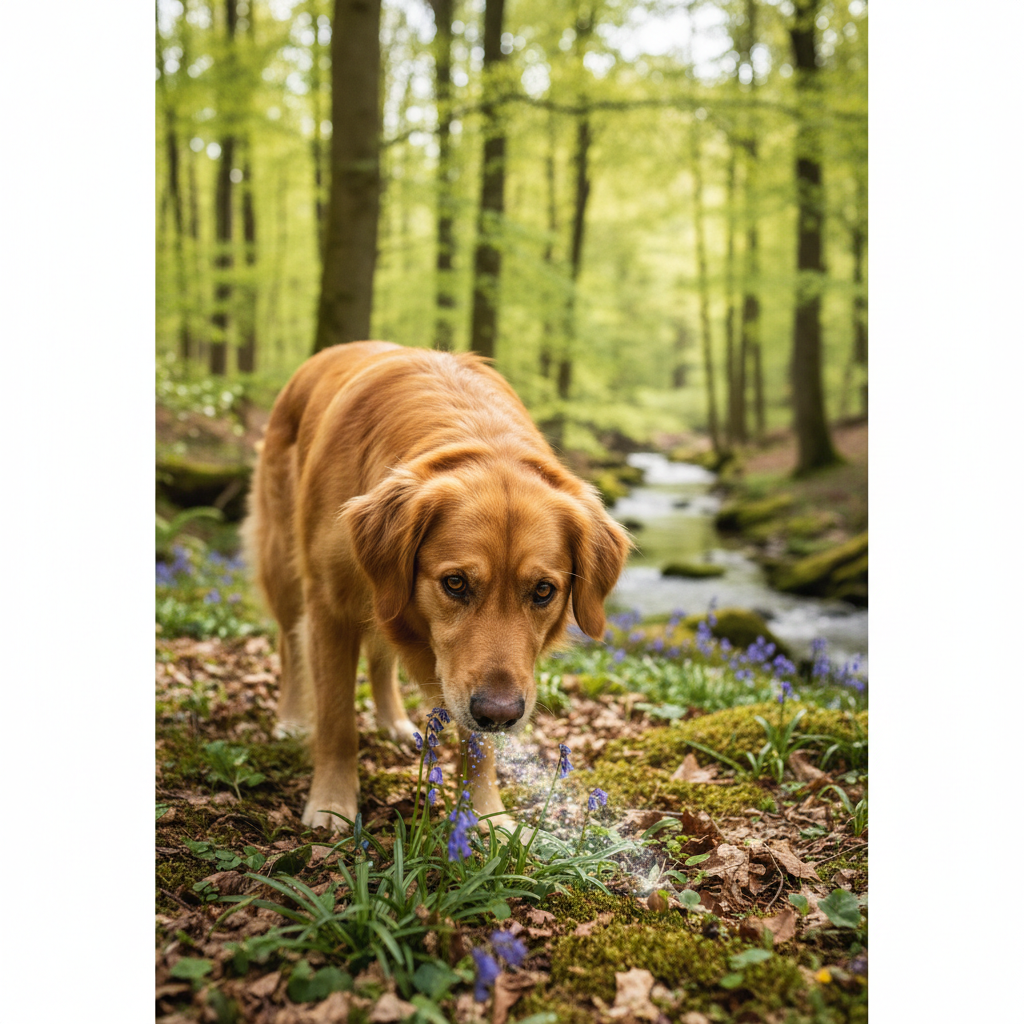
Understanding the incredible power of your dog's nose fosters a deeper, more empathetic bond. When we witness our dogs intently sniffing a patch of grass or tracking an invisible trail, we're not just seeing a curious habit; we're observing them interpreting their world in vivid detail.
This appreciation encourages us to communicate with our dogs in ways that respect their primary sense. It helps us understand why they might be more interested in the scent left by another dog than in making eye contact with us at that moment. It also underscores the importance of allowing them to experience their natural environment unhindered by constant commands or rushed schedules.
By embracing canine olfaction, we recognize our dogs as sentient beings with unique and powerful ways of experiencing life. This isn't just about good pet care; it's about fostering respect for the natural world and the amazing creatures within it, aligning perfectly with GreenNest Living's commitment to a more harmonious, sustainable existence for all.
So, the next time your dog seems utterly engrossed in sniffing something unseen, take a moment to marvel. Their nose isn't just finding a smell; it's painting a picture of their world, one molecule at a time. And by understanding this, we open the door to a richer, more meaningful relationship with our beloved companions.
Original source
GreenNest Living Editorial
Author, Digital Entrepreneur & AI Creator
More from PetCare
- Rescue Dogs: Nurturing a New Beginning in Your Green Home — May 14, 2026
- Beagle Rescue: Unmasking the Ethics of Pet Product Testing — May 13, 2026
- Fresh Home, Happy Pup: Sustainable Ways to Beat Pet Odors — May 11, 2026
- Green PetCare: The Truth About Vaseline and Your Dog — May 10, 2026
- Mass Beagle Rescue Shines Light on Ethical Pet Sourcing — May 9, 2026