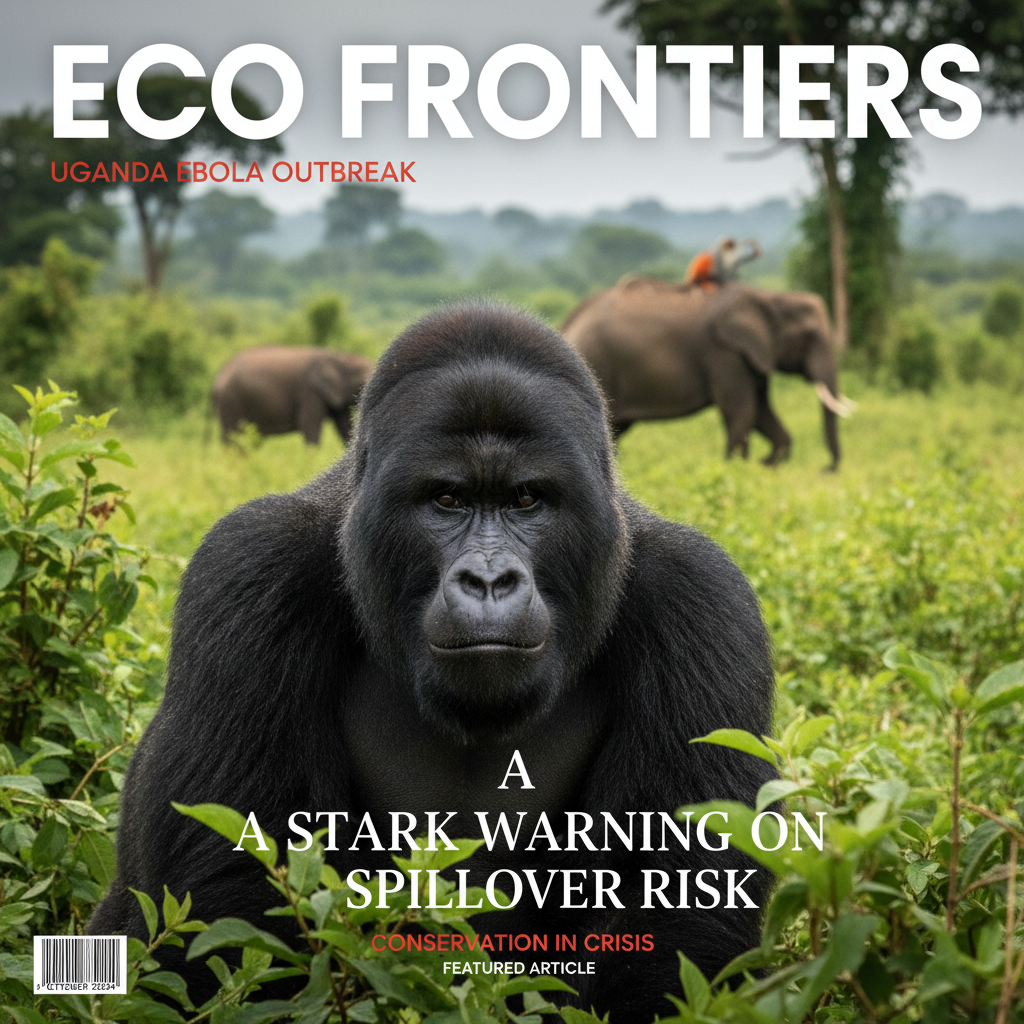
Uganda Ebola Outbreak: A Stark Warning on Spillover Risk
Key Takeaways
- A rare Ebola strain in Uganda highlights the persistent threat of virus spillover.
- No specific vaccine or cure exists for the Bundibugyo ebolavirus strain.
- Human encroachment on wildlife habitats increases the risk of new diseases emerging.
- This crisis emphasizes the vital importance of global conservation efforts for public health security.
A recent Ebola outbreak in western Uganda serves as a chilling reminder of the delicate balance between human civilization and the natural world. This isn't just about a localized health crisis; it's a potent signal, amplifying global concerns about how our increasing encroachment into wild spaces directly fuels the risk of devastating zoonotic diseases.
TL;DR: Key Facts
- Western Uganda is experiencing an outbreak of Bundibugyo ebolavirus, a rare strain of Ebola.
- There is currently no vaccine or cure specifically for this particular ebolavirus species.
- The outbreak underscores long-standing, systemic risks of viruses crossing from wildlife to humans.
- Authorities are racing to contain the spread in a region bordering the Democratic Republic of Congo (DRC).
What Happened
In the hilly landscapes and bustling trading centers of western Uganda, near the Democratic Republic of Congo border, health authorities are grappling with an outbreak of the Bundibugyo ebolavirus. This particular species of Ebola is considered rare, and critically, there is no existing vaccine or specific cure available to combat it. The number of suspected cases in the neighboring DRC is rapidly increasing, signaling a broader regional concern.
The immediate focus is on limiting the spread of this highly virulent pathogen. However, beyond the urgent public health response, the outbreak has drawn significant attention to a more profound and persistent issue: the long-standing risks of virus spillover from wildlife to human populations. This incident is not an isolated phenomenon but rather a stark indicator of the ongoing challenges faced at the human-wildlife interface.
Why It Matters
This Ebola outbreak transcends a mere medical emergency; it’s a profound ecological alarm bell. It shines a harsh light on the intrinsic connection between ecosystem health and human well-being. When we degrade natural habitats through deforestation, agricultural expansion, or unchecked resource extraction, we push wildlife closer to human settlements. This increased proximity dramatically heightens the chances for pathogens to jump species, creating conditions ripe for zoonotic spillover events like Ebola.
The absence of a vaccine or cure for this specific Bundibugyo strain underscores our vulnerability and the unpredictability of nature's response to anthropogenic pressures. It's a clear illustration that our actions in one part of the world, particularly concerning land use and biodiversity, can have devastating global consequences. For GreenNest Living readers, this isn't just news from a distant land; it's a crucial case study emphasizing why protecting intact ecosystems and promoting sustainable coexistence with wildlife is not just an environmental imperative, but a matter of human survival and global security.
What You Can Do
Here’s an actionable checklist for GreenNest Living readers to make a difference:
- Support Conservation Efforts: Donate to or volunteer with organizations dedicated to protecting biodiverse habitats and promoting sustainable land management in regions prone to spillover events.
- Educate Yourself and Others: Learn more about zoonotic diseases, the human-wildlife interface, and how environmental degradation contributes to public health crises. Share this knowledge responsibly.
- Advocate for Policy Change: Contact your elected officials to support policies that promote sustainable development, halt deforestation, and fund wildlife conservation and disease surveillance programs globally.
- Choose Sustainable Products: Opt for products with certified sustainable sourcing to reduce demand for resources that contribute to habitat destruction, like illegally logged timber or unsustainably farmed goods.
- Practice Responsible Tourism: If traveling, choose eco-friendly tour operators that respect wildlife, local communities, and support conservation initiatives, minimizing your footprint.
- Reduce Your Carbon Footprint: Climate change can alter ecosystems, driving species migration and increasing disease transmission risks. Sustainable lifestyle choices contribute to mitigating this.
Ciro's Take
As an environmental advocate, seeing news like the Ugandan Ebola outbreak sends a shiver down my spine, not just for the immediate human toll, but for what it represents: a stark, undeniable warning from our planet. This isn't just about a virus; it's about the profound consequences of our relentless push into wild spaces, our disregard for biodiversity, and the interconnectedness of all life. It’s a painful reminder that nature will always find a way to rebalance, and sometimes, that rebalancing manifests as a global health crisis. My passion for a greener, more sustainable world isn't just about aesthetics; it's about survival. We must recognize these outbreaks as critical feedback loops, urging us to listen to the whispers of our ecosystems before they erupt into thunderous roars.
FAQs
Q: What is 'virus spillover'?
A: Virus spillover, or zoonotic spillover, occurs when a pathogen (like a virus) that typically circulates within animal populations successfully jumps from its animal host to infect a human host.
Q: Why is Bundibugyo ebolavirus particularly concerning?
A: It's concerning because it's a rare strain of Ebola, for which there is currently no specific vaccine or cure, making containment and treatment efforts significantly more challenging compared to more common strains.
Q: How does habitat destruction contribute to disease spillover?
A: When habitats are destroyed or fragmented, wildlife is displaced and often forced into closer contact with human settlements. This increased interaction creates more opportunities for pathogens to cross the species barrier from animals to humans.
Sources
This article is based on reporting by Mongabay.
Original source
Mongabay
Author, Digital Entrepreneur & AI Creator
More from Wildlife & Nature News
- Celestial Dance: Moon & Venus Grace Earth's Skies — May 26, 2026
- Nagaland's Ancient Wisdom: A Lifeline for Endangered Pangolins — May 25, 2026
- Moon Rocks to Resources: NASA's Innovation for Sustainable Space Living — May 24, 2026
- Zoo Breach in Japan: Rethinking Human-Wildlife Boundaries — May 23, 2026