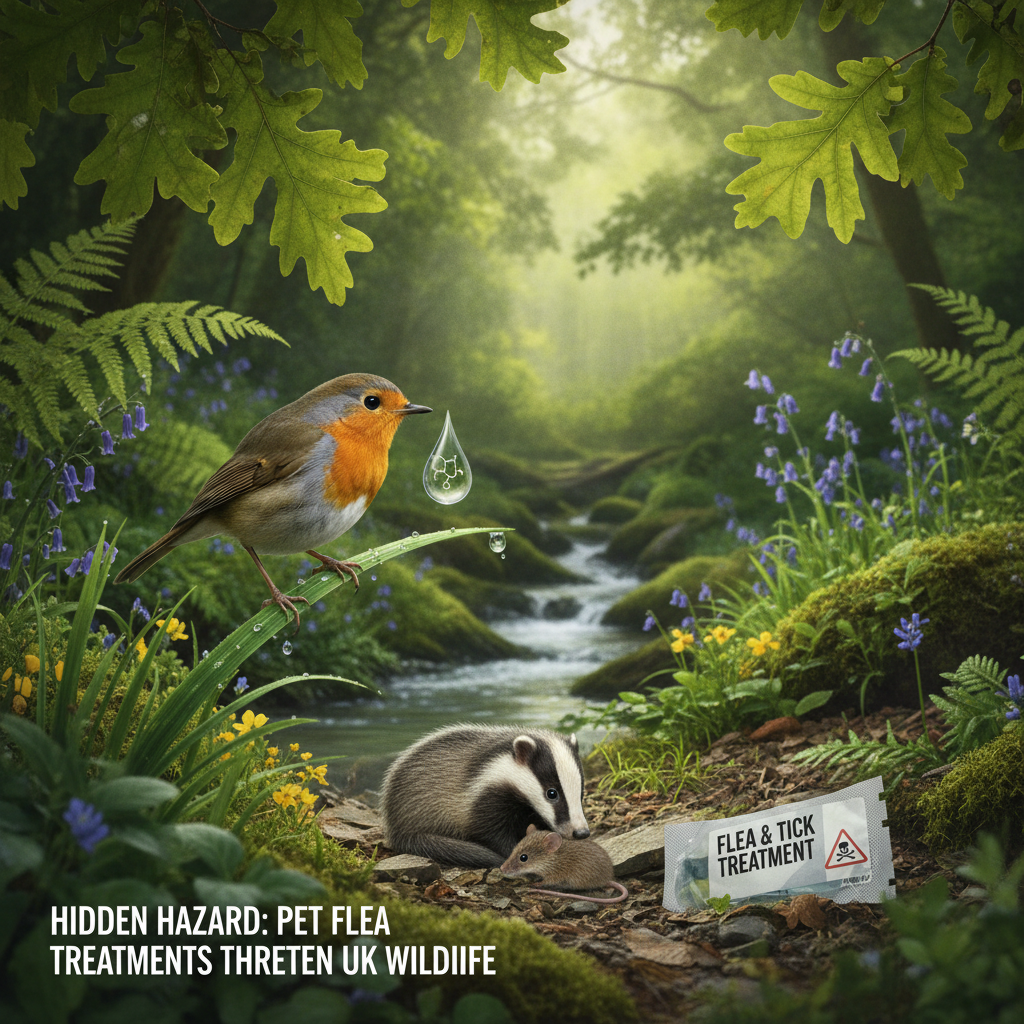
Hidden Hazard: Pet Flea Treatments Threaten UK Wildlife
Key Takeaways
- Pet flea treatments contain toxic insecticides fipronil and imidacloprid.
- A UK study reveals these chemicals are devastating wildlife in natural habitats.
- Government action is urged to limit the use of these harmful pet products.
- The contamination impacts aquatic life and potentially broader ecosystems.
- Fipronil and imidacloprid are also linked to lower cognitive scores in children.
Hidden Hazard: Pet Flea Treatments Threaten UK Wildlife
Our beloved pets bring immense joy, but a recent UK study sheds light on a hidden danger lurking in their routine care: common flea and tick treatments. This news demands immediate attention because the very products we use to protect our furry companions are now implicated in the widespread poisoning of rivers, parks, and precious conservation areas, impacting wildlife and potentially human health.
TL;DR: Key Facts
- Common pet flea treatments contain highly toxic insecticides: fipronil and imidacloprid.
- A UK study indicates these chemicals are devastating wildlife in rivers, parks, and protected areas.
- Conservationists and scientists are urging the government to take urgent action to limit their use.
- The chemicals' impact extends to aquatic invertebrates, insects, and potentially the wider food chain.
- Fipronil and imidacloprid have also been linked to lower cognitive scores in children with autism, raising broader public health concerns.
What Happened
A recent study from the UK has issued a stark warning regarding the environmental impact of widely used pet flea and tick treatments. The chemicals in question, fipronil and imidacloprid, are potent insecticides designed to kill parasites on pets. However, the study highlights that these substances are not staying put. They are leaching into the environment, contaminating rivers, public parks, and even designated special conservation areas across the UK.
The findings point to a devastating effect on local wildlife, particularly aquatic invertebrates and insects, which form the base of many food chains. This widespread contamination threatens biodiversity and ecosystem health. Experts and conservation groups are now calling for urgent intervention from the government, advocating for stricter regulations and a significant reduction in the use of these particular chemicals in pet care products.
Adding another layer of concern, the report also touches upon potential human health implications. Fipronil and imidacloprid have been implicated in studies linking them to lower cognitive scores in children with autism, underscoring the broad-reaching and insidious nature of chemical pollution that can impact both our natural world and vulnerable human populations.
Why It Matters
This revelation transforms a seemingly innocuous aspect of pet ownership into a critical environmental issue. For GreenNest Living readers, it underscores how deeply interconnected our daily choices are with the health of the planet, particularly concerning wildlife and nature. The widespread contamination by fipronil and imidacloprid is not merely an isolated incident; it represents a significant threat to biodiversity, particularly to insect populations that are already under immense pressure globally. Insects are vital pollinators, decomposers, and a fundamental food source for birds, bats, and fish, meaning their decline has cascading effects throughout entire ecosystems.
The chemicals' presence in rivers and conservation areas is particularly alarming. Aquatic environments are highly sensitive to pollution, and the persistent nature of these insecticides means they can accumulate, affecting everything from microscopic organisms to larger predators. This hidden pollution illustrates a pervasive problem where consumer convenience can inadvertently contribute to environmental degradation. It challenges us to look beyond immediate solutions and consider the broader ecological footprint of everyday products, demanding greater transparency, innovation, and responsibility from manufacturers and regulators alike.
What You Can Do
- Research Alternatives: Explore natural, physical, or less toxic flea and tick prevention methods. Consult with your veterinarian about safe and effective options, including oral medications or natural repellents.
- Proper Disposal: Never wash flea-treated pets in natural waterways. If washing at home, ensure the water drains into the sewage system, not directly into stormwater drains. Dispose of packaging and unused products responsibly according to local guidelines.
- Engage Your Vet: Discuss your concerns with your veterinarian. Ask them about the environmental impact of the treatments they prescribe and inquire about eco-friendlier alternatives.
- Support Advocacy: Back organizations campaigning for stricter regulations on pesticides in pet products. Your voice and financial support can drive policy change.
- Spread Awareness: Share this information with fellow pet owners, friends, and family. Educate them on the risks and encourage them to explore safer alternatives for their pets and the environment.
- Monitor Your Pet's Health: Be observant of your pet's health and reactions to any treatment. Report adverse effects to your vet and relevant regulatory bodies.
Ciro's Take
As an environmental advocate, news like this hits hard because it exposes the insidious ways in which our well-intentioned actions can inadvertently harm the very nature we strive to protect. It's a stark reminder that 'out of sight, out of mind' is a dangerous philosophy when it comes to chemical use. The idea that products designed for pet welfare are silently poisoning our waterways and impacting wildlife, and potentially even human children, is profoundly unsettling. It underscores the urgent need for a 'precautionary principle' in product development and regulation, demanding that we thoroughly understand the full life-cycle impact of chemicals before they become commonplace. This isn't just about fleas; it's about our collective responsibility to safeguard the delicate balance of life on Earth, starting with the choices we make for our closest companions.
FAQs
Q: What are fipronil and imidacloprid?
A: Fipronil and imidacloprid are broad-spectrum insecticides commonly used in many topical and oral pet flea and tick treatments. They work by targeting the nervous systems of insects and other invertebrates.
Q: How do these chemicals get into the environment?
A: These chemicals can enter the environment through several pathways, including when treated pets swim in or are washed near waterways, or through pet waste that contains residues of the chemicals.
Q: Are there safe or more environmentally friendly alternatives for pet flea control?
A: Yes, there are often less harmful alternatives available, ranging from oral medications that are less likely to leach into the environment to physical removal methods, flea combs, and natural repellents. Always consult your veterinarian to find the safest and most effective option for your pet and local environmental conditions.
Sources
This article is based on reporting by The Guardian Environment.
Original source
The Guardian Environment
Author, Digital Entrepreneur & AI Creator
More from Wildlife & Nature News
- Tourist Arrest in Monkey Enclosure: A Call for Respect — May 20, 2026
- Tourist Enclosure Breach: A Call for Wildlife Respect — May 20, 2026
- Green Energy's Dark Side: Indonesia's Nickel Boom Fallout — May 19, 2026
- NASA's Evolving Nightscape: Wildlife Stakes in Earth's New Light Map — May 18, 2026