Urgent Climate Watch: Satellite Uncovers El Niño Precursor
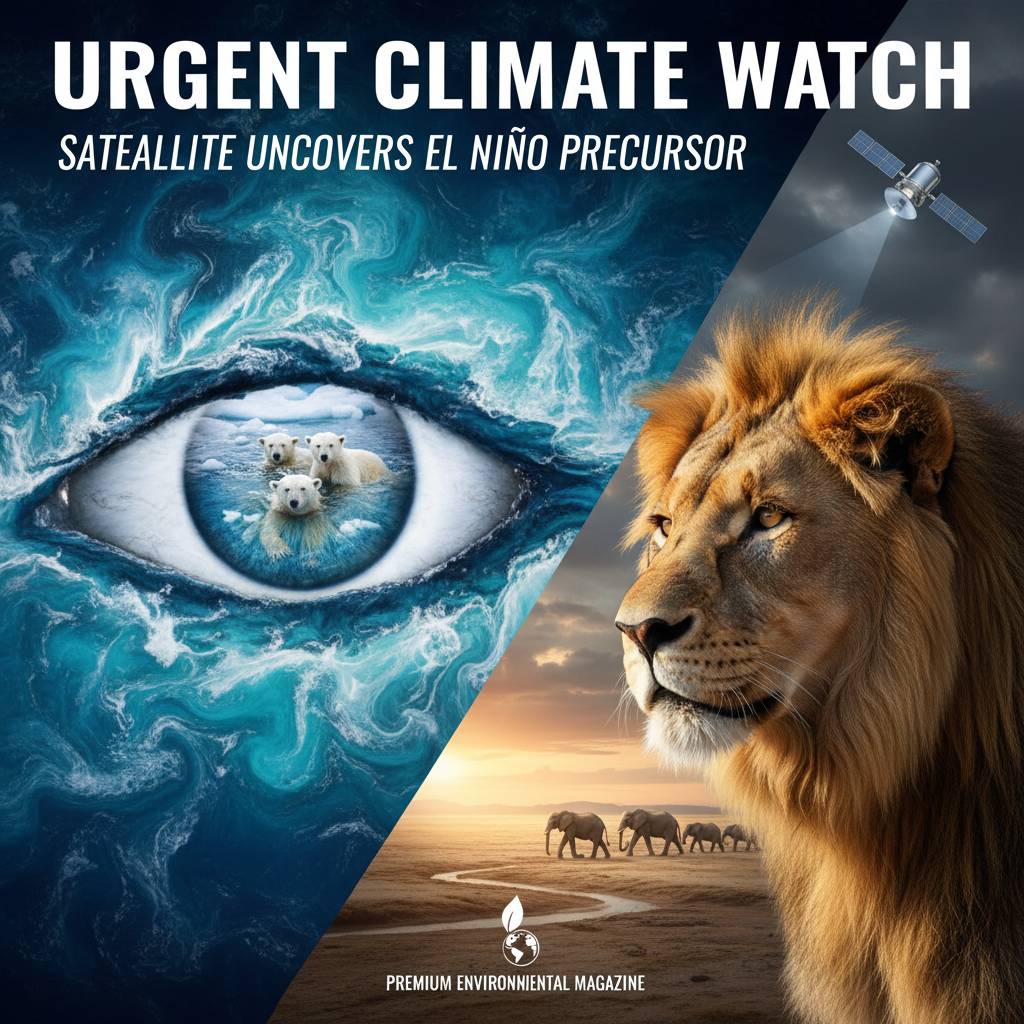
Key Takeaways
- NASA's Sentinel-6 satellite observed a warm Kelvin wave in the Pacific.
- This eastward-moving wave is a known precursor to El Niño.
- Data from March to May 2026 revealed higher, warmer water.
- The phenomenon can significantly impact global weather and ecosystems.
- Early detection allows for better preparedness and mitigation strategies.
A critical early warning has emerged from space, courtesy of NASA's Sentinel-6 Michael Freilich satellite. This vital observation signals a potential El Niño event, a global climate phenomenon with profound implications for ecosystems, weather patterns, and human societies worldwide. Understanding this precursor now is paramount for proactive environmental stewardship and community resilience.
TL;DR: Key Facts
- NASA's Sentinel-6 Michael Freilich satellite observed a 'warm Kelvin wave' in the Pacific Ocean.
- The data, collected from March to May 2026, showed higher, warmer water moving eastward.
- This eastward movement stretches from the western Pacific to the coasts of Colombia, Ecuador, and Peru.
- A warm Kelvin wave is a significant indicator and precursor to an El Niño event.
- Early detection provides crucial time for global communities to prepare for potential climate shifts.
What Happened
The international Sentinel-6 Michael Freilich satellite, a joint mission focused on precisely measuring sea level, has identified a significant oceanographic event: a 'warm Kelvin wave.' Between March and May 2026, the satellite’s altimeter data revealed a distinct band of higher, warmer water migrating across the Pacific.
This oceanic anomaly originated in the western Pacific and has been steadily moving eastward, reaching the eastern tropical Pacific, specifically off the coastlines of Colombia, Ecuador, and Peru. Scientists consider the presence and movement of such a warm Kelvin wave a key precursor to the onset of an El Niño phenomenon, signaling a shift in oceanographic conditions that often precedes broader atmospheric changes.
Why It Matters
For GreenNest Living readers, this isn't just a scientific observation; it's a critical early warning for our planet's wildlife and nature. El Niño events are known to trigger a cascade of environmental impacts globally. In marine ecosystems, warmer waters can lead to coral bleaching, alter fish migration patterns, and disrupt food chains, threatening species from plankton to apex predators. On land, El Niño can exacerbate droughts in some regions, leading to increased wildfire risk, water scarcity, and agricultural failure, while causing heavy rainfall and flooding in others, devastating habitats and displacing wildlife.
The ability of satellites like Sentinel-6 to detect these precursors provides an invaluable window for preparation. Early warnings allow communities to bolster flood defenses, conserve water resources, prepare for potential crop failures, and develop strategies to protect vulnerable wildlife populations. This underscores the crucial role of advanced Earth observation technology in our fight to understand and adapt to a changing climate, making scientific data a direct tool for environmental conservation and human resilience.
What You Can Do
- Stay Informed: Follow reputable climate science sources like NASA, NOAA, and regional meteorological agencies for El Niño updates and localized forecasts.
- Reduce Your Carbon Footprint: Advocate for and adopt sustainable practices that help mitigate climate change, the underlying factor influencing the intensity and frequency of such events.
- Support Climate Research: Contribute to or advocate for funding for satellite missions and climate science, which are vital for early detection and prediction.
- Prepare Your Home and Community: Understand local climate risks (drought, flood, wildfire) and take proactive steps to prepare, such as conserving water, securing property, and participating in local resilience planning.
- Practice Water Conservation: Regardless of your local forecast, El Niño often brings regional water stress. Adopt water-saving habits at home and in your garden.
- Protect Local Ecosystems: Support initiatives that restore and protect local natural habitats, which can act as buffers against extreme weather events.
Ciro's Take
As an environmental advocate, news like this fills me with both concern and a profound sense of purpose. The detection of an El Niño precursor isn't just a weather forecast; it's a stark reminder of Earth's intricate, delicate balance and how closely our lives are tied to its rhythms. It highlights the indispensable value of space-based observation – literally, looking down on Earth from above – to protect the life teeming below. This isn't just about science; it's about our collective responsibility to listen to what our planet is telling us, to prepare, and to protect. It reaffirms my belief that robust scientific endeavor, coupled with global cooperation, is our best hope for safeguarding our natural world and ensuring a resilient future for all species.
FAQs
Q: What exactly is El Niño?
A: El Niño is a climate pattern that describes the unusual warming of surface waters in the eastern tropical Pacific Ocean. It is the warm phase of the larger El Niño-Southern Oscillation (ENSO) climate pattern and can lead to significant changes in weather patterns worldwide, including altered rainfall, temperatures, and storm activity.
Q: How does a 'warm Kelvin wave' relate to El Niño?
A: A warm Kelvin wave is a subsurface oceanic wave that carries warm water eastward across the Pacific. When these waves reach the eastern Pacific, they can bring warmer water to the surface, contributing to the warming conditions characteristic of an El Niño event and often signaling its onset.
Q: How accurate are satellite predictions for El Niño?
A: Satellite data, particularly from sea level altimeters like Sentinel-6, significantly enhance the accuracy of El Niño predictions. By precisely measuring sea surface height and temperature anomalies, scientists can track the development of precursors like Kelvin waves, improving the lead time and reliability of forecasts compared to traditional methods alone.
Sources
This article is based on reporting by NASA Breaking News.
Original source
NASA Breaking News
Author, Digital Entrepreneur & AI Creator
More from Wildlife & Nature News
- Typhoon Jangmi: Japan Braces for Deluge, Ecosystems Under Threat — June 3, 2026
- Rewilding Works: Somerset Farm Rebounds with Nature's Help — June 2, 2026
- Stopping the Steal: Brazil's Golden Monkeys Under Threat — June 1, 2026
- Roman Space Telescope: New Cosmic Eye, Earth's Priceless Value — May 31, 2026