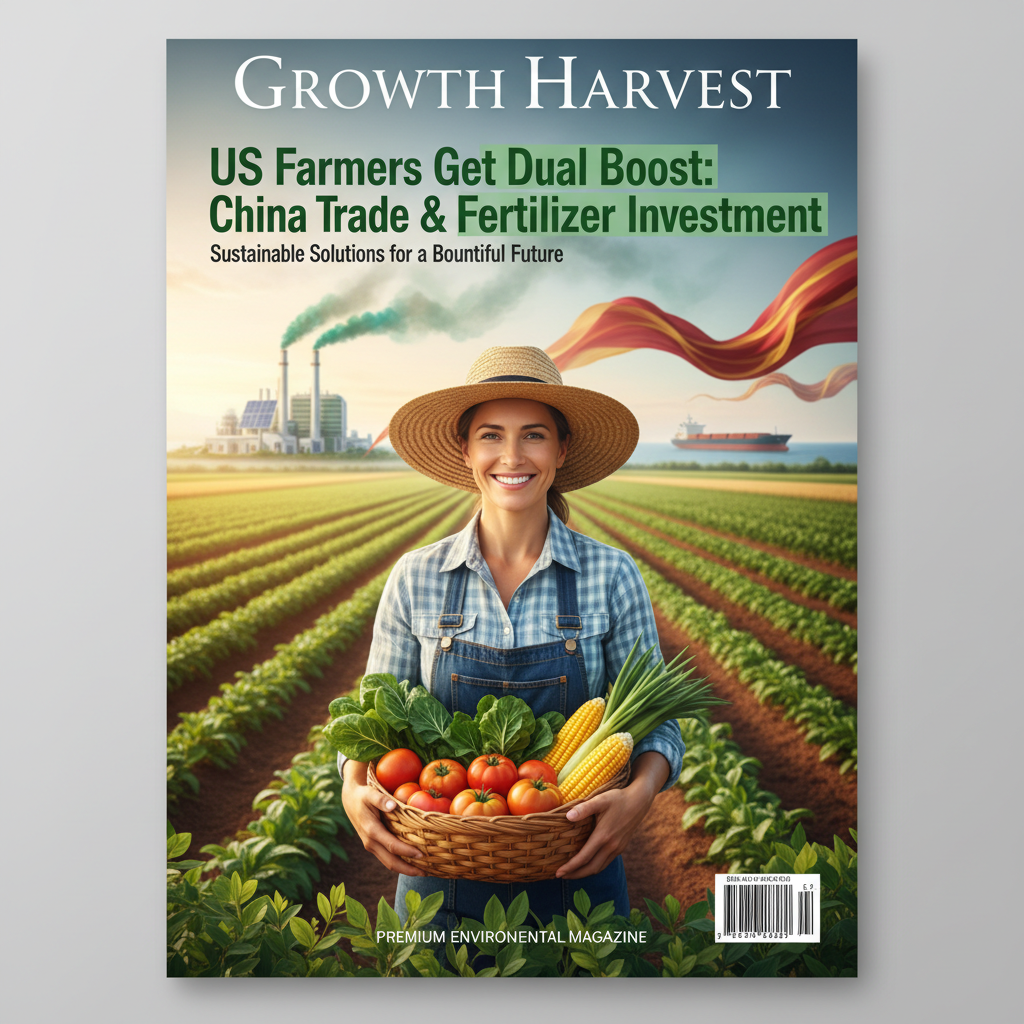
US Farmers Get Dual Boost: China Trade & Fertilizer Investment
Key Takeaways
- U.S. government announced policies to support farmers.
- China committed to purchasing $17 billion in U.S. agricultural goods.
- Domestic fertilizer production will be expanded.
- Aims to address farmer challenges and boost food security.
- Policies blend economic stability with environmental considerations for agriculture.
Farmers are the backbone of our food system, yet they constantly face economic headwinds and global market shifts. This week, the U.S. government announced significant measures to bolster agricultural stability and production, directly impacting both the wallets of our farmers and the future of our food supply.
TL;DR: Key Facts
- The U.S. government announced two major initiatives to support farmers.
- A new trade agreement will see China purchase at least $17 billion in U.S. agricultural goods.
- The U.S. plans to significantly expand domestic fertilizer production.
- These efforts aim to address ongoing economic difficulties faced by American farmers.
- The overarching goal is to enhance both economic stability for farmers and national food security.
What Happened
U.S. officials made two significant announcements this week, both geared towards addressing the persistent challenges confronting American farmers. First, a new trade agreement was forged with China, in which the Asian nation has committed to purchasing a minimum of $17 billion in U.S. agricultural products. This deal aims to expand market access and provide a vital economic boost to the agricultural sector.
Concurrently, the U.S. government also unveiled plans to increase domestic fertilizer production. This initiative seeks to reduce reliance on foreign supply chains, which have proven volatile and subject to global disruptions, ensuring a more stable and affordable supply of this crucial agricultural input for farmers across the nation.
Why It Matters
These dual policy announcements carry substantial implications for both the economic health of American agriculture and the environmental landscape. From an economic standpoint, securing a $17 billion trade deal with China offers a much-needed market for U.S. agricultural goods. This can translate to more stable prices for farmers, reduced surpluses, and a stronger economic foundation for rural communities. Reducing reliance on foreign fertilizer suppliers by boosting domestic production addresses a critical vulnerability in our food system, making it more resilient against geopolitical shifts, supply chain disruptions, and price volatility, all of which directly affect farmers' profitability and, ultimately, food prices for consumers.
However, the environmental implications of these policies are equally important for GreenNest Living readers. While a stable fertilizer supply is crucial for food production, increased domestic production requires careful scrutiny. The manufacturing of synthetic fertilizers is energy-intensive and can contribute to greenhouse gas emissions. Furthermore, the increased availability, if not managed alongside sustainable agricultural practices, could exacerbate issues like nutrient runoff into waterways, leading to algal blooms and ecological damage. The conversation must shift from merely increasing production to fostering environmentally responsible production and application methods.
Ultimately, these initiatives highlight a strategic effort to balance economic stability and national security within the agricultural sector. For GreenNest Living readers, it underscores the intricate relationship between global trade, domestic policy, and environmental stewardship. How these policies are implemented—with or without a strong emphasis on sustainability and ecological protection—will determine their long-term impact on both our food system and the planet.
What You Can Do
- Stay Informed: Educate yourself on agricultural trade policies, fertilizer production methods, and their environmental impacts.
- Support Local & Sustainable: Prioritize purchasing from local farmers and businesses that employ sustainable farming practices to reduce reliance on large-scale industrial agriculture.
- Advocate for Green Agriculture: Contact your elected officials to support policies that incentivize regenerative agriculture, reduce fertilizer runoff, and invest in eco-friendly farming technologies.
- Reduce Your Food Waste: Minimize your household food waste, as this lessens the overall demand pressure on agricultural production and its associated environmental footprint.
- Consider Composting: Start composting organic waste at home to create nutrient-rich soil, reducing the need for synthetic fertilizers in your own gardening.
- Learn About Food Labels: Familiarize yourself with certifications that indicate environmentally responsible farming or local sourcing.
Ciro's Take
As an environmental advocate, I view these announcements with a mix of optimism and caution. On one hand, securing markets for our farmers and bolstering domestic production is vital for food security and economic resilience. It reduces our vulnerability to global shocks, which is a clear win. However, increasing fertilizer production, while addressing a critical supply chain issue, demands rigorous environmental safeguards. We must ensure this doesn't lead to unchecked pollution or a regression on sustainable agricultural practices. The true win for the environment will come when these economic boosts are inextricably linked with ecological responsibility, driving innovation towards regenerative farming rather than simply more of the same. This is where our advocacy needs to focus.
FAQs
Q: How will the China trade deal specifically help U.S. farmers?
A: The agreement secures a commitment from China to purchase at least $17 billion in U.S. agricultural goods, providing a significant market and boosting export opportunities for American farmers, which can stabilize prices and incomes.
Q: What are the environmental concerns related to increased fertilizer production?
A: Expanded fertilizer production can lead to increased energy consumption (for synthesis), higher greenhouse gas emissions, and potential water pollution from nutrient runoff into waterways if not managed with strict environmental regulations and sustainable application practices.
Q: How does this initiative compare to previous efforts to support farmers?
A: This initiative combines market access through international trade with strengthening domestic input production, offering a dual approach to farmer support. It places a notable emphasis on supply chain resilience and reducing foreign dependency, lessons learned from recent global disruptions affecting agricultural inputs.
Sources
This article is based on reporting by Civil Eats.
Original source
Civil Eats
Author, Digital Entrepreneur & AI Creator
More from Food & Environment
- EPA Reverses PFAS Limits in Drinking Water: What It Means For You — May 21, 2026
- Pantry Power: Common Foods Boost Heart Health, Budget, Planet — May 20, 2026
- YumLit: Fun Mealtimes Fuel the Fight Against Food Insecurity — May 19, 2026
- Chocolate Recall: Critical Warnings Missing on 10,000 lbs — May 18, 2026