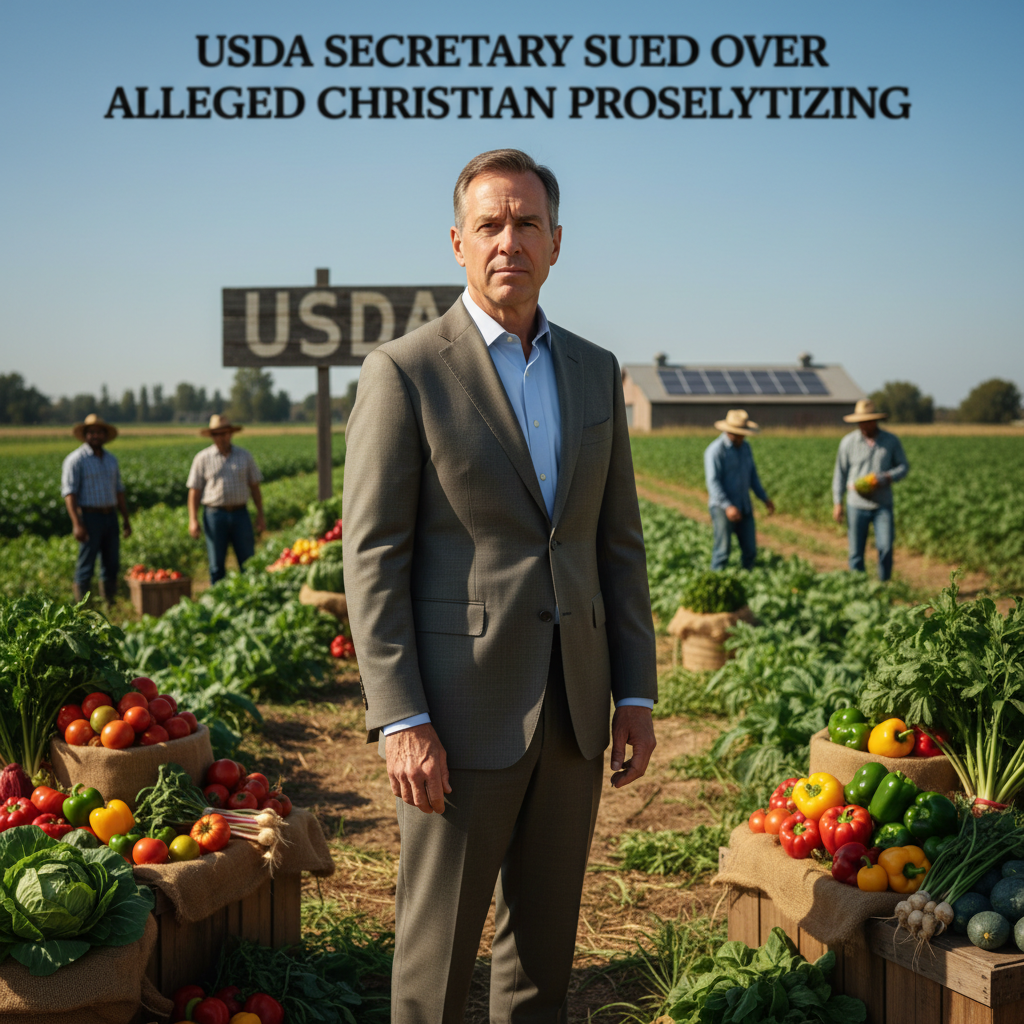
USDA Secretary Sued Over Alleged Christian Proselytizing
Key Takeaways
- USDA Secretary Brooke Rollins is being sued by agency employees.
- The lawsuit alleges an “escalating pattern” of Christian proselytizing.
- Plaintiffs claim this violates the First Amendment's separation of church and state.
- The suit raises concerns about impartiality within a critical federal agency.
- Rollins has reportedly shown no sign of relenting on the alleged messaging.
In an alarming development for federal oversight and the principles of secular governance, employees of the U.S. Department of Agriculture (USDA) have launched a lawsuit against Secretary Brooke Rollins. This legal action, filed on May 14, 2026, alleges a severe breach of the First Amendment, accusing Secretary Rollins of an “escalating pattern of subjecting all USDA employees to proselytizing Christian messaging.” Such allegations, if proven, could have profound implications for the integrity and functionality of one of the nation’s most vital agencies concerning food, agriculture, and environmental stewardship.
For GreenNest Living readers, this isn't just a political squabble; it's a direct challenge to the impartial, science-based decision-making essential for a sustainable future. When the leadership of a foundational agency like the USDA faces accusations of religious coercion, it begs the question of whether its core mission – serving all Americans and protecting our natural resources – can remain untainted and unbiased.
TL;DR: Key Facts
- USDA Secretary Brooke Rollins is being sued by agency employees.
- The lawsuit, filed on May 14, 2026, alleges an “escalating pattern” of Christian proselytizing.
- Employees claim this conduct violates the First Amendment, which ensures the separation of church and state.
- The action raises serious concerns about the impartiality and professionalism within a crucial federal agency.
- Secretary Rollins has reportedly shown no sign of relenting on the alleged messaging.
What Happened
On Wednesday, May 14, 2026, employees of the U.S. Department of Agriculture initiated a lawsuit against Secretary of Agriculture Brooke Rollins. The core of their complaint centers on an alleged “escalating pattern of subjecting all USDA employees to proselytizing Christian messaging.” This conduct, according to the plaintiffs, constitutes a violation of the First Amendment of the U.S. Constitution, which prohibits the government from establishing a religion and protects individuals' freedom of religion from government interference, including in the workplace.
The lawsuit underscores a fundamental tension when personal religious beliefs intersect with public office, especially within an institution as far-reaching and impactful as the USDA. The plaintiffs contend that Secretary Rollins' actions have created an environment where employees are subjected to religious messages, thereby infringing upon their rights and potentially compromising the secular nature required for federal service. The news snippet indicates that, despite these allegations, Secretary Rollins has given no indication that she plans to alter her approach.
Why It Matters
For readers of GreenNest Living, this lawsuit against the USDA Secretary is far more than an internal government squabble; it strikes at the heart of how our food systems and environmental policies are governed. The USDA is not merely an agricultural department; it's a critical pillar for food safety, nutrition programs, land management, conservation efforts, and climate resilience initiatives. Its decisions impact everything from the food on our plates to the health of our ecosystems.
When the leadership of such a pivotal agency faces allegations of religious proselytization, it raises serious questions about impartiality. The USDA's mission must be driven by scientific evidence, public health concerns, and environmental stewardship, not by personal religious agendas. A perceived lack of neutrality at the top can erode public trust, foster an exclusive work environment, and potentially bias policy formulation away from objective, evidence-based solutions towards those that align with specific religious doctrines. This could derail progress on sustainable agriculture, climate adaptation strategies, and equitable food access – areas where GreenNest Living readers seek progress and depend on secular, expert guidance.
Furthermore, the integrity of federal institutions is paramount for effective governance. If employees feel compelled to endure religious messaging or fear repercussions for not conforming, it undermines morale, diversity, and the overall capacity of the agency to execute its complex, multifaceted mission. A compromised USDA is a less effective USDA, and that directly impacts every citizen, every farmer, and every acre of land and water that falls under its purview. This lawsuit forces us to examine the foundational principles guiding our government's approach to the environment and food security.
What You Can Do
This situation highlights the importance of vigilant citizenship and advocating for secular governance within our federal institutions. Here’s what GreenNest Living readers can do:
- Stay Informed: Follow reliable news sources for updates on this lawsuit and similar issues affecting government agencies. Understanding the facts is the first step.
- Support Secular Governance: Advocate for the strict separation of church and state in all government operations. This ensures that public policy, including food and environmental regulations, is based on scientific evidence and public good, not religious doctrine.
- Contact Your Representatives: Express your concerns to your elected officials regarding the conduct of federal agency leadership and the importance of maintaining impartiality and professional standards at the USDA.
- Promote Inclusive Workplaces: Champion environments, whether in government or private sectors, that are free from religious coercion, fostering diversity, respect, and merit-based decision-making.
- Demand Science-Based Policy: Reinforce the expectation that all decisions impacting agriculture, food systems, and the environment are rooted in robust scientific research and data, free from personal biases.
Ciro's Take
As an environmental advocate, news like this deeply troubles me because it strikes at the heart of trust and impartiality within institutions crucial for our planet's future. The USDA is meant to be a pillar of scientific research, sustainable agricultural practices, and equitable food access – a mission that demands unwavering focus and secular leadership. Any hint that personal religious agendas are influencing or even permeating the agency's operations is a red flag for environmental progress. Our food systems and natural resources are too vital to be subjected to anything less than objective, data-driven stewardship. This lawsuit is a stark reminder that even the integrity of our federal agencies needs constant safeguarding to ensure they can truly serve the public and protect our shared environment.
FAQs
Q: What is the First Amendment's role in this lawsuit?
A: The First Amendment guarantees freedom of religion but also prohibits the government from establishing a religion. This means government officials cannot endorse or coerce religious beliefs, especially within public workplaces, as it violates the rights of employees to be free from religious favoritism or pressure.
Q: How might this lawsuit affect the USDA's environmental and food policies?
A: While the lawsuit isn't directly about policy decisions, allegations of religious proselytization at the highest level can undermine the agency's credibility, divert focus, and create an environment where science-based policymaking is potentially compromised. An impartial USDA is crucial for developing and implementing effective, equitable, and sustainable food and environmental policies.
Q: Can federal employees sue their agency head?
A: Yes, federal employees can sue their agency head or the agency itself for various reasons, including violations of constitutional rights (like the First Amendment), discrimination, or other breaches of employment law. Such lawsuits are a mechanism for accountability within the federal government.
Sources
This article is based on reporting by Civil Eats.
Original source
Civil Eats
Author, Digital Entrepreneur & AI Creator
More from Food & Environment
- Gardening: A Neurosurgeon's Secret to Longevity & Well-being — May 13, 2026
- Farm to School: Nourishing Kids, Cultivating Community Growth — May 12, 2026
- High-Risk Cheese Outbreak: FDA Alert Amid E. coli Fears — May 11, 2026
- Are Your 'Healthy' Foods Truly Nutritious? New Study Investigates — May 10, 2026