Water Bankruptcy: Why Our Food Systems Must Adapt Now
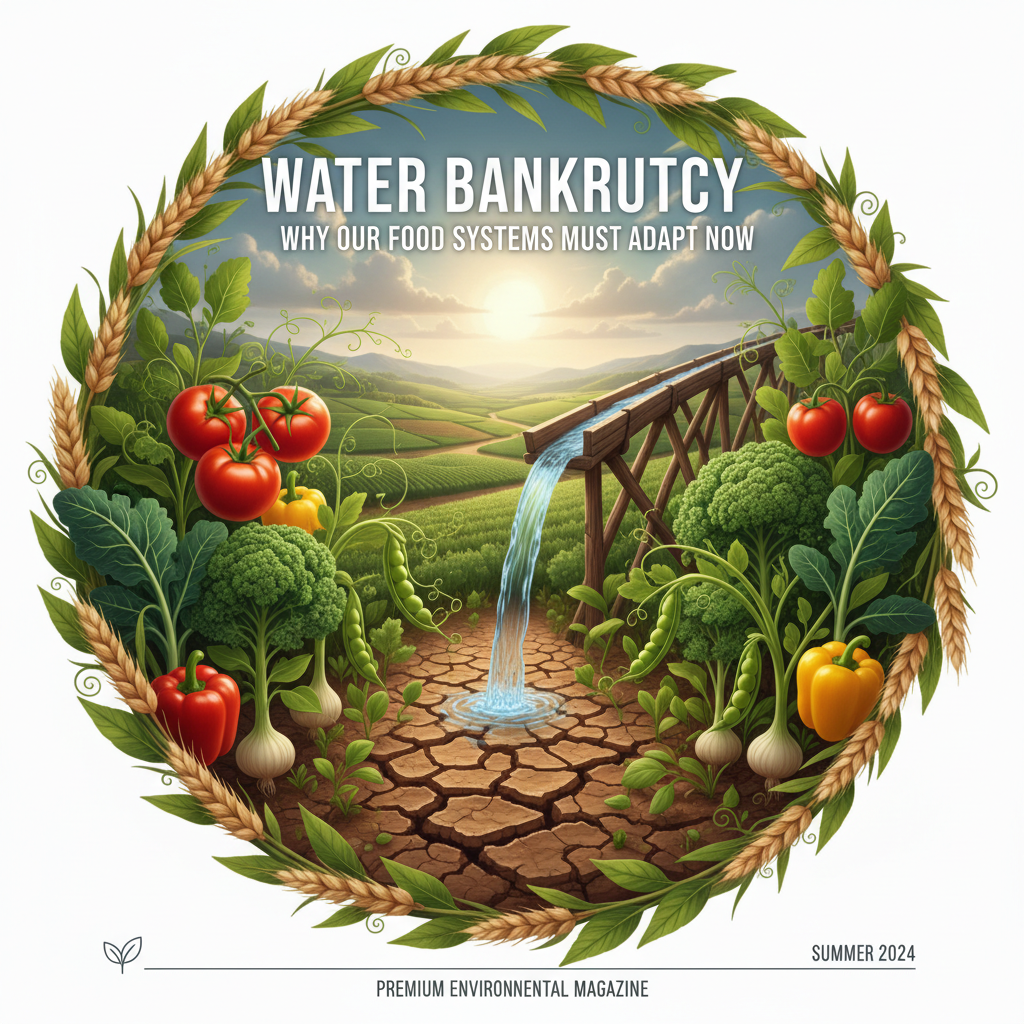
Key Takeaways
- The UN has declared a state of "water bankruptcy" globally.
- Surface waters, glaciers, wetlands, and groundwater are critically depleted.
- This crisis necessitates immediate and significant adaptation within food and agriculture systems.
- Failure to adapt will lead to severe food insecurity and environmental instability.
- Individual and collective actions are crucial for water conservation and sustainable practices.
The recent United Nations report delivers a stark warning: the world is hurtling towards "water bankruptcy." This isn't just an ecological alarm; it's a direct threat to the stability of our food systems and the very sustenance of our communities. For GreenNest Living readers, understanding this impending crisis and its profound implications for how we grow and consume food is paramount.
TL;DR: Key Facts
- A United Nations report declares the world is facing a state of "water bankruptcy."
- Globally, surface waters, glaciers, wetlands, and groundwater are severely depleted.
- This critical situation mandates urgent adaptation in global food and agriculture systems.
- The widespread depletion of freshwater resources threatens global food security and environmental stability.
What Happened
The United Nations recently released a critical report sounding the alarm on a global water crisis, explicitly labeling the current state as "water bankruptcy." This grim declaration highlights the severe depletion of freshwater resources across the planet. The report details how vital surface waters, including rivers and lakes, are shrinking, while glaciers, crucial reservoirs of freshwater, are in retreat.
Furthermore, precious wetlands, which act as natural filters and buffers, have been extensively liquidated, and underground aquifers, our primary source of groundwater, have been dangerously over-extracted. This widespread degradation and depletion of water sources mean that the world's natural water balance is severely out of sync, demanding immediate and drastic changes in how societies, particularly food and agriculture systems, operate to avoid catastrophic collapse.
Why It Matters
For anyone invested in sustainable living, the concept of "water bankruptcy" should send shivers down their spine. Water is the fundamental lifeblood of agriculture; without it, our food systems grind to a halt. This isn't a distant problem for future generations; it's a present reality impacting everything from crop yields and livestock health to food prices and regional conflicts over resources. The report signals that the current methods of food production are unsustainable in the face of dwindling water supplies.
GreenNest Living readers understand the interconnectedness of our planet. This water crisis means rethinking our dietary choices, supporting water-efficient farming practices, and advocating for policies that prioritize water conservation and regeneration. It calls for innovation in food production – from drought-resistant crops to indoor farming – and a collective commitment to valuing every drop. Ignoring this bankruptcy will lead to widespread food insecurity, ecological collapse, and social instability, making proactive adaptation not just an option, but a necessity for a resilient future.
What You Can Do
- Support Water-Smart Agriculture: Seek out and purchase food from farms employing regenerative practices, drip irrigation, or dry farming techniques.
- Reduce Food Waste: Minimize food waste at home, as producing and transporting food is incredibly water-intensive.
- Conserve Water at Home: Implement simple water-saving measures like shorter showers, fixing leaks, and using water-efficient appliances.
- Learn About Your Local Water Source: Understand where your tap water comes from and the challenges it faces. Support local water conservation efforts.
- Advocate for Policy Change: Contact elected officials to push for robust water management policies, infrastructure improvements, and sustainable agricultural subsidies.
- Explore Plant-Forward Diets: While not universally applicable, reducing consumption of water-intensive animal products can contribute to overall water conservation.
Ciro's Take
The UN's declaration of "water bankruptcy" isn't hyperbole; it's a cold, hard truth that demands our attention. As an environmental advocate, I've seen firsthand how easily we take water for granted, yet it's the most precious resource on Earth. This report isn't just about statistics; it's about the future of every meal we eat, every ecosystem we cherish, and the stability of our global community. We must shift from viewing water as an infinite commodity to recognizing it as a finite, precious resource that needs active protection and intelligent management. Our legacy depends on how we respond to this challenge, and it starts with every one of us valuing and conserving every drop.
FAQs
Q: What does "water bankruptcy" actually mean?
It means that globally, we are using freshwater resources faster than they can be naturally replenished, leading to severe depletion of surface waters, glaciers, wetlands, and groundwater.
Q: How does this specifically impact food systems?
Agriculture is the largest consumer of freshwater. Depleted water sources lead to reduced crop yields, increased irrigation costs, potential crop failures, higher food prices, and widespread food insecurity.
Q: Is there any hope for reversing this trend?
Yes, through a combination of policy changes, technological innovation (e.g., desalination, water recycling), sustainable farming practices, and individual conservation efforts, we can work towards water security. Adaptation is key.
Sources
This article is based on reporting by Food Tank, referencing a United Nations report.
Original source
Food Tank
Author, Digital Entrepreneur & AI Creator
More from Food & Environment
- Grocery Refrigerants: Climate Rules Eased, What It Means For You — May 24, 2026
- Cuba's Fuel Shortage Ignites a Food Systems Crisis — May 23, 2026
- US Farmers Get Dual Boost: China Trade & Fertilizer Investment — May 22, 2026
- EPA Reverses PFAS Limits in Drinking Water: What It Means For You — May 21, 2026