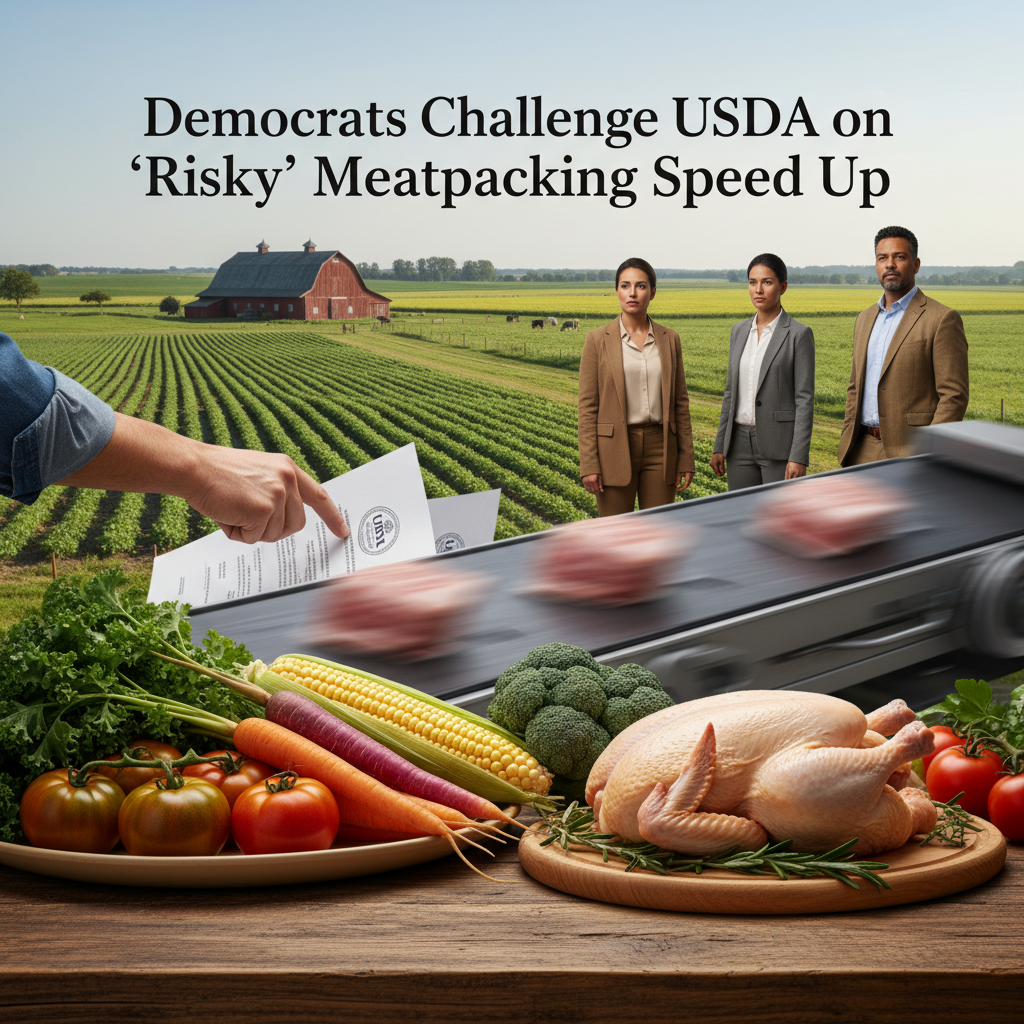
Democrats Challenge USDA on 'Risky' Meatpacking Speed Up
Key Takeaways
- Democrats urge USDA to withdraw proposal for increased meatpacking line speeds.
- Proposed changes affect poultry and pork processing facilities, aiming for permanent speed increases.
- Major concerns cited include worker safety, animal welfare, and potential food contamination risks.
- The proposal represents a broader tension between industrial efficiency and ethical, sustainable food production.
- Consumers have a role in advocating for safer and more humane food system practices.
Our food system is under constant pressure to deliver more, faster, and cheaper. But at what cost? A recent push by Congressional Democrats to halt a USDA proposal to permanently increase line speeds in meatpacking facilities brings critical questions of ethics, safety, and sustainability to the forefront of our dinner tables and beyond.
TL;DR: Key Facts
- Congressional Democrats are challenging the USDA's proposed rule to increase meatpacking line speeds.
- The proposal aims to permanently increase production line speeds at poultry and pork processing plants.
- Opponents cite significant concerns regarding worker safety, animal welfare, and food safety standards.
- The USDA initially proposed these rules in February 2026, building on previous attempts to deregulate line speeds.
- This move is seen as prioritizing industry efficiency over consumer and worker protection.
What Happened
In a significant development, Congressional Democrats are formally requesting that the U.S. Department of Agriculture (USDA) reverse course on a controversial proposed rule. This rule seeks to permanently increase the maximum allowable line speeds at both poultry and pork processing facilities across the nation. The USDA initially put forth these proposed changes in February 2026.
The pushback from lawmakers stems from deep-seated concerns that accelerating these production lines would exacerbate existing issues within the meatpacking industry. Critics argue that higher speeds directly compromise the safety of workers, who already face some of the highest injury rates in any sector. Furthermore, there are serious implications for animal welfare, as faster lines can lead to increased stress and mishandling of animals.
Beyond human and animal well-being, the proposal also raises red flags for food safety advocates. Faster processing might reduce the effectiveness of inspections and increase the risk of contamination, ultimately affecting public health. Democrats are urging the USDA to prioritize safety and ethical considerations over industrial efficiency gains.
Why It Matters
This debate over meatpacking line speeds is not just about regulatory minutiae; it's a critical intersection of food production, environmental ethics, and social justice that profoundly impacts our sustainable living values. For GreenNest Living readers, understanding this issue is vital because it directly influences the integrity of the food on our plates, the well-being of the workers who produce it, and the treatment of the animals in our food system.
Increased line speeds often lead to more frequent and severe injuries among meatpacking workers, who are predominantly from marginalized communities and are already operating in demanding conditions. This push for speed over safety is an ethical concern for any conscious consumer. From an animal welfare perspective, faster lines mean less time for proper handling and inspection, potentially leading to increased suffering and stress for the animals, undermining efforts toward more humane food production. For those concerned about the environmental footprint of industrial agriculture, a system that prioritizes speed at all costs often overlooks sustainable practices in favor of maximizing output, potentially leading to greater waste and resource depletion.
Ultimately, this proposal symbolizes a broader conflict: the tension between industrial efficiency and the values of safety, ethical treatment, and sustainability. As consumers, our choices and advocacy can influence these policies. Supporting efforts to slow down, ensure proper oversight, and prioritize the well-being of all involved – from farm animals to factory workers – is crucial for fostering a truly sustainable and equitable food system for our communities and the planet.
What You Can Do
- Contact Your Representatives: Reach out to your Congressional representatives and urge them to support efforts to block the USDA's proposed rule on increased meatpacking line speeds.
- Educate Yourself: Learn more about the conditions in industrial meatpacking facilities and the impacts of high-speed processing on workers, animals, and food safety.
- Support Ethical Producers: Seek out and purchase meat products from farms and processors that prioritize humane animal treatment, worker safety, and sustainable practices. Look for certifications.
- Diversify Your Plate: Explore plant-based alternatives or reduce your overall meat consumption to lessen demand on the industrial meat system.
- Advocate for Transparency: Support organizations pushing for greater transparency and accountability within the food industry, demanding higher standards for all aspects of production.
- Join the Conversation: Share information about this issue on social media and with your networks to raise awareness and encourage broader advocacy.
Ciro's Take
As an environmental advocate, it's disheartening to see the USDA once again consider proposals that prioritize corporate profits over the fundamental well-being of workers, animals, and consumers. This drive for 'efficiency' at any cost perpetuates a broken food system, turning living beings into mere commodities and labor into an expendable resource. We're past the point where we can ignore the ethical and environmental toll of industrial meat production. Our health, our planet's health, and the dignity of every individual involved in the food chain demand that we resist these dangerous proposals and instead champion a system built on respect, safety, and genuine sustainability.
FAQs
Q: What are the primary concerns associated with increased meatpacking line speeds?
A: The main concerns include a heightened risk of worker injuries due to faster repetitive motions, compromised animal welfare leading to increased stress and suffering, and a greater potential for food contamination as inspectors have less time to identify issues.
Q: Has the USDA tried to increase line speeds before?
A: Yes, the USDA has made previous attempts to increase line speeds, particularly in poultry and pork processing. These efforts have often faced strong opposition from worker advocacy groups, animal welfare organizations, and food safety watchdogs.
Q: How does this proposal affect consumers directly?
A: Directly, increased line speeds could lead to a higher risk of contaminated products reaching shelves, potentially impacting consumer health. Indirectly, it affects the ethical implications of the food they consume, impacting animal welfare standards and the conditions of food production workers.
Sources
This article is based on reporting by Civil Eats.
Original source
Civil Eats
Author, Digital Entrepreneur & AI Creator
More from Food & Environment
- Gardening: A Neurosurgeon's Secret to Longevity & Well-being — May 13, 2026
- Farm to School: Nourishing Kids, Cultivating Community Growth — May 12, 2026
- High-Risk Cheese Outbreak: FDA Alert Amid E. coli Fears — May 11, 2026
- Are Your 'Healthy' Foods Truly Nutritious? New Study Investigates — May 10, 2026
- Australia Battles Food Waste: A Global Sustainability Push — May 9, 2026