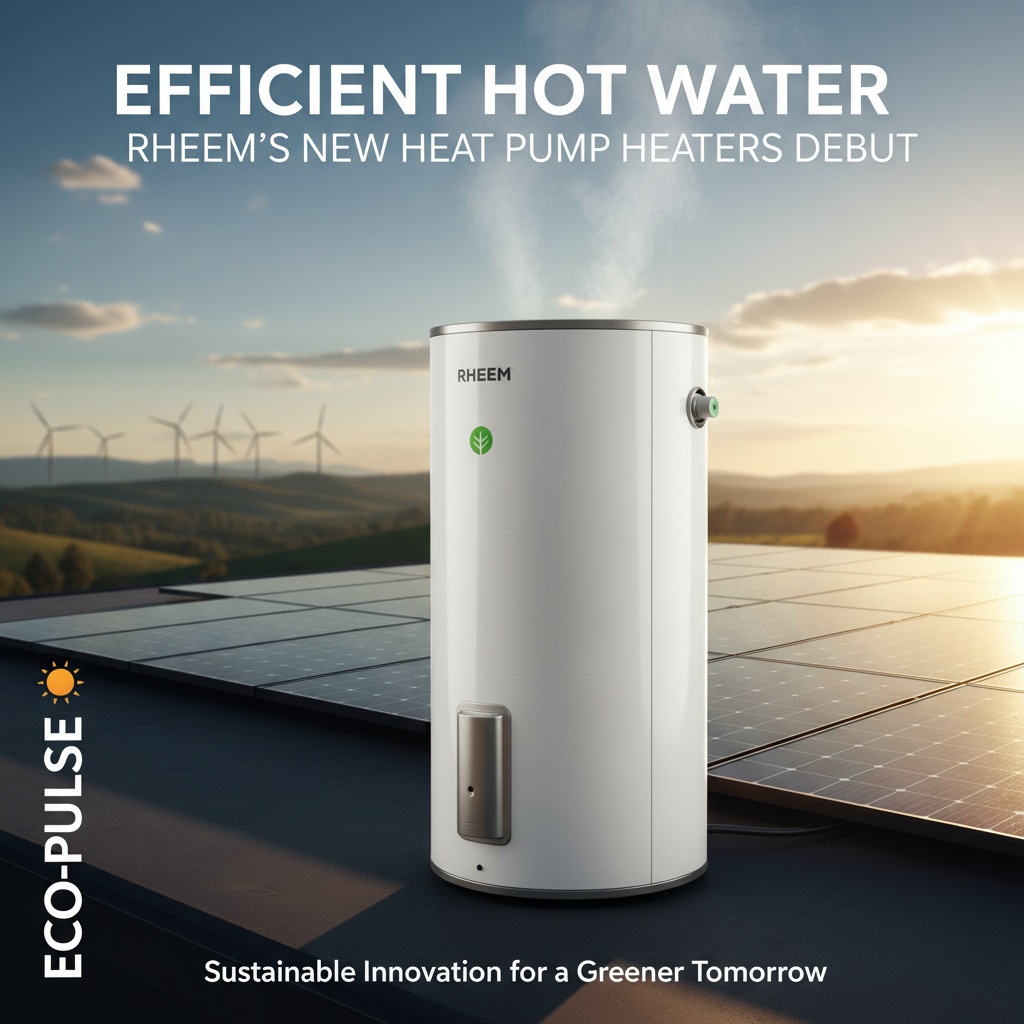
Efficient Hot Water: Rheem's New Heat Pump Heaters Debut
Key Takeaways
- Rheem has launched a refreshed ProTerra Heat Pump Water Heater (HPWH) line.
- HPWHs are highly efficient, using electricity to move heat rather than generate it, cutting energy use.
- The refresh underscores the growing market importance of efficient water heating in cleantech.
- Continual product innovation makes sustainable home solutions more reliable and accessible.
- Adoption of HPWHs is key for homeowners to reduce utility bills and contribute to decarbonization goals.
OPENING PARAGRAPH
In the quiet revolution of home electrification, the humble water heater often goes overlooked. Yet, it represents a significant opportunity to slash energy bills and reduce carbon footprints. The recent refresh of Rheem's ProTerra Heat Pump Water Heater (HPWH) signals a crucial step forward in making efficient, sustainable hot water solutions more accessible and appealing to homeowners right now.
This isn't just about a new appliance; it's about the accelerating shift towards a cleaner, more energy-independent home, making this news particularly vital for anyone looking to live greener without compromising comfort.
TL;DR: Key Facts
- Rheem has launched a refreshed version of its ProTerra Heat Pump Water Heater (HPWH) line.
- The refresh focuses on enhanced efficiency and performance, building on existing HPWH technology.
- HPWHs are a key technology for residential electrification, using electricity to move heat rather than generate it.
- The manufacturer's interview highlights the growing market importance of efficient water heating solutions in the cleantech space.
- This product update signifies a maturing market for energy-saving home appliances, offering consumers more advanced options.
What Happened
Rheem, a prominent manufacturer in heating and cooling solutions, has announced a significant refresh of its ProTerra Heat Pump Water Heater (HPWH) series. This update comes at a time when the cleantech space is keenly focused on accelerating home electrification, recognizing water heating as one of the largest energy consumers in the average household. The announcement was accompanied by an interview with Rheem representatives, emphasizing the technical advancements and market strategy behind the refreshed line.
The core of the ProTerra HPWH technology revolves around using a heat pump to extract heat from the surrounding air and transfer it to the water in the tank, a process far more efficient than traditional electric resistance water heaters that generate heat directly. While specific technical improvements from the interview were not detailed in the provided snippet, the focus on a 'refreshed' model implies enhancements in areas such as efficiency ratings (e.g., Uniform Energy Factor or UEF), smart features, installation flexibility, or durability.
This move by Rheem reinforces the industry trend towards offering consumers more sustainable and cost-effective alternatives to conventional water heating methods. By continually refining and bringing new iterations of HPWHs to market, manufacturers are signaling confidence in the technology's readiness for widespread adoption, making efficient home solutions more robust and reliable.
Why It Matters
This refresh of Rheem's ProTerra HPWH is far more than just another product announcement; it's a tangible marker of progress in the fight against climate change, directly impacting our homes and wallets. For GreenNest Living readers, this means a more mature and reliable option for one of the largest energy drains in their household: water heating. Traditional electric resistance water heaters are energy hogs, and gas heaters contribute directly to household emissions and indoor air pollution. Heat pump water heaters, by contrast, are up to 3-4 times more efficient, drastically cutting energy consumption and associated utility bills.
Moreover, the continuous innovation in the HPWH market, exemplified by Rheem's refresh, is crucial for achieving broader decarbonization goals. As our electricity grid becomes cleaner with more renewable sources, electrifying household appliances like water heaters means we're progressively heating our water with sunshine and wind. This systemic shift reduces reliance on fossil fuels, enhances grid stability by offering demand-side management opportunities, and provides a healthier indoor environment free from combustion byproducts. The commitment of major manufacturers like Rheem to refining these products sends a powerful signal to the market that sustainable living is not just possible, but increasingly practical and advantageous.
For the 'Green Tech' theme, this development highlights the critical role of everyday home appliances in the energy transition. Often, the focus remains on electric vehicles or solar panels, but the widespread adoption of efficient heating and cooling technologies for buildings holds immense potential for energy savings and emission reductions. A refreshed, high-performing HPWH makes green living more attainable for the average consumer, bridging the gap between grand environmental goals and practical household choices.
What You Can Do
- Assess Your Current Water Heater: Understand its type (electric resistance, gas, tankless) and age. Older models are often less efficient and prime candidates for replacement.
- Research Heat Pump Water Heaters: Explore models from Rheem and other manufacturers to compare efficiency ratings (UEF), tank sizes, smart features, and warranty options.
- Check for Incentives: Look into federal tax credits (like the Inflation Reduction Act), state rebates, and local utility incentives that can significantly reduce the upfront cost of an HPWH.
- Consult with an HVAC Professional: Get professional advice on sizing the right HPWH for your home's needs, assessing electrical panel capacity, and proper installation for optimal performance.
- Consider Smart Features: Many new HPWHs offer smart connectivity, allowing you to monitor energy use, set schedules, and even integrate with smart home systems, further optimizing savings.
- Share Your Experience: If you install an HPWH, share your journey and savings with friends and family to help demystify the technology and encourage wider adoption of this vital green tech.
Ciro's Take
As an advocate for sustainable living, I find news like Rheem's HPWH refresh incredibly encouraging. It's easy to get lost in the grand narratives of solar farms and EV battery breakthroughs, but the true impact of green tech often lies in the everyday items we use. Heating our water responsibly is a foundational step towards a greener home and a healthier planet. Every time a major manufacturer dedicates resources to improving an energy-efficient appliance, it validates the market demand for sustainable choices and makes them more accessible to everyone.
I personally believe that these quiet innovations in home electrification are the bedrock of our collective climate action. They empower individuals to make a tangible difference in their carbon footprint without sacrificing comfort, transforming sustainability from a distant ideal into a practical reality within our own four walls. It’s a testament to how practical engineering meets environmental stewardship, and I, for one, celebrate every step forward in this arena.
FAQs
Q: What is a Heat Pump Water Heater?
A: A Heat Pump Water Heater (HPWH) uses electricity to move heat from the air around it to heat water in the tank, similar to how a refrigerator cools food by moving heat out of it. This makes it far more efficient than traditional electric resistance water heaters that generate heat directly.
Q: How much can I save with an HPWH?
A: Savings vary based on local electricity rates, hot water usage, and the efficiency of your old water heater, but HPWHs can typically save households hundreds of dollars annually on electricity bills, often cutting water heating costs by 50-70% compared to electric resistance models.
Q: Do Heat Pump Water Heaters require special installation?
A: While HPWHs often utilize existing water connections, they do require specific electrical requirements (usually a 240V dedicated circuit) and need to be installed in a space that maintains a certain ambient temperature (typically above 40°F/4.4°C) and has sufficient air volume for the heat pump to operate efficiently.
Sources
This article is based on reporting by CleanTechnica.
Original source
CleanTechnica
Author, Digital Entrepreneur & AI Creator
More from Green Tech
- Unlock Savings: Master Your Home's Electricity Pricing — May 25, 2026
- Shocking Savings: EV vs. Gas, Your Wallet Will Thank You — May 24, 2026
- Smart Cars: A Data Privacy Nightmare? — May 23, 2026
- Geely's European Leap: Ford Factory Sale Reshapes EV Map — May 22, 2026