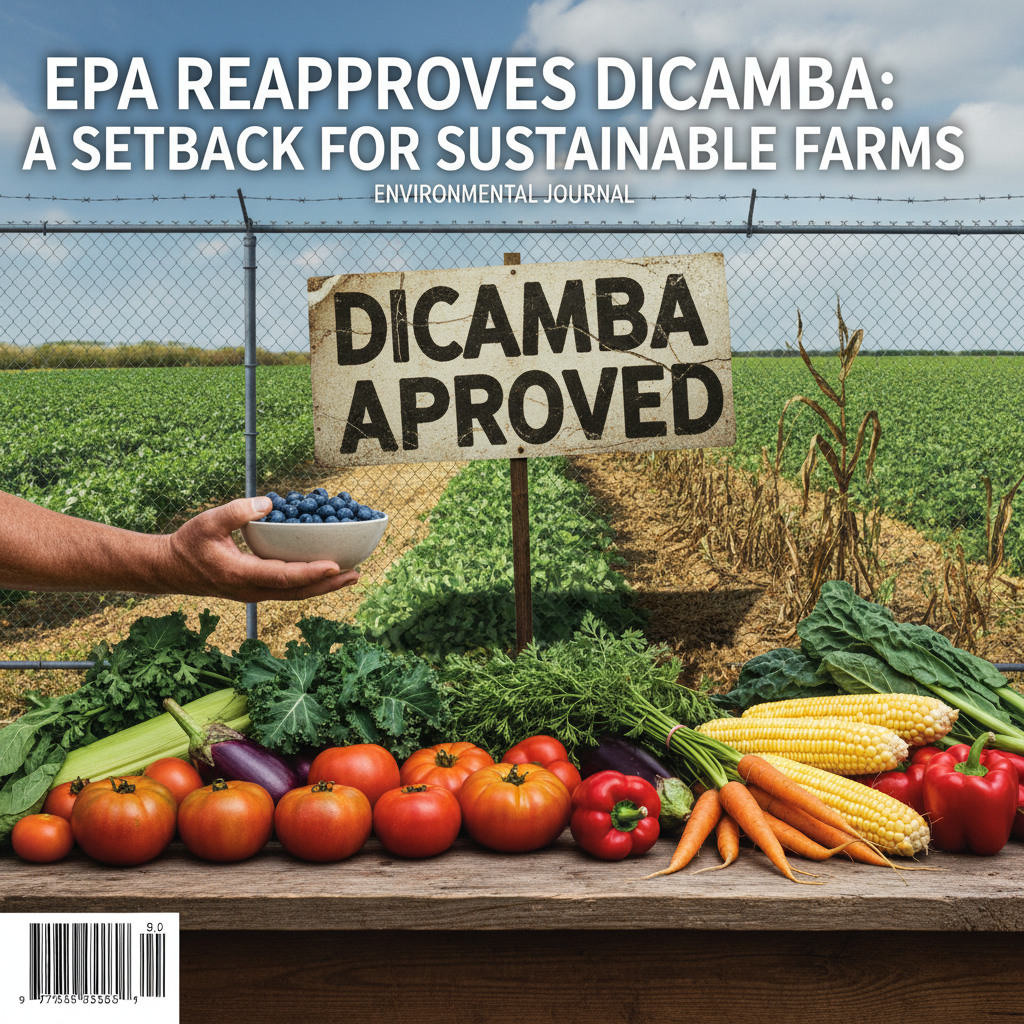
EPA Reapproves Dicamba: A Setback for Sustainable Farms
Key Takeaways
- The EPA reapproved the weedkiller Dicamba despite strong concerns.
- Dicamba is known for widespread drift damage to non-target crops and ecosystems.
- Environmental groups and farmers fiercely oppose the decision, citing economic and social harm.
- Critics see this as a blow to sustainable agriculture and rural communities.
The Environmental Protection Agency (EPA) has once again given the green light to the controversial weedkiller Dicamba, a decision that has sent ripples of concern through agricultural communities and environmental advocacy groups nationwide. This reapproval, made despite years of documented evidence of widespread crop damage and ecological harm, raises urgent questions about the future of sustainable farming and the integrity of our food systems. For GreenNest Living readers, understanding this development is crucial for making informed choices about the food on your plate and the health of our planet.
TL;DR: Key Facts
- The EPA has reapproved the use of Dicamba, a powerful agricultural herbicide.
- Dicamba is notorious for its tendency to drift, causing damage to non-target crops and natural vegetation.
- Environmental groups and farmers express strong opposition, citing threats to livelihoods and rural communities.
- Critics argue the decision undermines efforts towards sustainable and organic farming practices.
What Happened
In a move that has drawn immediate and fierce criticism, the Environmental Protection Agency (EPA) recently announced the reapproval of the weedkiller Dicamba for agricultural use. This decision comes despite a long history of documented problems associated with the herbicide, particularly its propensity for off-target movement, or “drift,” which has led to extensive damage on neighboring farms.
Bill Freese, science director at the Center for Food Safety (CFS), minced no words in his response, stating, “The Trump administration’s hostility to farmers and rural America knows no bounds.” Freese further emphasized the devastating impact, asserting that “Dicamba drift damage threatens livelihoods and tears apart rural communities.” Farmers have been utilizing dicamba since at least 201... This reapproval permits the continued application of a chemical that has consistently posed significant challenges to agricultural coexistence and environmental health.
Why It Matters
This EPA decision is far more than a bureaucratic formality; it has profound implications for both our food system and the environment. From an ecological standpoint, Dicamba's well-documented drift is a direct threat to biodiversity. When it moves beyond the intended application area, it can severely damage non-GMO crops, organic farms, and wild vegetation, including vital pollinator habitats. This indiscriminate destruction disrupts delicate ecosystems, potentially reducing pollinator populations essential for many food crops, and undermines efforts to restore ecological balance in agricultural landscapes. The long-term effects on soil health and water quality from widespread herbicide use also remain a serious concern for environmental sustainability.
For farmers, especially those committed to sustainable and organic practices, this reapproval represents a significant setback and an ongoing economic threat. The financial burden of damaged crops from drift, coupled with the legal disputes and strained neighborly relations it often instigates, can be crippling. As Freese noted, it “threatens livelihoods and tears apart rural communities,” creating an uneven playing field where chemical-intensive agriculture is prioritized over more environmentally benign methods. This policy choice signals a continued reliance on synthetic pesticides, potentially hindering the growth and acceptance of regenerative agriculture and organic food production in the United States.
For GreenNest Living readers, this decision highlights the critical need for vigilance and informed consumer choices. It underscores how regulatory actions can directly influence the availability of sustainably grown food and the health of the environment from which it comes. Supporting agricultural policies that prioritize ecological protection and farmer well-being is paramount in shaping a truly resilient and healthy food future.
What You Can Do
Here's how you can make a difference in the face of this regulatory decision:
- Support Organic & Regenerative Farms: Prioritize purchasing food from local organic, biodynamic, or regenerative farms. Your dollar directly supports farmers who avoid harmful pesticides like Dicamba.
- Advocate for Stronger Regulations: Contact your elected officials at both federal and state levels. Express your concerns about pesticide drift and advocate for stricter regulations on herbicides that pose environmental and agricultural risks.
- Educate and Share: Talk to your friends, family, and community about the impacts of pesticides like Dicamba. Share reliable information from sources like GreenNest Living to raise awareness.
- Support Environmental & Farmer Advocacy Groups: Organizations like the Center for Food Safety (CFS) and others are on the front lines fighting for sensible pesticide policies and protecting farmers. Consider donating or becoming a member.
- Choose Certified Organic Products: When shopping, look for USDA Organic certification. This ensures food is produced without synthetic pesticides, herbicides, or GMOs, offering a clear alternative to chemically-dependent agriculture.
- Monitor Local Issues: Stay informed about agricultural practices and pesticide applications in your local community. Attend local planning meetings or join groups focused on local food and environmental safety.
FAQs
Q: What exactly is Dicamba?
A: Dicamba is a widely used herbicide designed to kill broadleaf weeds. It's often used with genetically modified (GMO) crops that are engineered to tolerate Dicamba, allowing farmers to spray the herbicide without harming their resistant crops.
Q: How does Dicamba affect the environment and other farms?
A: Dicamba is known for its volatility, meaning it can turn into a gas and drift far from where it was applied, sometimes miles away. This drift can damage or kill non-Dicamba-tolerant crops, organic crops, trees, and natural vegetation, leading to significant economic losses for farmers and harming biodiversity.
Q: What does the EPA's reapproval mean for me as a consumer?
A: The reapproval means Dicamba will continue to be used on a large scale, potentially increasing the risk of environmental contamination and damage to non-GMO and organic farms. As a consumer, this underscores the importance of choosing certified organic and sustainably grown foods to support agricultural practices that minimize pesticide use and protect ecological health.
Sources
This article is based on reporting by Civil Eats.
Original source
Civil Eats
Author, Digital Entrepreneur & AI Creator
More from Food & Environment
- Gardening: A Neurosurgeon's Secret to Longevity & Well-being — May 13, 2026
- Farm to School: Nourishing Kids, Cultivating Community Growth — May 12, 2026
- High-Risk Cheese Outbreak: FDA Alert Amid E. coli Fears — May 11, 2026
- Are Your 'Healthy' Foods Truly Nutritious? New Study Investigates — May 10, 2026
- Australia Battles Food Waste: A Global Sustainability Push — May 9, 2026