EPA Upholds Farmers' Right to Repair: A Green Win for Agriculture
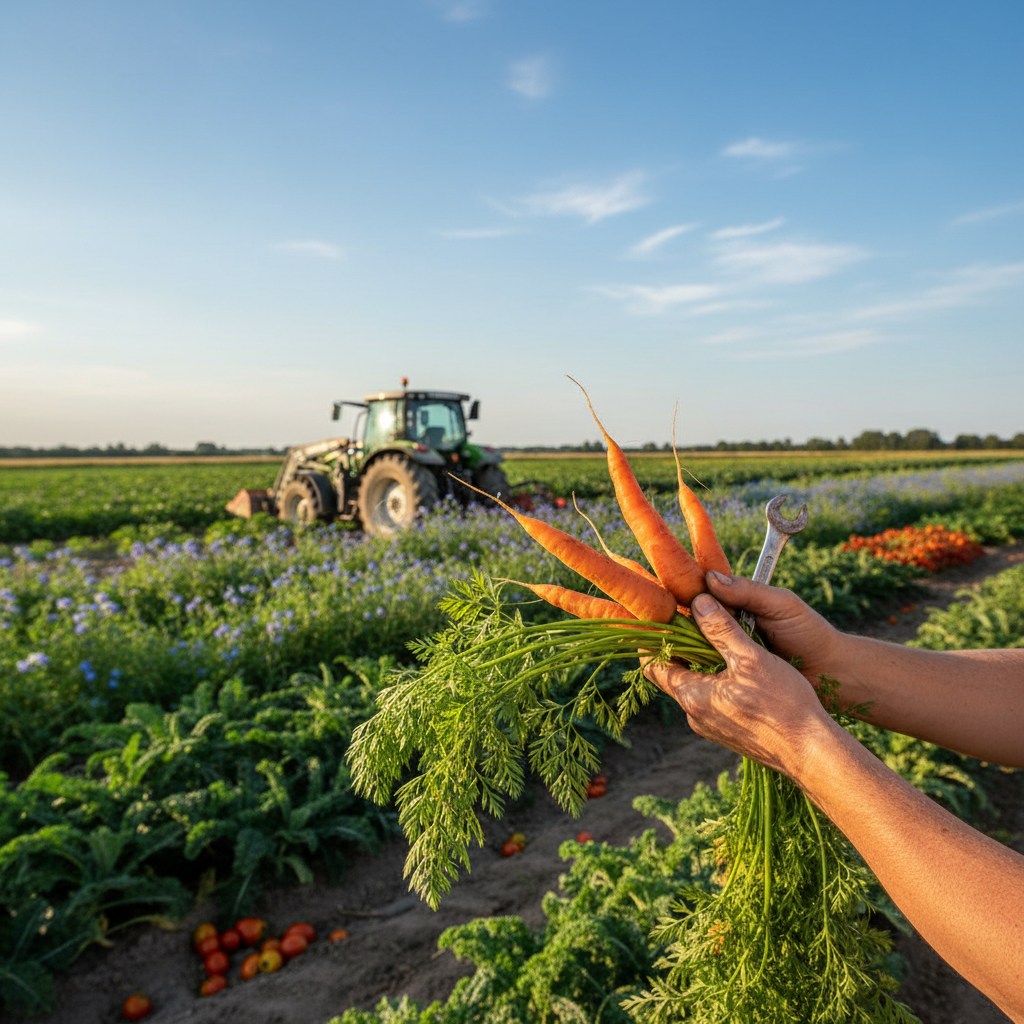
Key Takeaways
- EPA guidance issued Feb 5, 2025, prevents manufacturers from using the Clean Air Act to block farmers' equipment repairs.
- The decision empowers farmers to fix their own machinery, reducing dependence on costly dealership services.
- This move supports a more sustainable agriculture model by extending equipment lifespan and reducing demand for new manufacturing.
- It's a significant victory for the broader 'Right to Repair' movement in the agricultural sector.
- Farmers gain greater economic independence and operational efficiency.
In a landmark development for sustainable agriculture, the Environmental Protection Agency (EPA) has stepped in to champion the rights of farmers, issuing guidance that could fundamentally shift how agricultural machinery is maintained across the nation. This move addresses a long-standing battle, empowering farmers to take control of their equipment's lifespan and fostering a more resilient food system.
For years, farmers have faced significant hurdles in repairing their own tractors and essential farm implements, often forced into costly and time-consuming dealership repairs due to proprietary software and restrictive practices. This new guidance from the EPA represents a pivotal moment, validating the persistent advocacy from the farming community and aligning environmental policy with practical agricultural needs.
TL;DR: Key Facts
- The EPA issued new guidance on February 5, 2025, supporting farmers' right to repair their equipment.
- This guidance explicitly states manufacturers cannot use the Clean Air Act to prevent farmers from performing their own repairs.
- Farmers have actively campaigned for years to gain independent repair access for their machinery.
- The decision aims to reduce farmers' reliance on manufacturer-specific dealerships for maintenance and repairs.
- It marks a significant victory for the broader 'Right to Repair' movement within the agricultural sector.
What Happened
This week, the Environmental Protection Agency (EPA) unveiled significant new guidance that directly addresses the ongoing struggle faced by farmers regarding equipment repair. Dated February 5, 2025, the EPA's directive clarifies that manufacturers of agricultural machinery cannot invoke the provisions of the Clean Air Act as a means to restrict farmers from undertaking their own maintenance and repair work on their vital equipment. This guidance is a direct response to years of pressure and advocacy from farming communities nationwide.
For too long, farmers have found themselves in a difficult position, often unable to access the necessary diagnostic tools, software, parts, or repair manuals needed to fix their modern, technologically advanced tractors and other machinery. Manufacturers frequently cited intellectual property rights or environmental regulations, including the Clean Air Act, as justification for these restrictions, thereby funneling all repair work through their authorized dealerships. This practice often resulted in inflated repair costs, extended downtime during crucial planting or harvesting seasons, and an overall loss of autonomy for agricultural producers.
The EPA's clear stance now dismantles one of the major legal pretexts used by manufacturers to enforce these repair monopolies. By affirming that the Clean Air Act cannot be weaponized to prevent self-repair, the agency has removed a significant barrier, paving the way for farmers to gain greater independence in maintaining the machinery essential to their livelihoods. This decision is expected to have far-reaching implications for agricultural operations, particularly for small and medium-sized farms that are most vulnerable to high repair costs and delays.
Why It Matters
This EPA guidance is far more than a technical legal ruling; it's a profound victory for environmental sustainability and the resilience of our food system. At its core, the 'Right to Repair' movement is about extending the lifespan of products, and in agriculture, this translates directly into tangible ecological benefits. When farmers can repair their existing equipment, they reduce the demand for new machinery manufacturing, which is an incredibly resource-intensive process involving significant energy consumption, raw material extraction, and carbon emissions. Fewer new tractors mean less industrial waste and a smaller overall carbon footprint associated with agricultural production.
Furthermore, this decision bolsters the economic viability of independent and small-scale farms. When repairs are restricted to costly manufacturer dealerships, it places an immense financial burden on farmers, often driving them into debt or forcing them to prematurely replace functional equipment simply because repairs are too expensive or inaccessible. By empowering farmers to perform their own repairs or utilize independent local mechanics, the EPA is helping to reduce operational costs, increase efficiency, and foster greater economic stability within the agricultural sector. This, in turn, supports local economies and helps preserve the diverse network of family farms that are crucial to a robust and secure food supply.
From a broader environmental perspective, empowering farmers to repair their own tools aligns perfectly with GreenNest Living's ethos of a circular economy. It champions a shift away from a 'take-make-dispose' model towards one that values longevity, resourcefulness, and waste reduction. By enabling repairs, we are not just saving farmers money; we are actively contributing to a more sustainable planet. This guidance also encourages innovation in durable, repairable equipment design, potentially leading to a future where agricultural machinery is built to last and be easily serviced, rather than designed for planned obsolescence. It's a critical step towards a more self-reliant, environmentally conscious agricultural future.
What You Can Do
- Support Right to Repair Legislation: Research and contact your state and federal representatives to express your support for broader 'Right to Repair' laws that extend beyond agricultural equipment to consumer electronics and other goods.
- Choose Farms That Prioritize Sustainability: Seek out and support local farms that openly practice sustainable methods, including maintaining and extending the life of their equipment. Engage with them to understand their challenges and successes.
- Advocate for Open-Source Farm Technology: Support initiatives and companies developing open-source hardware and software for agricultural machinery, which naturally promotes repairability and farmer independence.
- Support Local Repair Businesses: When possible, choose independent repair shops for your own items and encourage others to do the same. A strong local repair economy benefits everyone.
- Educate Your Community: Share information about the 'Right to Repair' movement and its environmental and economic benefits with friends, family, and social networks to raise awareness.
- Embrace Repair in Your Own Life: Before replacing household items, explore options for repair. This small personal action contributes to the larger movement towards a circular economy.
FAQs
Q: What exactly is the 'Right to Repair' movement?
A: The 'Right to Repair' movement is a global effort advocating for consumers' and owners' ability to repair their own products. This includes having access to necessary diagnostic tools, parts, and repair manuals from manufacturers.
Q: How does this EPA guidance help the environment?
A: By allowing farmers to repair their equipment, it extends the lifespan of machinery. This reduces the need for new manufacturing, which in turn cuts down on raw material extraction, energy consumption, industrial waste, and carbon emissions associated with producing new goods.
Q: Does this new EPA guidance apply to all consumer products, like my phone or car?
A: While this specific EPA guidance focuses on agricultural equipment and prevents manufacturers from using the Clean Air Act as a barrier to repair, it is a significant step forward for the broader 'Right to Repair' movement. It sets a precedent, but doesn't directly apply to all consumer products; broader legislation would be needed for that.
Sources
This article is based on reporting by Civil Eats.
Original source
Civil Eats
Author, Digital Entrepreneur & AI Creator
More from Food & Environment
- Gardening: A Neurosurgeon's Secret to Longevity & Well-being — May 13, 2026
- Farm to School: Nourishing Kids, Cultivating Community Growth — May 12, 2026
- High-Risk Cheese Outbreak: FDA Alert Amid E. coli Fears — May 11, 2026
- Are Your 'Healthy' Foods Truly Nutritious? New Study Investigates — May 10, 2026
- Australia Battles Food Waste: A Global Sustainability Push — May 9, 2026