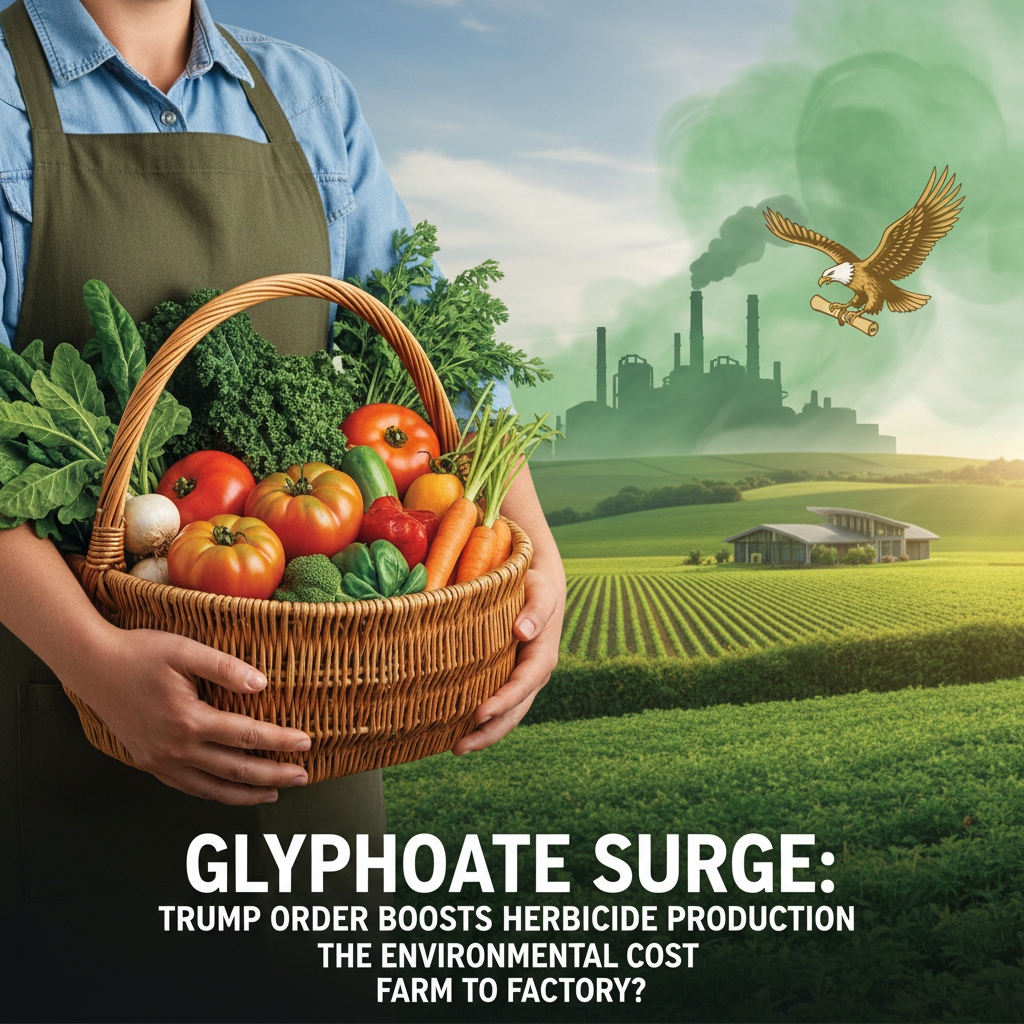
Glyphosate Surge: Trump Order Boosts Herbicide Production
Key Takeaways
- President Trump issued an executive order on Feb 19, 2026.
- It directs the USDA to boost domestic glyphosate production.
- The rationale provided is national security.
- Glyphosate is a controversial herbicide linked to environmental and health concerns.
- This policy may deepen reliance on chemical-intensive farming.
A recent executive order by President Donald Trump signals a troubling shift in agricultural policy, directing the USDA to ramp up domestic production of glyphosate. For those committed to sustainable living and a healthy food system, this move, ostensibly for 'national security,' raises immediate alarms about environmental degradation and public health, pushing us further from regenerative practices.
TL;DR: Key Facts
- President Donald Trump issued an executive order on February 19, 2026.
- The order directs the Secretary of Agriculture to boost the domestic supply of glyphosate.
- Glyphosate is the active ingredient in the controversial herbicide, Roundup.
- The stated rationale for this directive is "national security."
What Happened
In a significant move impacting the future of American agriculture, President Donald Trump signed an executive order on Wednesday, February 19, 2026. This directive specifically tasks the U.S. Department of Agriculture (USDA) with increasing the domestic production of glyphosate, the widely used active ingredient found in the herbicide Roundup.
The executive order frames this boost in glyphosate supply as a matter of national security. While the specifics of how this 'national security' justification relates to herbicide production were not fully detailed in the initial reports, the order strongly emphasizes expanding domestic manufacturing capabilities for the chemical.
Why It Matters
For GreenNest Living readers, this executive order is deeply concerning, directly challenging the principles of environmental stewardship and sustainable food systems. Glyphosate, while effective as an herbicide, has been at the center of extensive scientific and public debate regarding its potential links to various health issues, including cancer, and its documented negative impacts on ecosystems. Increasing its production under the guise of 'national security' signals a move away from, rather than towards, a more resilient, environmentally sound agricultural future.
The intensified use of glyphosate has well-documented environmental consequences. It can degrade soil health, harm crucial pollinator populations like bees, and contaminate water sources, impacting aquatic life and human drinking water. This reliance on a single chemical solution for weed management further discourages diversification in farming practices, stifling the growth of regenerative agriculture which prioritizes soil vitality, biodiversity, and reduced chemical dependency.
Furthermore, this directive could entrench the U.S. food system's dependence on industrial, chemical-intensive farming methods. Instead of investing in ecological solutions that build long-term food security through healthy soils and diverse farming, the order appears to double down on a model that has faced significant criticism for its environmental footprint and human health risks. It places short-term expediency over the long-term health of our planet and its inhabitants.
What You Can Do
As conscious consumers and environmental advocates, your actions can help shape a more sustainable future:
- Support Organic & Regenerative Agriculture: Seek out and purchase food from certified organic farms or those practicing regenerative methods. These farms prioritize soil health and avoid synthetic herbicides like glyphosate.
- Advocate for Policy Change: Contact your local, state, and federal representatives to express your concerns about increased glyphosate production and to support policies that promote sustainable farming and reduced chemical use.
- Educate Your Community: Share information about the impacts of glyphosate with friends, family, and social networks. Awareness is the first step towards change.
- Garden Sustainably: If you garden, choose organic pest and weed control methods. Avoid using glyphosate-based products in your own yard and garden to protect local ecosystems and your family's health.
- Investigate Food Sources: Look for labels that indicate glyphosate-free products, or choose whole, unprocessed foods that minimize exposure to chemical residues.
- Support Research & Innovation: Advocate for government and private funding into alternative, eco-friendly weed management solutions and sustainable agricultural research.
FAQs
Q: What exactly is glyphosate?
A: Glyphosate is a broad-spectrum systemic herbicide used to kill weeds, especially annual broadleaf weeds and grasses known to compete with crops. It is the active ingredient in many popular weed killer products, most notably Roundup.
Q: Why is glyphosate considered controversial?
A: Glyphosate's controversy stems from environmental concerns, including its impact on soil health and biodiversity, and significant human health debates, particularly its classification as a "probable human carcinogen" by the International Agency for Research on Cancer (IARC), leading to numerous lawsuits alleging links to non-Hodgkin lymphoma.
Q: How does this executive order impact me directly?
A: Increased domestic production of glyphosate could lead to its more widespread and cheaper use in agriculture, potentially increasing your exposure to residues in food and water, and contributing to broader environmental degradation that impacts air, water, and biodiversity in the areas you live and visit. It also signals a policy direction that prioritizes chemical inputs over sustainable farming.
Sources
This article is based on reporting by Civil Eats.
Original source
Civil Eats
Author, Digital Entrepreneur & AI Creator
More from Food & Environment
- Gardening: A Neurosurgeon's Secret to Longevity & Well-being — May 13, 2026
- Farm to School: Nourishing Kids, Cultivating Community Growth — May 12, 2026
- High-Risk Cheese Outbreak: FDA Alert Amid E. coli Fears — May 11, 2026
- Are Your 'Healthy' Foods Truly Nutritious? New Study Investigates — May 10, 2026
- Australia Battles Food Waste: A Global Sustainability Push — May 9, 2026