GM Banks on Sodium-Ion for Grid Energy Storage Future
Key Takeaways
- GM partners with Peak Energy for sodium-ion battery development.
- Technology is targeted specifically for large-scale energy storage.
- Sodium-ion offers a more abundant and cost-effective alternative to lithium-ion for grid applications.
- This move enhances grid stability and accelerates renewable energy integration.
For years, the energy world has been fixated on lithium-ion batteries as the silver bullet for everything from electric vehicles to grid storage. But a significant announcement from General Motors this week signals a crucial diversification in our sustainable energy strategy. Their new partnership to focus on sodium-ion batteries for energy storage facilities isn't just business news; it's a powerful indicator of how the green tech landscape is evolving to build a more resilient and affordable renewable future.
TL;DR: Key Facts
- General Motors (GM) has announced a new partnership with Peak Energy.
- The collaboration focuses on developing and deploying sodium-ion battery technology.
- These sodium-ion batteries are specifically targeted for large-scale energy storage facilities.
- This move represents a strategic commitment to diversifying battery chemistry beyond lithium-ion for grid applications.
What Happened
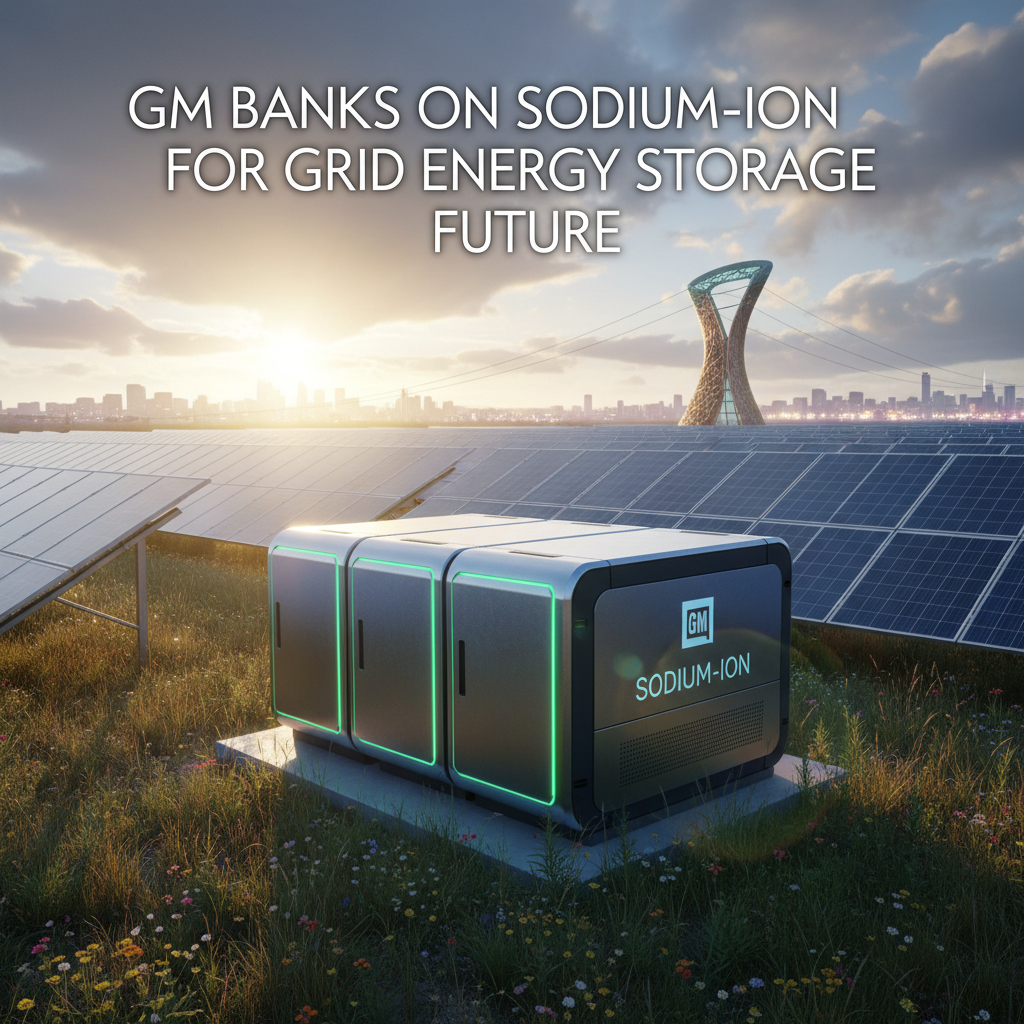
General Motors (GM) made headlines this week with the announcement of a new partnership with Peak Energy. This collaboration is set to bring sodium-ion battery technology to the forefront of energy storage solutions, specifically targeting large-scale facilities.
While GM has been a major player in the electric vehicle (EV) market with its lithium-ion battery strategies, this move indicates a distinct and strategic pivot for stationary energy storage applications. By focusing on sodium-ion, GM is venturing into a battery chemistry that offers several advantages for grid-scale storage, particularly in terms of resource availability and cost.
Why It Matters
This development is immensely significant for the green tech sector and our collective transition to a sustainable energy future. For too long, the conversation around battery technology has been dominated by lithium-ion, which, while effective, comes with its own set of challenges—namely, the finite supply and geopolitical complexities of lithium and other critical minerals like cobalt and nickel. GM's embrace of sodium-ion for energy storage offers a compelling alternative.
Sodium is one of the most abundant elements on Earth, found readily in seawater and salt deposits, making it significantly cheaper and more accessible than lithium. This translates directly into lower manufacturing costs for batteries, which is critical for scaling up grid-level energy storage. Affordable, large-scale storage is the linchpin for truly integrating intermittent renewable energy sources like solar and wind into our power grids. By providing a cost-effective means to store excess energy and release it when needed, sodium-ion batteries can dramatically improve grid stability, reduce reliance on fossil fuel peaker plants, and accelerate the transition to a fully renewable energy system.
Furthermore, this move showcases a forward-thinking approach to technological diversification. Relying on a single battery chemistry for all applications carries risks. By championing sodium-ion for stationary storage, GM is not only contributing to supply chain resilience but also fostering innovation across the entire battery industry. This strategic foresight positions GM not just as an automaker, but as a key player in the broader energy ecosystem, driving the evolution of sustainable energy infrastructure beyond just vehicles.
What You Can Do
As green tech advances, here's how you can engage and contribute:
- Educate Yourself: Learn more about emerging battery technologies like sodium-ion. Understanding their benefits and applications empowers you to make informed decisions and advocate for progress.
- Consider Home Energy Storage: While GM's focus is grid-scale, the principles apply. Explore residential battery storage options to increase your home's energy independence and utilize renewable power more effectively.
- Advocate for Green Infrastructure: Support policies and initiatives that prioritize investment in renewable energy infrastructure, including grid modernization and diverse energy storage solutions.
- Support Innovative Companies: Look for and support companies, like GM and Peak Energy, that are investing in sustainable, long-term energy solutions and diversified green technologies.
- Reduce Your Energy Consumption: The most sustainable energy is the energy you don't use. Continue practicing energy efficiency in your home and daily life to lessen overall demand.
Ciro's Take
This news from GM isn't just another battery announcement; it's a profound signal about the maturity and diversification of our green energy transition. For years, I've championed the need for energy storage solutions that are not only effective but also sustainable from a resource perspective. Lithium-ion, while revolutionary, always presented a challenge with its reliance on finite, often geopolitically sensitive minerals. GM's strategic pivot to sodium-ion for grid-scale storage is incredibly inspiring.
It demonstrates a clear understanding that a truly sustainable future demands multiple pathways and solutions, leveraging abundant resources to build resilient energy systems. This isn't just about cleaner cars; it's about making our entire energy infrastructure more robust, affordable, and equitable. Seeing a major corporation like GM invest so heavily in this alternative technology confirms that the future of energy is multifaceted, and that's precisely the kind of thoughtful, long-term approach that makes me hopeful for a truly green world.
FAQs
Q: What are sodium-ion batteries?
A: Sodium-ion batteries are a type of rechargeable battery that functions similarly to lithium-ion batteries but uses sodium ions as the charge carriers. Sodium is far more abundant and cheaper than lithium.
Q: Why is GM focusing on sodium-ion over lithium-ion for energy storage?
A: Sodium-ion batteries are appealing for large-scale energy storage due to their lower cost (thanks to abundant sodium), better thermal stability, and reduced reliance on critical and often ethically problematic minerals like lithium, cobalt, and nickel. While they may have lower energy density than some lithium-ion variants, this is less critical for stationary grid storage than for electric vehicles.
Q: How do sodium-ion batteries benefit the renewable energy grid?
A: They provide a cost-effective and sustainable solution for storing excess electricity generated by intermittent renewable sources like solar and wind. This storage helps to stabilize the grid, ensure a consistent power supply, and reduce the need for fossil fuel-based backup power plants, thereby accelerating the transition to a fully renewable energy system.
Sources
This article is based on reporting by CleanTechnica.
Original source
CleanTechnica
Author, Digital Entrepreneur & AI Creator
More from Green Tech
- Global Banks Fuel Climate Crisis: Trillions Back Fossil Fuels — June 11, 2026
- US Grid: Solar & Storage Power 90%+ of New Capacity — June 10, 2026
- EU's EV Backpedal: A Costly Setback for Grid Stability — June 9, 2026
- Mexico Hits 5 GW Distributed Solar: A Green Energy Milestone — June 8, 2026