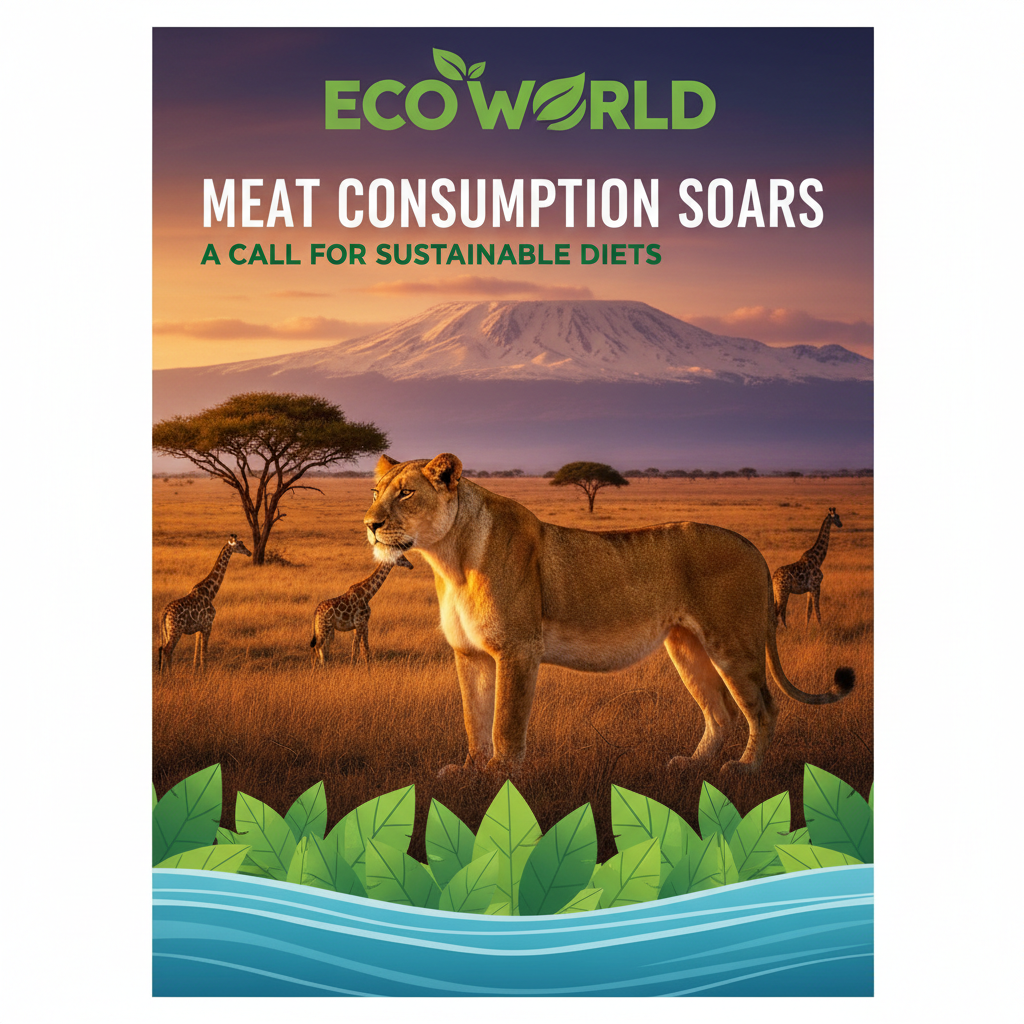
Meat Consumption Soars: A Call for Sustainable Diets
Key Takeaways
- Chicken consumption per person has increased six-fold since 1961.
- Global meat supply has quadrupled in the last 60 years.
- Meat consumption is projected to continue rising.
- Industrial meat production is a major contributor to deforestation and climate change.
- A shift towards plant-based diets is essential for environmental sustainability and wildlife protection.
Our plates are telling a story of rapid change, and a new UN report casts a stark light on one of the most impactful shifts: how much meat we consume. This isn't just about diet; it's a critical environmental issue shaping our planet's future, impacting everything from biodiversity to climate stability. Understanding these trends is crucial for building a truly sustainable lifestyle.
TL;DR: Key Facts
- The average person now eats six times more chicken than in 1961.
- Pork consumption has also doubled per person since 1961.
- Global meat supply has quadrupled over the last 60 years.
- This significant increase is projected to continue rising.
- The report highlights the existing potential for a shift to plant-based diets, despite current trends.
What Happened
A recent United Nations report has unveiled striking statistics about global meat consumption, indicating a monumental shift in dietary habits over the past six decades. The findings reveal that the average individual today consumes approximately six times the amount of chicken compared to their counterparts in 1961. Similarly, pork consumption per person has doubled within the same timeframe, illustrating a broad acceleration in the demand for animal proteins.
Overall, the report states that the global meat supply has seen a staggering fourfold increase over the last 60 years. This upward trajectory is not expected to slow down; projections suggest that meat consumption will continue to rise. While the report acknowledges that the ingredients for a societal pivot towards plant-based diets are increasingly in place, it underscores that meat products continue to dominate the global food landscape, presenting significant challenges for environmental sustainability and public health.
Why It Matters
This surge in global meat consumption isn't merely a dietary preference; it's a critical environmental flashpoint with far-reaching implications for wildlife, natural habitats, and the very health of our planet. The industrial-scale production required to meet such demand is a leading driver of deforestation, particularly for creating pastureland and cultivating feed crops like soy. This habitat destruction directly threatens countless species, leading to biodiversity loss and disrupting delicate ecosystems vital for planetary balance.
Furthermore, livestock farming is a significant contributor to greenhouse gas emissions, including methane and nitrous oxide, potent gases that accelerate climate change. The sheer volume of resources – water, land, and energy – diverted to meat production places immense strain on natural systems, impacting water scarcity and soil degradation. For readers of GreenNest Living, this news underscores the direct connection between our daily choices and the broader environmental crisis, urging us to consider the ecological footprint of our food.
The report's analysis highlights a crucial juncture: while the systems are in place for more plant-based eating, the prevailing trajectory leans heavily towards increased meat consumption. This imbalance not only jeopardizes global conservation efforts but also poses questions about long-term food security and the resilience of our ecosystems in the face of escalating human demand. It's a clear call for more sustainable food policies and a collective re-evaluation of our dietary habits to protect wildlife and foster a healthier planet.
What You Can Do
- Embrace Plant-Forward Meals: Gradually incorporate more plant-based dishes into your weekly diet. Explore diverse recipes featuring legumes, whole grains, and vegetables.
- Reduce Red Meat Intake: Consider cutting back on red meat specifically, which generally has a higher environmental footprint than poultry, though all meat production carries an impact.
- Choose Sustainable Sources: If you do consume meat, research and opt for ethically raised, local, and sustainably farmed options where available, prioritizing quality over quantity.
- Minimize Food Waste: Ensure you're not wasting any food, including meat products, as discarded food represents wasted resources from production to plate.
- Educate Yourself and Others: Learn more about the environmental impacts of different foods and share this knowledge with friends and family to encourage informed choices.
- Support Sustainable Food Policies: Advocate for policies that promote plant-based agriculture, reduce food waste, and encourage responsible animal husbandry.
Ciro's Take
As an environmental advocate, seeing these stark numbers on meat consumption hits close to home. It's a powerful reminder that our connection to nature isn't just about majestic landscapes or endangered species; it's also deeply woven into our everyday habits, particularly what we choose to eat. This report isn't about shaming, but about awakening us to the profound impact of our collective dietary evolution. For the future of wildlife and nature, shifting towards more sustainable, plant-rich diets isn't just an option; it's an imperative that we must embrace with urgency and creativity, recognizing that every meal is an opportunity to make a positive difference.
FAQs
Q: Is all meat equally impactful on the environment?
A: No. Beef generally has the highest environmental footprint due to factors like methane emissions and land use, followed by lamb, pork, and then poultry. Plant-based foods typically have the lowest impacts.
Q: What is a 'plant-based diet'?
A: A plant-based diet emphasizes foods derived from plants, including vegetables, fruits, whole grains, legumes, nuts, and seeds. It doesn't necessarily mean being strictly vegetarian or vegan, but rather making plants the central focus of your meals.
Q: How can I find sustainable meat options?
A: Look for certifications like 'organic', 'grass-fed', or 'pasture-raised' from reputable organizations. Support local farmers who practice regenerative agriculture or prioritize animal welfare and environmental stewardship. Farmers' markets are a great place to start.
Sources
This article is based on reporting by The Guardian Environment.
Original source
The Guardian Environment
Author, Digital Entrepreneur & AI Creator
More from Wildlife & Nature News
- Urgent Climate Watch: Satellite Uncovers El Niño Precursor — June 4, 2026
- Typhoon Jangmi: Japan Braces for Deluge, Ecosystems Under Threat — June 3, 2026
- Rewilding Works: Somerset Farm Rebounds with Nature's Help — June 2, 2026
- Stopping the Steal: Brazil's Golden Monkeys Under Threat — June 1, 2026