New U.S. Dietary Guidelines: Eat Whole, Ditch Processed
Key Takeaways
- The new 2025–2030 U.S. Dietary Guidelines for Americans have been released.
- The guidelines strongly advocate for reduced consumption of processed foods.
- A key focus is also on cutting down refined carbohydrates.
- They simultaneously promote an increased intake of whole, unprocessed foods.
- Existing advice on fats, protein, and dairy has been critically revised.
The way we eat isn't just a personal choice; it's a powerful statement about our health and the health of our planet. A significant shift in national guidance has just emerged, with the latest U.S. Dietary Guidelines for Americans setting a clear course towards a more sustainable and nourishing future. This pivotal update isn't merely about what's on your plate; it’s about reshaping our food system from the ground up, impacting everything from agricultural practices to individual well-being and the environment we all share.
TL;DR: Key Facts
- The U.S. government has released the new 2025–2030 Dietary Guidelines for Americans.
- A core recommendation is to significantly reduce the consumption of processed foods.
- The guidelines also call for a decrease in the intake of refined carbohydrates.
- They strongly promote the increased consumption of whole, unprocessed foods.
- Existing dietary advice regarding fats, protein, and dairy has undergone revisions.
What Happened
The U.S. government, under the Trump administration, has unveiled its updated 2025–2030 Dietary Guidelines for Americans. This quinquennial federal policy document, developed jointly by the U.S. Department of Agriculture (USDA) and the Department of Health and Human Services (HHS), provides evidence-based nutrition recommendations designed to promote health and prevent chronic disease across the nation. This latest iteration signals a notable pivot in national dietary advice.
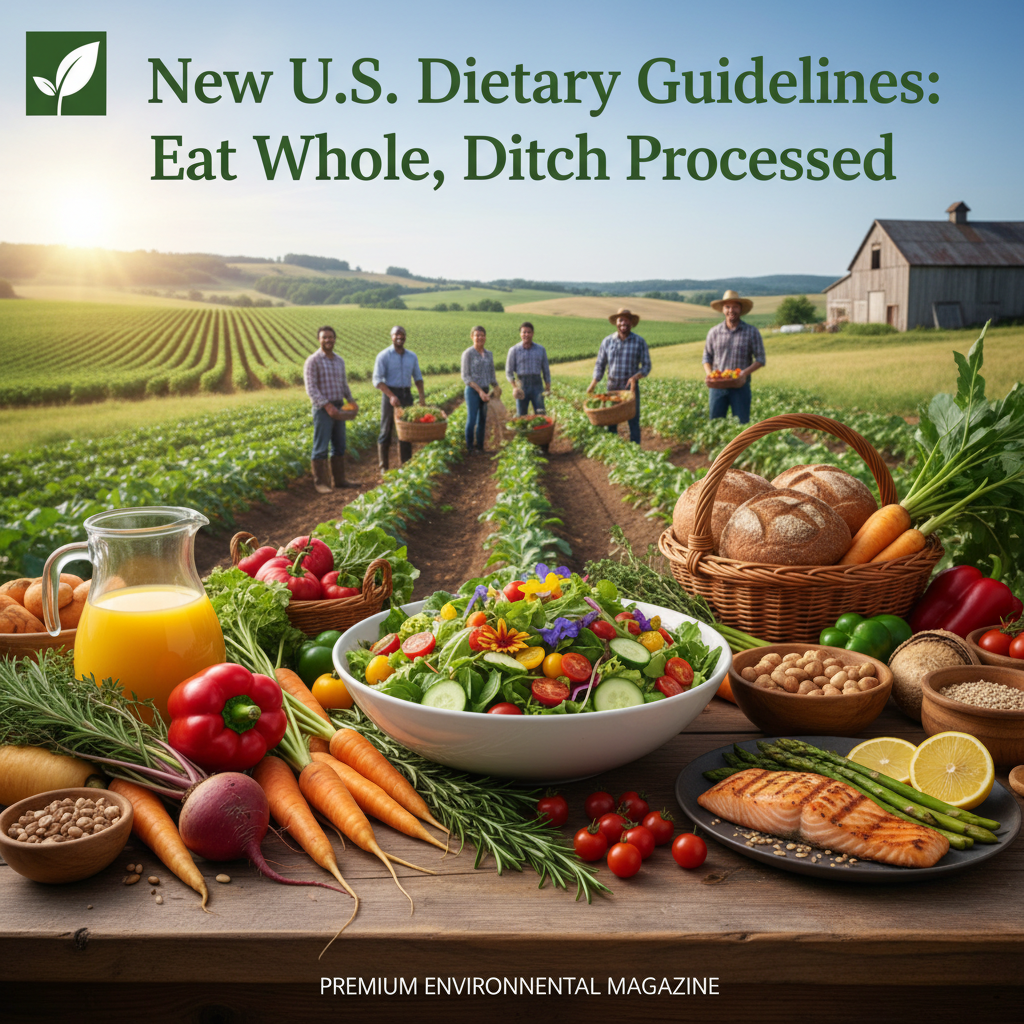
At its core, the new guidelines deliver a strong and clear message: reduce the intake of processed foods and refined carbohydrates. This recommendation urges Americans to move away from items often laden with added sugars, unhealthy fats, and excessive sodium – components frequently found in the modern industrial food supply. Simultaneously, the guidelines champion a return to more foundational eating, advocating for a significant increase in the consumption of whole foods. This includes fruits, vegetables, whole grains, and lean proteins that are in their natural or minimally altered state.
Beyond these primary directives, the 2025-2030 guidelines also reportedly revise long-standing advice on the consumption of fats, protein, and dairy. While the specifics of these revisions will require a detailed review of the full document, the overarching strategy points towards a comprehensive reevaluation of dietary priorities. The emphasis is firmly placed on fostering eating patterns that are more natural, less altered, and ultimately, more beneficial for long-term health and wellness.
Why It Matters
For readers of GreenNest Living, these new dietary guidelines are far more than just health advice; they represent a monumental opportunity for advancing both personal well-being and environmental sustainability. The explicit call to drastically reduce processed foods and wholeheartedly embrace whole ingredients directly aligns with the fundamental principles of sustainable living and responsible consumption. Processed foods typically carry a disproportionately large environmental footprint. Their production often demands intensive energy for manufacturing, relies on extensive, globalized supply chains, and generates copious amounts of packaging waste, all contributing significantly to greenhouse gas emissions and pollution.
A widespread shift away from these resource-intensive items can fundamentally alter demand, potentially reducing reliance on monoculture crops that feed industrial food systems. Instead, it can foster an environment where biodiversity thrives, and more sustainable, regenerative agricultural practices become the norm. When consumers prioritize fresh produce, whole grains, and minimally processed proteins, they often inadvertently support local economies and farmers who are already committed to environmentally friendly methods. This can lead to healthier soil, reduced use of synthetic pesticides and fertilizers, and a significantly smaller carbon footprint associated with food transportation and processing. It’s a systemic change that, if embraced widely, has the potential to transform our agricultural landscapes, fostering greater ecological balance and resilience against the escalating climate crisis.
Furthermore, the health implications are profound. A diet rich in whole foods and low in processed items is scientifically proven to dramatically reduce the risk of chronic diseases such as obesity, type 2 diabetes, and heart disease. For our community at GreenNest Living, this isn't just about individual well-being; it's about cultivating a healthier, more robust society that is better equipped to adapt to and mitigate environmental challenges. By making informed, mindful food choices, we contribute directly to both a healthier planet and a healthier ourselves, powerfully embodying the intricate interconnectedness of food, personal health, and the environment.
What You Can Do
Empowering yourself with these new guidelines means making tangible changes in your daily life. Here are actionable steps you can take:
- Prioritize Whole Foods: Make fresh fruits, vegetables, whole grains (like quinoa, brown rice, oats), legumes, nuts, and seeds the undisputed cornerstone of your daily diet.
- Become a Label Detective: Always read ingredient lists. Become adept at identifying processed foods by looking for added sugars (under various names), unhealthy fats (like hydrogenated oils), and artificial additives.
- Embrace Home Cooking: Preparing meals from scratch gives you complete control over ingredients, drastically reduces processing, and inherently minimizes packaging waste.
- Support Local and Seasonal: Purchase food from farmers' markets or join a Community Supported Agriculture (CSA) program to reduce transportation emissions and directly support sustainable farming practices in your area.
- Minimize Food Waste: Plan your meals effectively, store food properly to extend its freshness, and compost unavoidable scraps to prevent edible food from ending up in landfills, where it generates potent methane emissions.
- Advocate for Change: Support policies and organizations that promote sustainable agriculture, ensure healthy school lunch programs, and work towards equitable access to whole, nutritious foods for all communities.
FAQs
Q: Who is responsible for issuing the U.S. Dietary Guidelines?
A: The U.S. Dietary Guidelines for Americans are jointly issued every five years by the U.S. Department of Agriculture (USDA) and the Department of Health and Human Services (HHS).
Q: What exactly constitutes a "processed food"?
A: Generally, processed foods are those that have been altered from their natural state. This can range from minimally processed (like pre-cut vegetables) to heavily processed, which often include ingredients like added sugars, fats, sodium, artificial colors, and preservatives (e.g., packaged snacks, sugary drinks, frozen dinners).
Q: How do dietary choices, specifically reducing processed foods, impact the environment?
A: Reducing reliance on processed foods often leads to a smaller environmental footprint. These foods typically require more energy for manufacturing, rely on extensive supply chains, and generate more packaging waste. Shifting to whole, minimally processed foods supports more localized and sustainable agriculture, reduces transportation emissions, and cuts down on overall waste.
Sources
This article is based on reporting by Food Tank.
Original source
Food Tank
Author, Digital Entrepreneur & AI Creator
More from Food & Environment
- Gardening: A Neurosurgeon's Secret to Longevity & Well-being — May 13, 2026
- Farm to School: Nourishing Kids, Cultivating Community Growth — May 12, 2026
- High-Risk Cheese Outbreak: FDA Alert Amid E. coli Fears — May 11, 2026
- Are Your 'Healthy' Foods Truly Nutritious? New Study Investigates — May 10, 2026
- Australia Battles Food Waste: A Global Sustainability Push — May 9, 2026