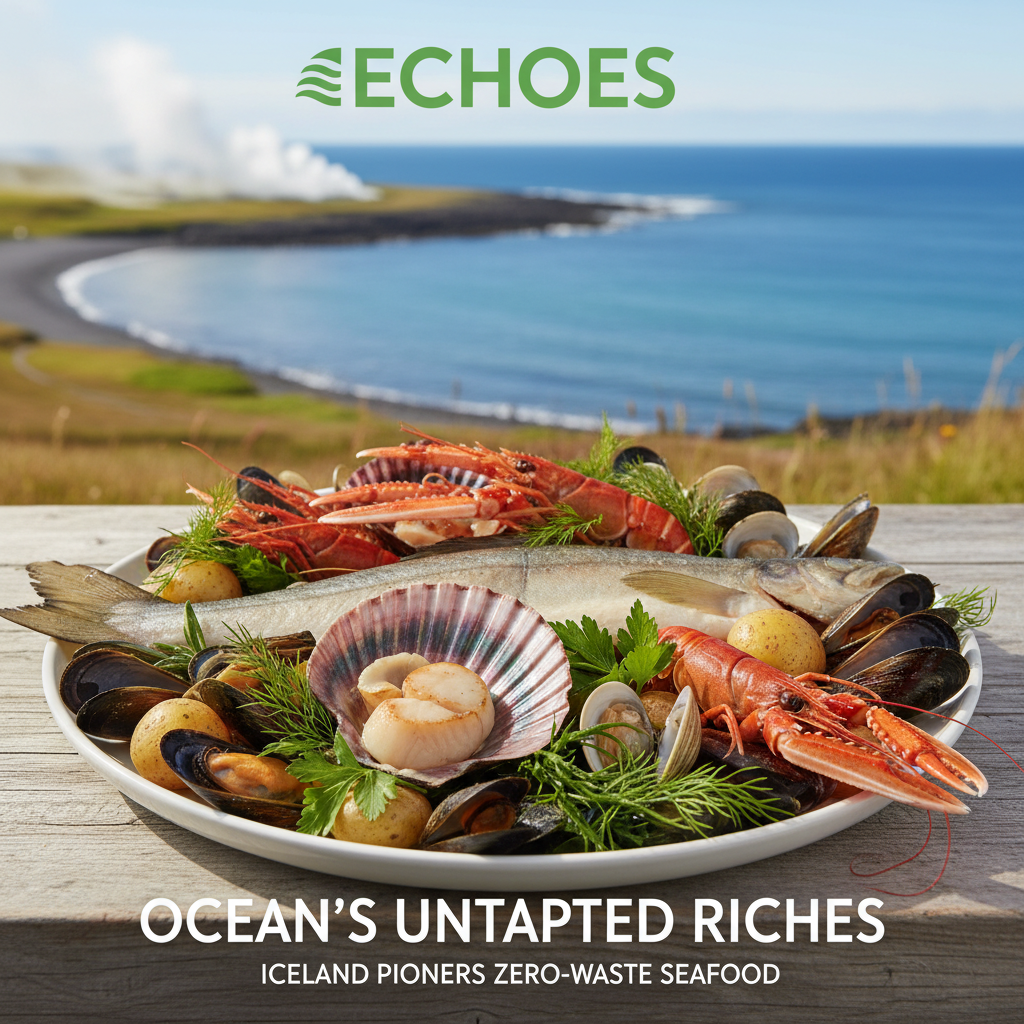
Ocean's Untapped Riches: Iceland Pioneers Zero-Waste Seafood
Key Takeaways
- Iceland's 100% Fish Program utilizes all parts of fish to eliminate waste.
- The initiative transforms byproducts into new, high-value economic goods.
- It significantly boosts coastal economies and promotes the 'blue economy'.
- The program is a leading example of circular economy principles in the food sector.
- It demonstrates how environmental stewardship can drive economic innovation.
In an era where sustainability often feels like an uphill battle, innovations that simultaneously tackle waste and ignite economic growth are nothing short of revolutionary. Imagine a world where every single part of a resource is utilized, leaving nothing behind. That's precisely the vision Iceland is bringing to life with its groundbreaking approach to seafood, transforming what was once waste into a thriving 'blue economy' opportunity that could redefine our relationship with marine resources.
TL;DR: Key Facts
- The 100% Fish Program, spearheaded by the Iceland Ocean Cluster, aims for complete utilization of fish.
- It transforms fish byproducts (e.g., eyes, livers, skin) into new high-value economic goods.
- The initiative drastically reduces food waste within the seafood industry.
- It stimulates economic growth and revitalizes coastal economies.
- The program embodies circular economy principles, maximizing resource value.
What Happened
A new report from Food Tank highlights the remarkable strides made by the 100% Fish Program, an initiative born out of the Iceland Ocean Cluster. This program is not just about efficient processing; it's a paradigm shift in how the seafood industry operates. Traditionally, a significant portion of a caught fish—often up to 50%—would be discarded as waste, comprising heads, guts, bones, and skin. The 100% Fish Program challenges this status quo by committing to utilize every single part of the fish, from its eyes to its liver and skin.
The core concept behind this innovative program is to convert these often-overlooked byproducts into new, high-value economic chains. This means finding creative and profitable uses for every component, ensuring that nothing goes to waste. The program is not merely an environmental endeavor; it's a strategic economic one, breathing new life into coastal communities and fostering what is known as the 'blue economy'—sustainable use of ocean resources for economic growth, improved livelihoods, and ocean ecosystem health.
Why It Matters
For GreenNest Living readers, this program is a beacon of hope and a practical demonstration of circular economy principles in action. The ocean, a vital ecosystem for our planet, is under immense pressure from overfishing, pollution, and climate change. Maximizing the value from every fish caught reduces the overall environmental footprint of the seafood industry. By making better use of what's already harvested, we can lessen the demand for catching more fish, indirectly easing pressure on marine populations and habitats. This holistic approach supports true sustainability, moving beyond mere compliance to genuine resource stewardship.
Beyond the environmental benefits, the economic implications are profound. Coastal communities globally often grapple with economic fluctuations tied to fishing quotas and market demands. The 100% Fish Program offers a robust model for economic diversification and resilience. By creating new industries and jobs centered around byproduct processing—think pharmaceuticals from fish oils, cosmetics from skin, or even specialized foods from other parts—it builds a more stable and prosperous future for these regions. This isn't just about fish; it's about fostering innovative ecosystems that turn challenges into opportunities, benefiting both people and planet.
What You Can Do
- Support Sustainable Seafood: Look for seafood certified by organizations like the Marine Stewardship Council (MSC) or Monterey Bay Aquarium Seafood Watch, indicating responsible fishing practices.
- Minimize Your Own Seafood Waste: When cooking fish at home, explore recipes that use parts often discarded, like fish heads for stock or bones for flavorful broths.
- Ask Questions at the Market: Engage with your local fishmonger or grocery store about their sourcing and whether they work with suppliers who utilize fish byproducts. Your demand can drive change.
- Educate Yourself on the Blue Economy: Learn more about initiatives that promote sustainable ocean-based economic development and support policies that champion such efforts.
- Explore Alternative Proteins: Diversify your protein sources to reduce overall pressure on marine ecosystems, incorporating plant-based options or sustainably farmed insects.
- Advocate for Circular Economy Policies: Encourage your local and national representatives to support legislation that promotes waste reduction and resource maximization across all food industries.
Ciro's Take
As an environmental advocate, seeing initiatives like the 100% Fish Program truly ignites a sense of optimism. It embodies the core principle of sustainability: respect for resources. The idea of transforming every ounce of a fish, a creature from our delicate oceans, into something valuable—whether it's medicine, cosmetics, or new food products—is not just smart, it's a testament to human ingenuity when focused on the right goals. This isn't just about Iceland; it's a blueprint for how we can and must approach all our natural resources. Imagine if every industry adopted this 'zero-waste' mindset. The future of our planet, and certainly our food systems, would look dramatically brighter, fostering not just ecological balance but economic equity too. It's a powerful reminder that true wealth lies in stewardship, not extraction.
FAQs
Q: What is the "Blue Economy"?
A: The "Blue Economy" refers to the sustainable use of ocean resources for economic growth, improved livelihoods, and ocean ecosystem health. It encompasses various sectors like fisheries, aquaculture, shipping, marine tourism, and renewable ocean energy, all managed in an environmentally responsible way.
Q: How much of a fish is typically wasted in conventional processing?
A: Historically, a significant portion, often 30-50% of the total fish mass, is discarded during conventional processing, including heads, bones, guts, and skin. The 100% Fish Program aims to eliminate this waste.
Q: Can the 100% Fish Program model be applied to other food industries?
A: Absolutely. The principles of the 100% Fish Program—maximizing resource utilization, reducing waste, and creating new value chains from byproducts—are highly transferable and can inspire similar circular economy initiatives in agriculture, meat processing, and other food sectors globally.
Sources
This article is based on reporting by Food Tank.
Original source
Food Tank
Author, Digital Entrepreneur & AI Creator
More from Food & Environment
- Poultry Farmers Left Vulnerable: USDA Delays Fair Pay Rule — June 2, 2026
- Trump Era: Local Food Systems & Small Farms Face Headwinds — June 1, 2026
- Clean Plate Movement: States Ban Dyes, World Shifts from Processed Foods — May 31, 2026
- From Blight to Bounty: A Regenerative Farm's Community Lifeline — May 30, 2026