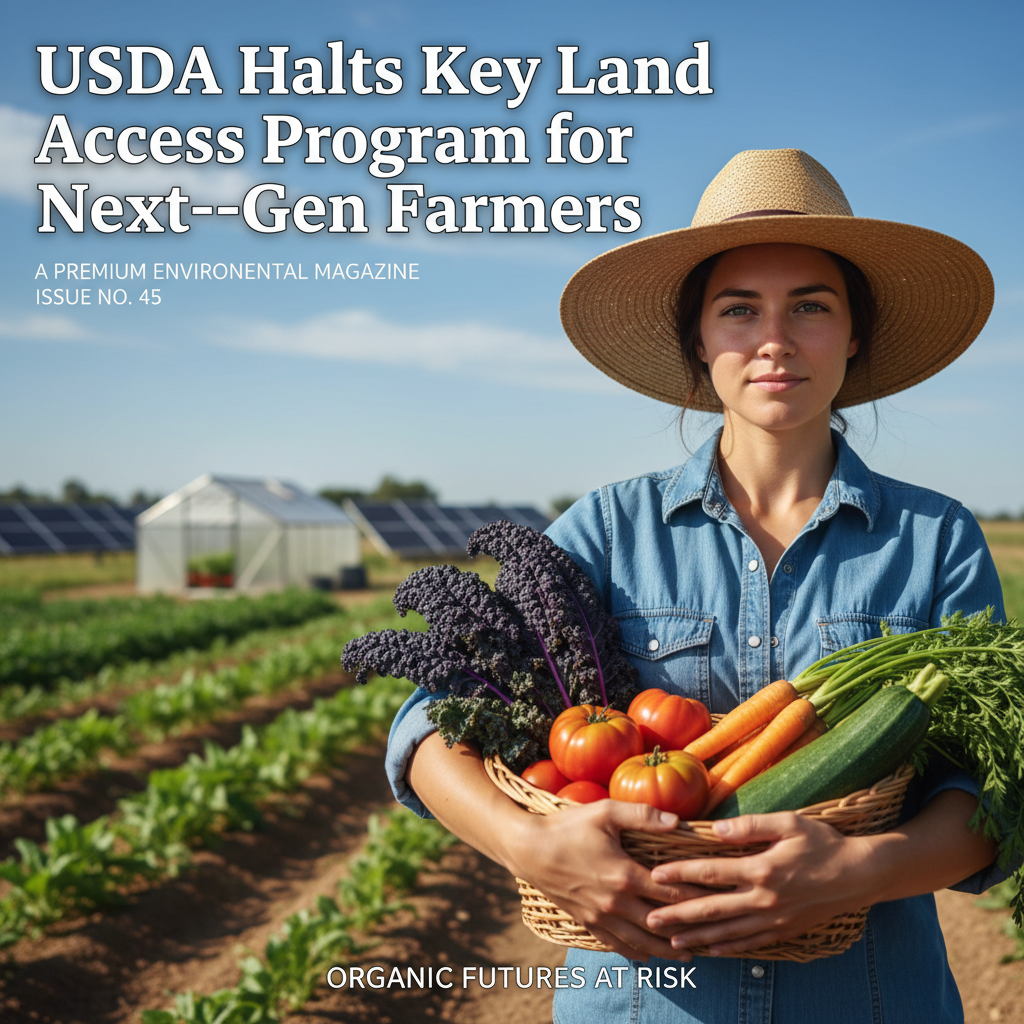
USDA Halts Key Land Access Program for Next-Gen Farmers
Key Takeaways
- USDA canceled $300M 'Increasing Land, Capital, and Market Access' program.
- Program used Inflation Reduction Act and American Rescue Plan funding.
- Aimed to help young farmers overcome land access and capital barriers.
- Cancellation raises concerns for sustainable farming and food security.
- Decision impacts the next generation of environmentally conscious growers.
The future of sustainable agriculture hinges on supporting new farmers, yet a recent decision by the U.S. Department of Agriculture (USDA) has cast a concerning shadow on these crucial efforts. Just as many aspiring young growers are stepping up to cultivate our food systems more regeneratively, a vital program designed to help them access land has been abruptly terminated. This move, impacting $300 million in contracts, raises serious questions about the nation's commitment to a greener, more resilient food future.
TL;DR: Key Facts
- The USDA unilaterally canceled the “Increasing Land, Capital, and Market Access” program.
- This Biden-era initiative was funded by the Inflation Reduction Act and American Rescue Plan.
- The program was designed to provide $300 million in contracts to support beginning farmers.
- Its primary goal was to address critical barriers like land access, capital, and market entry for new growers.
- The cancellation raises significant concerns for the future of sustainable farming and food security.
What Happened
In a significant policy reversal that has sent ripples through the agricultural community, the U.S. Department of Agriculture (USDA) announced on March 25, 2026, the termination of a substantial program aimed at assisting the next generation of farmers. The initiative, officially known as the “Increasing Land, Capital, and Market Access” program, was a key component of the Biden administration's efforts to bolster agricultural resilience and equity.
Established with robust financial backing from both the Inflation Reduction Act and the American Rescue Plan, the program had initially committed $300 million in contracts. Its core mission was to address some of the most formidable barriers faced by new and beginning farmers: prohibitive land costs, limited access to capital, and challenges in reaching viable markets. By providing this crucial “leg up,” the USDA intended to foster a more diverse and dynamic agricultural sector. The sudden cancellation, without immediate public explanation for the decision, leaves many stakeholders bewildered and concerned about the viability of ambitious new farming ventures across the country.
Why It Matters
This decision reverberates deeply within the "Food & Environment" sphere, particularly for GreenNest Living readers who understand the intrinsic link between how our food is grown and the health of our planet. Access to land is arguably the single largest hurdle for young, aspiring farmers, many of whom are eager to implement innovative, sustainable, and regenerative practices. Without critical support to secure and develop farmland, these potential stewards of the earth’s soil, water, and biodiversity may never get their start, stifling the much-needed shift towards ecological agriculture.
The cancellation not only undermines efforts to diversify agriculture, both in terms of crop varieties and the demographics of farmers themselves, but also directly impacts our nation's food security. Young farmers, often driven by environmental consciousness and a desire to build local food systems, are key to transitioning away from conventional, chemically-intensive agriculture towards systems that enhance soil health, conserve water, reduce greenhouse gas emissions, and boost regional food resilience. This program’s termination represents a significant setback for a more environmentally sound and equitable food system, potentially entrenching the status quo rather than fostering necessary change. It also raises unsettling questions about the stability and predictability of government support for crucial environmental and social initiatives, making long-term planning for sustainable agriculture even more challenging. The message it sends to those considering a career in sustainable farming is disheartening at best.
What You Can Do
- Contact Your Representatives: Reach out to your local and national elected officials to express your concern about this program's cancellation and advocate for policies supporting new and sustainable farmers.
- Support Local, Young Farmers: Seek out and purchase produce directly from beginning farmers in your community through farmers’ markets, CSAs, and farm stands. Your economic support is vital.
- Advocate for Land Access Initiatives: Research and support non-profit organizations and land trusts working to make farmland more accessible and affordable for sustainable farmers.
- Educate Yourself and Others: Learn more about the challenges faced by new farmers and share this information within your network to raise awareness and foster a supportive community.
- Invest in Future Farmers: Consider contributing to loan funds or grants specifically designed to help young farmers overcome financial barriers to land acquisition and sustainable infrastructure.
FAQs
Q: What was the primary goal of the cancelled program?
A: The Increasing Land, Capital, and Market Access program aimed to provide financial assistance and resources to young and beginning farmers, specifically addressing the critical barrier of land access.
Q: Why was the program cancelled by the USDA?
A: The provided news snippet does not state the specific reasons for the cancellation, only that the USDA terminated the contracts. This lack of transparency is a point of concern for many stakeholders.
Q: How does this cancellation impact sustainable farming efforts?
A: It significantly hinders sustainable farming by making it harder for environmentally-conscious young farmers to acquire land and start their operations, thus slowing the transition to more regenerative agricultural practices.
Sources
This article is based on reporting by Civil Eats.
Original source
Civil Eats
Author, Digital Entrepreneur & AI Creator
More from Food & Environment
- Gardening: A Neurosurgeon's Secret to Longevity & Well-being — May 13, 2026
- Farm to School: Nourishing Kids, Cultivating Community Growth — May 12, 2026
- High-Risk Cheese Outbreak: FDA Alert Amid E. coli Fears — May 11, 2026
- Are Your 'Healthy' Foods Truly Nutritious? New Study Investigates — May 10, 2026
- Australia Battles Food Waste: A Global Sustainability Push — May 9, 2026