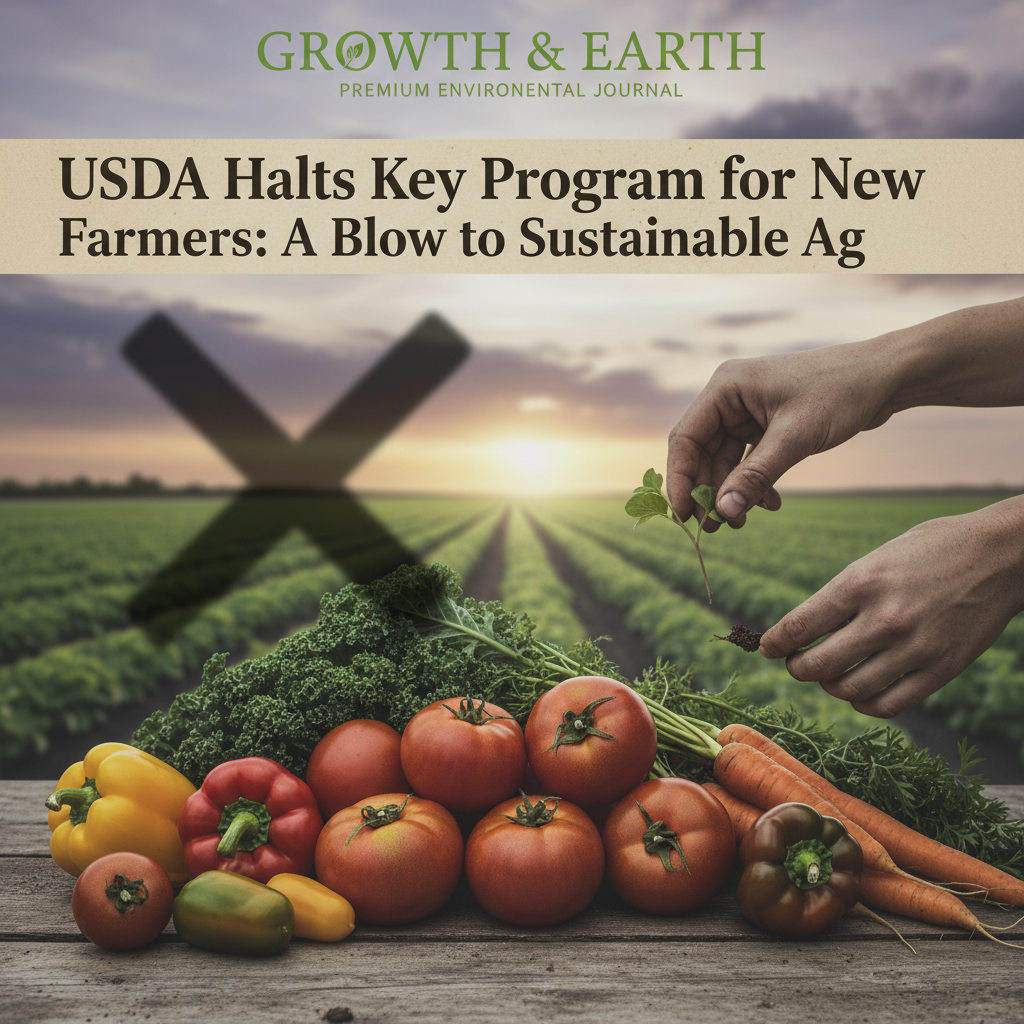
USDA Halts Key Program for New Farmers: A Blow to Sustainable Ag
Key Takeaways
- USDA terminated its Land Access Program, established in 2023.
- The program aimed to help new and underserved farmers access land and markets.
- This decision creates significant barriers for aspiring sustainable and diverse farmers.
- It has implications for environmental stewardship, food security, and social equity in agriculture.
- Readers can act by contacting officials, supporting local farms, and joining advocacy efforts.
A critical support system for the future of sustainable agriculture and food equity in the United States has just been dismantled. The USDA's recent termination of the Land Access Program, established just last year, marks a significant setback for emerging and underserved farmers who are vital to building resilient, environmentally conscious food systems.
This decision arrives at a time when consumer demand for local, healthy, and sustainably produced food is soaring, making the accessibility of land and resources for those committed to these values more crucial than ever before.
TL;DR: Key Facts
- The U.S. Department of Agriculture (USDA) has terminated its Land Access Program.
- The program was originally established in 2023 with the goal of expanding land and market access.
- Its primary beneficiaries were intended to be new and historically underserved farmers.
- The termination removes a crucial avenue for these farmers to gain a foothold in the agricultural sector.
What Happened
In 2023, the United States Department of Agriculture (USDA) launched the Land Access Program, an initiative designed to address one of the most significant barriers facing new and underserved farmers: access to land and markets. This program was a beacon of hope for many, aiming to provide resources and opportunities to individuals and communities traditionally marginalized within the agricultural landscape. Its mandate was clear: to foster a more equitable and diverse farming sector by facilitating pathways for these crucial groups to acquire land and connect with consumers.
However, in a surprising turn of events, the USDA has announced the termination of this nascent program. While the specific reasons for its dissolution have not been extensively detailed, the impact is immediate and profound. The termination effectively removes a dedicated federal mechanism intended to level the playing field, leaving many aspiring and existing underserved farmers without the specific support structure that was designed to help them thrive.
Why It Matters
This decision by the USDA to terminate the Land Access Program carries far-reaching implications, particularly for the intersection of food and environment. New and underserved farmers often represent the vanguard of sustainable agriculture. They are frequently at the forefront of adopting regenerative practices, diversifying crops, fostering biodiversity, and establishing local food systems that reduce carbon footprints and enhance ecological health. By removing a key support system, the USDA risks stifling innovation and growth in precisely the areas most critical for environmental stewardship and climate resilience within our food production.
Furthermore, the program's focus on underserved farmers touched upon vital issues of social equity and community resilience. Many of these farmers come from backgrounds that have historically been disenfranchised from land ownership and agricultural opportunities. Supporting them isn't just about food production; it's about repairing historical injustices, building intergenerational wealth, and ensuring that our food system reflects the diversity of our population. The termination jeopardizes these advancements, potentially narrowing the demographic representation in farming and thus limiting the range of perspectives and approaches to agricultural challenges, including those related to environmental protection.
From an environmental perspective, robust support for new and smaller-scale farms is paramount. These operations are often more agile in implementing practices like cover cropping, reduced tillage, and organic methods, which are crucial for soil health, water conservation, and carbon sequestration. Larger, industrialized farms, while efficient in scale, frequently rely on monocultures and chemical inputs that can degrade ecosystems. Hindering the growth of new, often sustainability-minded farmers could inadvertently reinforce a less environmentally friendly agricultural paradigm, undermining national efforts towards climate goals and biodiversity preservation. This is a moment when GreenNest Living readers must understand that policy choices directly shape the landscape of our environment and the health of our food supply.
What You Can Do
- Contact Your Elected Officials: Reach out to your congressional representatives and senators. Express your concern about the termination of the Land Access Program and advocate for policies that support new and underserved farmers.
- Support Local & Diverse Farms: Seek out and purchase food directly from farmers markets, CSAs (Community Supported Agriculture), and local grocery stores that source from small and diverse farms. Your dollar is a vote.
- Engage with Advocacy Groups: Join or support organizations that champion land access, agricultural equity, and sustainable farming practices for new and underserved farmers.
- Educate Your Community: Share this information with friends, family, and social networks. Raising awareness about the challenges facing new farmers is a crucial first step towards collective action.
- Invest in Local Food Systems: Look for opportunities to volunteer, donate, or invest in community gardens, urban farms, and initiatives that directly help connect aspiring farmers with resources and land.
FAQs
Q: What was the primary goal of the USDA's Land Access Program?
A: The program was established to expand land and market access opportunities specifically for new and historically underserved farmers, aiming to foster a more equitable and diverse agricultural sector.
Q: Who are considered "underserved farmers"?
A: Underserved farmers typically include individuals from historically marginalized groups, such as racial and ethnic minorities, women, veterans, and beginning farmers, who have faced significant barriers in accessing resources and opportunities in agriculture.
Q: How does the termination of this program impact sustainable agriculture?
A: It creates a significant hurdle for new farmers, who are often pioneers in adopting sustainable and regenerative farming practices. Limiting their access to land and markets could slow the transition to more environmentally friendly food systems and reduce agricultural diversity.
Sources
This article is based on reporting by Food Tank.
Original source
Food Tank
Author, Digital Entrepreneur & AI Creator
More from Food & Environment
- Gardening: A Neurosurgeon's Secret to Longevity & Well-being — May 13, 2026
- Farm to School: Nourishing Kids, Cultivating Community Growth — May 12, 2026
- High-Risk Cheese Outbreak: FDA Alert Amid E. coli Fears — May 11, 2026
- Are Your 'Healthy' Foods Truly Nutritious? New Study Investigates — May 10, 2026
- Australia Battles Food Waste: A Global Sustainability Push — May 9, 2026