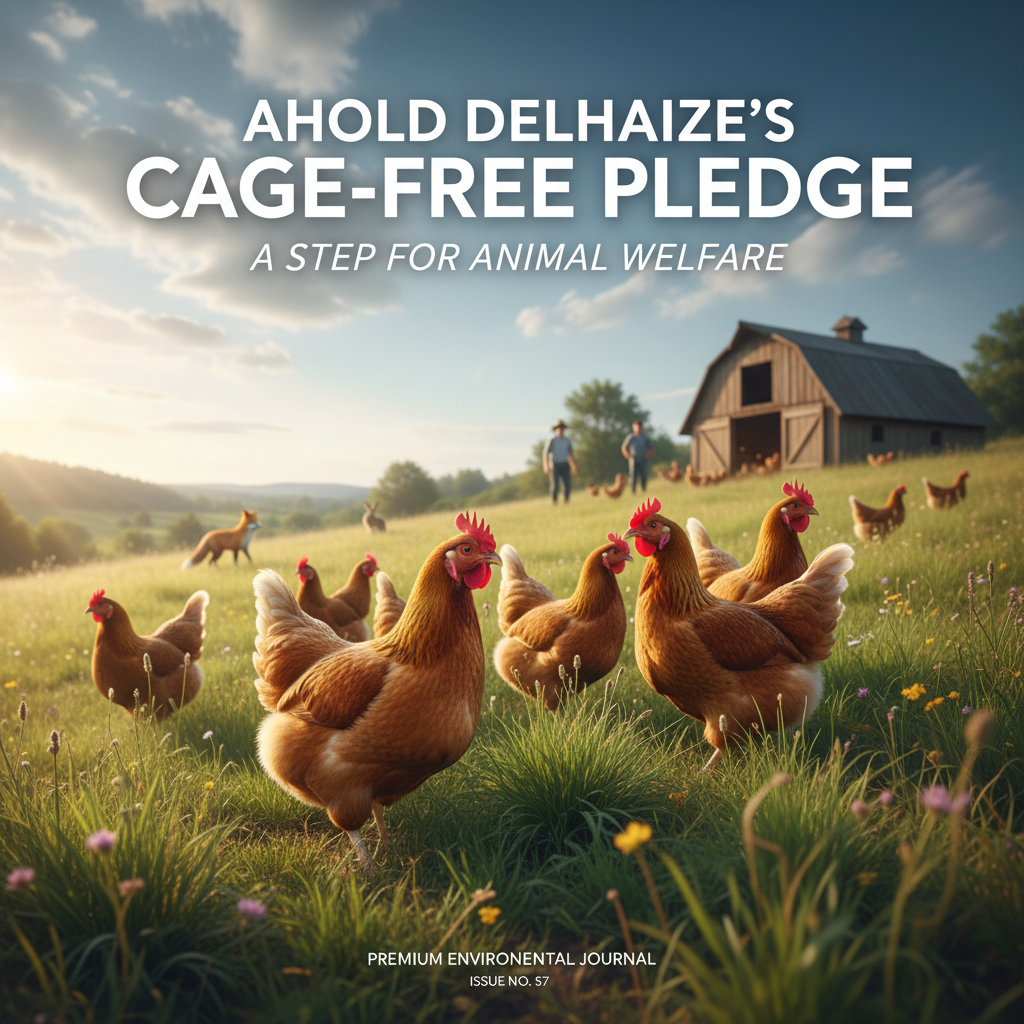
Ahold Delhaize's Cage-Free Pledge: A Step for Animal Welfare
Key Takeaways
- Ahold Delhaize commits to 100% cage-free eggs.
- This applies to its United States supply chain.
- The deadline for this transition is 2032.
- The move aims to improve animal welfare for laying hens.
- It responds to consumer demand for ethically sourced products.
In a move that signals a growing shift in corporate responsibility, supermarket powerhouse Ahold Delhaize has announced a firm timeline to transition its entire United States egg supply chain to 100% cage-free sources by 2032. This commitment is more than just a policy change; it reflects evolving consumer values and sets a new benchmark for how large retailers approach animal welfare in their product offerings, impacting millions of animals and influencing industry practices for years to come.
TL;DR: Key Facts
- Ahold Delhaize, a major supermarket group, has committed to selling only cage-free eggs.
- The commitment applies to its entire United States supply chain.
- The target date for achieving this 100% cage-free status is 2032.
- This initiative directly impacts the welfare of hens supplying eggs to their stores.
- It signifies a response to increasing consumer demand for ethically sourced products.
What Happened
Ahold Delhaize, the parent company of prominent U.S. grocery chains such as Stop & Shop, Giant Food, Food Lion, and Hannaford, has publicly declared its intention to source 100% cage-free eggs for its United States operations. This announcement sets a definitive timeline for the company to phase out eggs from conventional caged systems across all its brands in the country.
This commitment follows a growing trend among major food retailers to respond to public demand for improved animal welfare standards. By setting a clear target of 2032, Ahold Delhaize is providing its suppliers with a decade to transition their production methods, signaling a significant, albeit gradual, shift in the egg industry's landscape within the U.S. The move solidifies the company's stance on ethical sourcing and positions it among leaders in the supermarket sector addressing animal welfare concerns.
Why It Matters
For readers of GreenNest Living, this isn't just about grocery shopping; it's a profound statement on our relationship with the natural world and the ethical treatment of animals, even those raised for food. While hens in industrial settings aren't 'wildlife,' their welfare falls under the broader umbrella of 'nature news' by reflecting humanity's responsibility towards all living creatures. Cage-free systems, by allowing hens to move freely, perch, and lay eggs in nests, permit natural behaviors essential for their well-being, a stark contrast to the severe confinement of battery cages. This move acknowledges that animals are not mere commodities, but sentient beings deserving of a life free from unnecessary suffering.
Furthermore, Ahold Delhaize's commitment sends a powerful signal across the agricultural industry. When a corporation of this magnitude demands cage-free eggs, it drives systemic change. It incentivizes farmers to invest in more humane, and often more sustainable, housing systems. This shift can influence feed practices, waste management, and even the public perception of animal agriculture, pushing the entire sector towards practices that are more aligned with ecological values and a deeper respect for the natural world. It underscores the power of consumer choice in compelling corporations to prioritize ethical considerations alongside profit.
What You Can Do
As conscious consumers, your choices hold immense power. Here's how you can support this positive trend and advocate for higher animal welfare standards:
- Choose Certified Cage-Free or Pasture-Raised: Always look for third-party certifications like Certified Humane, Animal Welfare Approved, or Global Animal Partnership (GAP) on egg cartons. These go beyond basic cage-free claims to ensure even higher welfare standards.
- Support Retailers with Strong Commitments: Prioritize shopping at stores that have clear, ambitious animal welfare policies for all their products, not just eggs.
- Ask Your Local Grocer: Engage with your store managers. Inquire about their egg sourcing policies and encourage them to stock more ethically produced options.
- Educate Others: Share information about the benefits of cage-free and higher-welfare eggs with friends and family. Informed consumers drive market demand.
- Explore Plant-Based Alternatives: Consider incorporating more plant-based egg substitutes into your diet, further reducing demand for industrially farmed animal products.
- Advocate for Policy Change: Support organizations working to strengthen animal welfare legislation and industry standards, both locally and nationally.
FAQs
Q: What does 'cage-free' actually mean?
A: 'Cage-free' means that hens are not kept in traditional battery cages. They are typically housed in open barns, allowing them to roam, perch, and lay eggs in nests. However, it does not necessarily mean they have outdoor access.
Q: Why is the target date 2032, and not sooner?
A: Transitioning to 100% cage-free egg production requires significant investment and operational changes for farmers, including constructing new barns or retrofitting existing ones. A 2032 deadline provides suppliers with a realistic timeframe to make these costly adjustments without disrupting the supply chain.
Q: Does this commitment apply to all Ahold Delhaize stores globally?
A: The announcement specifically states the commitment applies to Ahold Delhaize's United States supply chain. Policies may vary for their operations in other countries.
Sources
This article is based on reporting by The Animal Reader.
Original source
The Animal Reader
Author, Digital Entrepreneur & AI Creator
More from Wildlife & Nature News
- The Silent Drain: Sand Scarcity Threatens Global Ecosystems — May 13, 2026
- Celestial Glimpse: Earth's Glow, Our Lost Night Skies — May 11, 2026
- Google's UK Datacentre Emissions Understated by Factor of Five — May 10, 2026
- Cosmic Beacon: Earth's Glow Inspires Global Stewardship — May 9, 2026
- Amazon Tipping Point: Deforestation, Warming Threaten Rainforest by 2040s — May 8, 2026