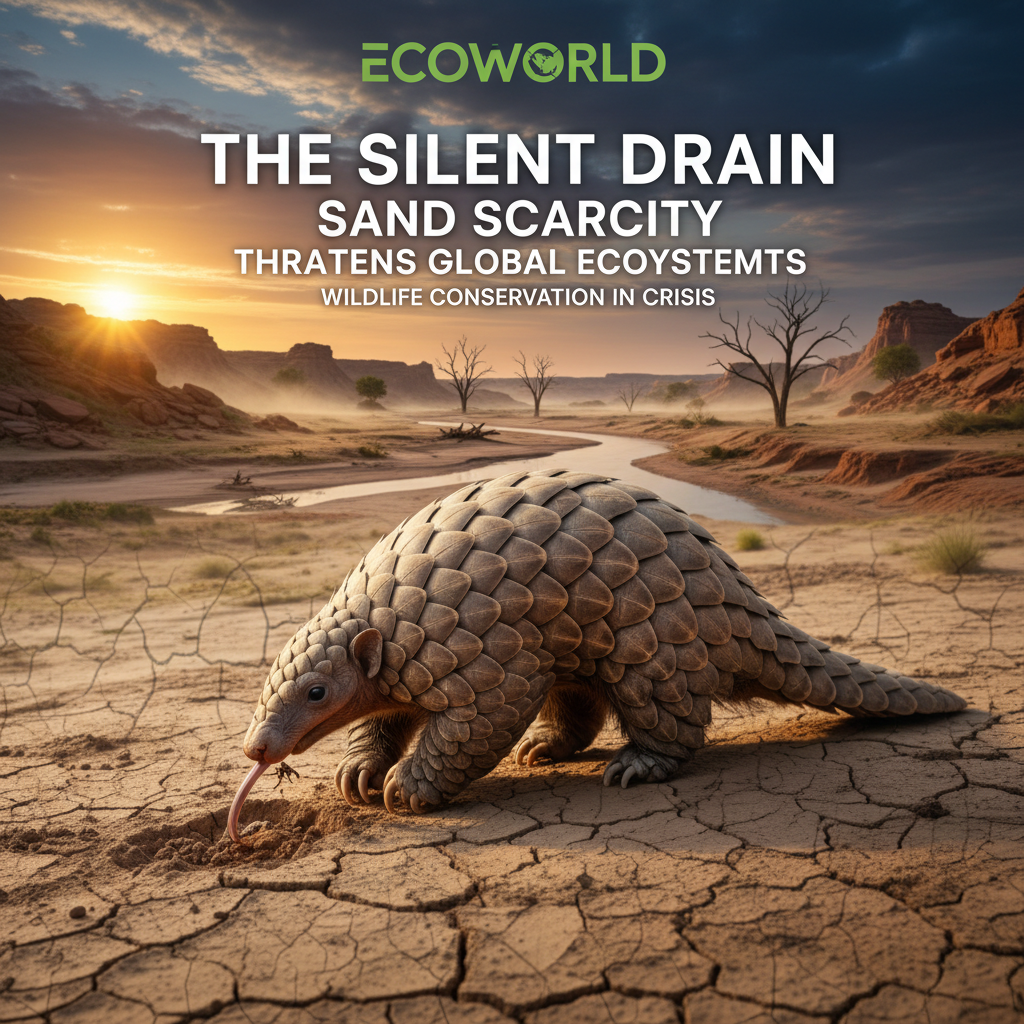
The Silent Drain: Sand Scarcity Threatens Global Ecosystems
Key Takeaways
- Sand is the world's most extracted solid material, surpassing fossil fuels.
- Extraction rates are critically faster than natural replenishment.
- This crisis directly threatens crucial ecosystems like rivers, coasts, and marine habitats.
- Vulnerable communities, such as Malé in the Maldives, face exacerbated threats from rising sea levels and resource scarcity.
- The unchecked demand for sand highlights a critical challenge in global sustainable resource management and its impact on biodiversity.
Imagine a world where the very foundation of our infrastructure and natural defenses is crumbling, not from an asteroid impact, but from our own insatiable demand. This isn't a dystopian fantasy, but the escalating reality of the global sand crisis, a critical environmental challenge that is rapidly transforming landscapes and jeopardizing the delicate balance of our planet's most vital ecosystems.
TL;DR: Key Facts
- Sand is the most extracted solid material on Earth, exceeding fossil fuels and biomass.
- Extraction rates far outpace natural replenishment, leading to rapid depletion.
- This unsustainable demand threatens global ecosystems, from riverbeds to coastal habitats.
- Millions of livelihoods, especially in vulnerable coastal communities, are at risk.
- Cities like Malé in the Maldives face a double threat from rising sea levels and the environmental impact of sand extraction.
What Happened
Our planet is facing an unprecedented demand for sand, a resource so fundamental to modern life that its scarcity often goes unnoticed. As the most extracted solid material globally, sand is the backbone of urban development, essential for concrete, asphalt, glass, and even the electronics we use daily. However, the current rate of extraction — billions of tonnes annually — is dramatically outstripping nature's capacity to regenerate it through geological processes.
This relentless removal of sand from riverbeds, coastlines, and marine environments has profound and often devastating consequences. It directly leads to the erosion of beaches, the destruction of critical habitats for countless species, and the destabilization of river systems. The source highlights Malé, the capital of the Maldives, as a stark example. Already one of the world's most overcrowded cities, it's simultaneously battling the existential threat of rising sea levels, a challenge exacerbated by ecosystem degradation linked to sand mining, as well as the ongoing need for sand for reclamation projects to sustain its growing population.
The crisis is not just an ecological one; it's deeply intertwined with human livelihoods. Communities reliant on healthy coastal ecosystems for fishing, tourism, and natural flood protection find their very existence jeopardized as their environment is literally dug away beneath them. This 'global sand crisis' is a slow-motion catastrophe, silently undermining the natural infrastructure that sustains both wildlife and human societies.
Why It Matters
For readers of GreenNest Living, the global sand crisis is not just another environmental headline; it’s a visceral warning about the limits of our planet’s resources and the far-reaching impacts of unchecked consumption on wildlife and nature. This isn't merely about construction materials; it's about the erosion of biodiversity, the collapse of natural defenses, and the unraveling of entire ecosystems that depend on stable sandy environments.
Consider the delicate balance of a river system or a coastal shoreline. Sand acts as a natural filter, a habitat for aquatic life, and a buffer against floods and storms. When it's aggressively mined, these functions are severely compromised. Riverbeds deepen, altering water flow and making them uninhabitable for fish and invertebrates. Coastal wetlands and beaches, vital nurseries for marine species and nesting grounds for birds and turtles, vanish. This loss directly translates to a decline in biodiversity, threatening species that are already vulnerable to climate change and habitat destruction. The situation in the Maldives, where an overcrowded city faces rising sea levels, painfully illustrates how sand extraction further strips away the natural resilience of vulnerable ecosystems, leaving both nature and human communities dangerously exposed.
Moreover, this crisis underscores a fundamental challenge of sustainable living: our reliance on finite resources for infinite growth. It forces us to confront how our demand for infrastructure material directly contributes to ecological degradation, blurring the lines between human development and environmental destruction. Understanding this crisis is crucial for fostering a deeper appreciation for the interconnectedness of all natural systems and inspiring collective action towards more sustainable resource management, ultimately safeguarding the wildlife and natural landscapes we cherish.
What You Can Do
- Advocate for Sustainable Sourcing: Support policies and companies that prioritize recycled materials (like recycled concrete or glass) and sustainably sourced alternatives to virgin sand in construction and manufacturing.
- Reduce, Reuse, Recycle: Minimize your overall consumption of new products, especially those with high raw material inputs. The less we demand new materials, the less sand is needed.
- Support Conservation Efforts: Donate to or volunteer with organizations working on coastal and riverine ecosystem restoration and advocating for better resource management.
- Educate Yourself and Others: Share information about the sand crisis with friends and family. Awareness is the first step towards change.
- Demand Transparency: Ask local authorities or construction companies about their sand sourcing practices. Encourage local governments to implement stricter regulations on sand mining.
- Invest in Green Technologies: Support industries and innovations that reduce reliance on virgin materials and promote circular economy principles.
Ciro's Take
The global sand crisis is, in many ways, the perfect metaphor for our often-overlooked environmental challenges. It's an invisible crisis, buried beneath our cities and infrastructure, yet its implications for wildlife and nature are profound and irreversible. As an environmental advocate, it pains me to see how a seemingly inert material like sand, so crucial to natural processes and human development alike, has become a casualty of our unsustainable consumption. This isn't just about rocks; it's about the living fabric of our planet – the rivers, coastlines, and delicate ecosystems – being literally dug out from under us. We must urgently shift our perspective from viewing resources as endless commodities to recognizing their finite nature and the invaluable ecological services they provide. The future of countless species, and indeed our own, hinges on this fundamental shift in stewardship.
FAQs
Q: Why is sand so important for human society?
A: Sand is a fundamental component of concrete, asphalt, and glass, making it essential for virtually all modern infrastructure, including buildings, roads, bridges, and even electronic devices.
Q: Why can't desert sand be used to meet global demand?
A: Desert sand grains are typically too fine, smooth, and rounded by wind erosion. They don't bind effectively, making them unsuitable for construction purposes like concrete, which requires rough, angular grains found in riverbeds and marine environments.
Q: Are there sustainable alternatives to natural sand?
A: Yes, alternatives include recycled concrete aggregate, crushed rock, manufactured sand (produced by crushing larger rocks), and even some industrial by-products. The challenge lies in scaling these alternatives and ensuring their economic viability and environmental footprint are truly superior.
Sources
This article is based on reporting by The Guardian Environment.
Original source
The Guardian Environment
Author, Digital Entrepreneur & AI Creator
More from Wildlife & Nature News
- Celestial Glimpse: Earth's Glow, Our Lost Night Skies — May 11, 2026
- Google's UK Datacentre Emissions Understated by Factor of Five — May 10, 2026
- Cosmic Beacon: Earth's Glow Inspires Global Stewardship — May 9, 2026
- Amazon Tipping Point: Deforestation, Warming Threaten Rainforest by 2040s — May 8, 2026