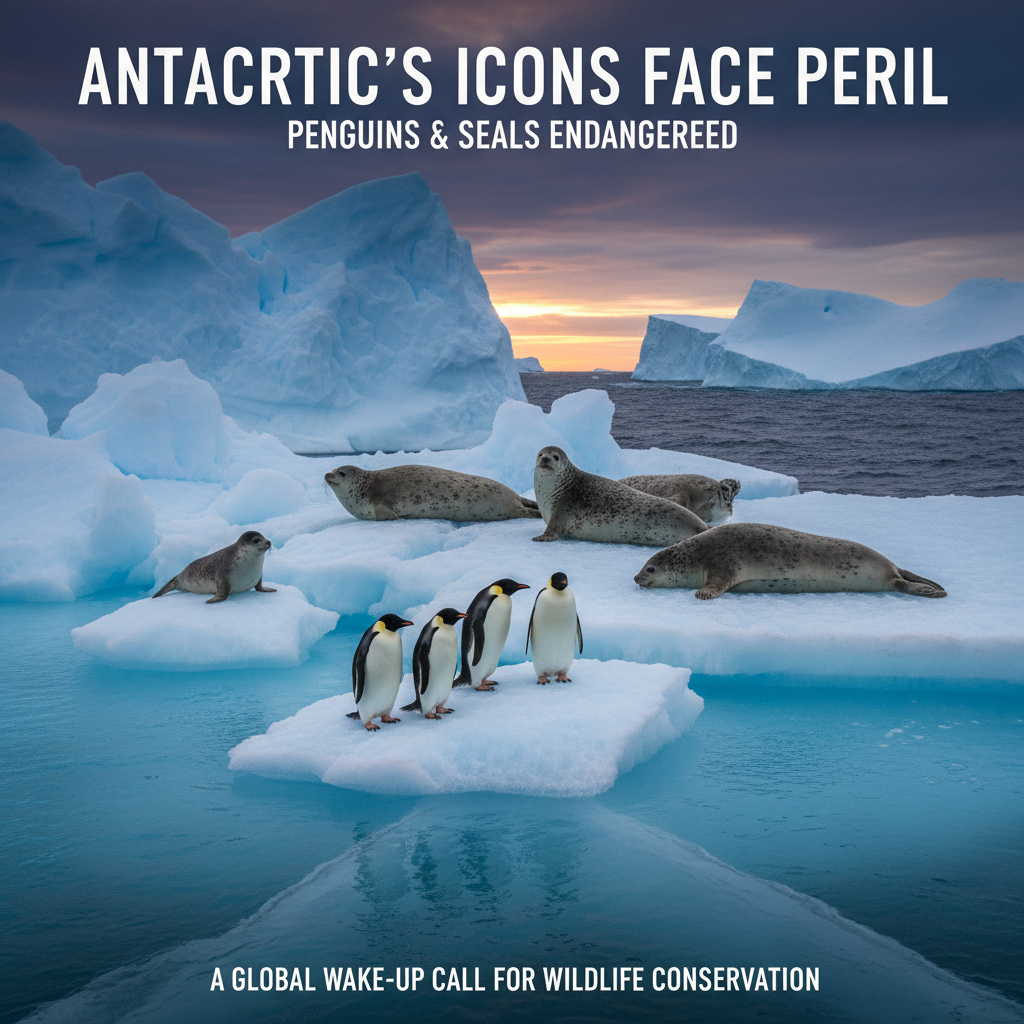
Antarctic's Icons Face Peril: Penguins & Seals Endangered
Key Takeaways
- Emperor penguins and Antarctic fur seals are now officially endangered.
- This listing highlights the severe threats faced by these iconic Antarctic animals.
- Their vulnerability is directly linked to environmental shifts, particularly climate change.
- The status of these indicator species reflects the overall health of the Antarctic ecosystem.
- This news serves as a critical warning for global biodiversity and climate stability.
Antarctic's Icons Face Peril: Penguins & Seals Endangered
The distant, pristine ice of Antarctica might seem far removed from our daily lives, yet the alarming news emanating from this crucial ecosystem directly impacts the health of our planet and all who inhabit it. The official designation of two of its most emblematic species as endangered is not just a scientific update; it's a stark, urgent warning ringing out across the globe, demanding our immediate attention.
TL;DR: Key Facts
- The Emperor penguin has been officially listed as endangered.
- The Antarctic fur seal has also been officially listed as endangered.
- Both species are iconic inhabitants of the Antarctic region.
- This listing signifies a severe threat to their populations and habitats.
- The news highlights the escalating ecological challenges facing polar wildlife.
What Happened
According to an update from The Animal Reader, an independent news platform focused on animal and environmental news, two key Antarctic animal species have received official endangered status. These are the majestic Emperor penguin and the resilient Antarctic fur seal.
This formal listing means that the populations of both the Emperor penguin and the Antarctic fur seal are now considered to be at very high risk of extinction in the wild. The declaration underscores significant concerns about their long-term survival within their unique polar environment.
Why It Matters
This announcement isn't just about two species; it's a flashing red light for the entire Antarctic ecosystem and, by extension, the health of our global climate. Emperor penguins, dependent on stable sea ice for breeding, foraging, and molting, are particularly vulnerable to warming temperatures and sea ice loss. Antarctic fur seals, while more adaptable, face pressures from changing prey availability due to ocean warming and overfishing, as well as entanglement in marine debris.
These animals are considered indicator species—their health reflects the health of their environment. Their endangered status signals profound changes occurring in one of the planet's most critical and fragile regions. The melting of polar ice caps contributes to rising sea levels and disrupts global ocean currents, impacting weather patterns and biodiversity far beyond the Antarctic circle. This news compels us to confront the accelerating pace of climate change and its direct, tangible consequences on iconic wildlife and the intricate web of life.
For GreenNest Living readers, understanding this connectivity is paramount. The fate of these Antarctic creatures is interwoven with our own. Their struggle for survival is a direct consequence of human activities, primarily greenhouse gas emissions, and serves as a powerful reminder of our responsibility to act as stewards of this planet. Protecting these species means protecting a vital part of Earth's natural heritage and ensuring the stability of ecosystems that regulate our climate.
What You Can Do
While Antarctica feels distant, your actions have a direct impact on these endangered species and their habitat. Here's what you can do:
- Reduce Your Carbon Footprint: Drive less, use public transport, bicycle, or walk. Opt for renewable energy sources for your home, and reduce your overall energy consumption. Every watt saved helps.
- Support Climate Advocacy: Contact your elected officials to demand stronger climate policies, investment in renewable energy, and protection for critical habitats. Join or support organizations actively campaigning for climate action.
- Choose Sustainable Seafood: Overfishing directly impacts marine food webs that Antarctic fur seals and penguins rely on. Use guides like those from the Monterey Bay Aquarium Seafood Watch to make informed choices about the fish you consume.
- Minimize Plastic Use: Plastic pollution is a major threat to marine life, including seals and penguins, through entanglement and ingestion. Reduce single-use plastics, recycle diligently, and participate in local cleanups.
- Educate and Advocate: Share this news with friends, family, and your community. Awareness is the first step towards collective action. The more people understand the crisis, the greater the pressure for change.
- Support Conservation Efforts: Donate to reputable organizations dedicated to polar research and wildlife conservation, such as the World Wildlife Fund (WWF), the Antarctic and Southern Ocean Coalition (ASOC), or specific penguin/seal conservation groups.
Ciro's Take
As an environmental journalist and advocate, hearing about the Emperor penguin and Antarctic fur seal being listed as endangered sends a shiver down my spine – not from the cold, but from the chilling reality of what this signifies. These aren't just animals; they are living symbols of a magnificent, yet imperiled, wilderness. For me, it's a profound, personal call to action, a stark reminder that our choices here, thousands of miles away, echo through the fragile polar regions. This news isn't just a headline; it's a mirror reflecting our collective impact, urging us to step up and safeguard the planet's wild heart before it's too late.
FAQs
Q: What does an 'endangered' listing mean?
A: An 'endangered' listing means a species is considered to be at a very high risk of extinction in the wild, indicating significant population decline or habitat loss.
Q: Why are Emperor penguins and Antarctic fur seals particularly vulnerable?
A: Emperor penguins rely heavily on stable sea ice for their breeding and feeding, making them extremely vulnerable to climate-induced ice loss. Antarctic fur seals are impacted by changes in prey availability due to ocean warming and fishing, as well as marine pollution.
Q: How does the health of Antarctic species affect global ecosystems?
A: Antarctic species are indicator species; their decline signals broader ecological distress. Changes in polar regions, like melting ice and disrupted food webs, contribute to global sea-level rise and alter ocean currents, impacting climate and ecosystems worldwide.
Sources
This article is based on reporting by The Animal Reader.
Original source
The Animal Reader
Author, Digital Entrepreneur & AI Creator
More from Wildlife & Nature News
- The Silent Drain: Sand Scarcity Threatens Global Ecosystems — May 13, 2026
- Celestial Glimpse: Earth's Glow, Our Lost Night Skies — May 11, 2026
- Google's UK Datacentre Emissions Understated by Factor of Five — May 10, 2026
- Cosmic Beacon: Earth's Glow Inspires Global Stewardship — May 9, 2026
- Amazon Tipping Point: Deforestation, Warming Threaten Rainforest by 2040s — May 8, 2026