Celestial Glimpse: Earth's Glow, Our Lost Night Skies
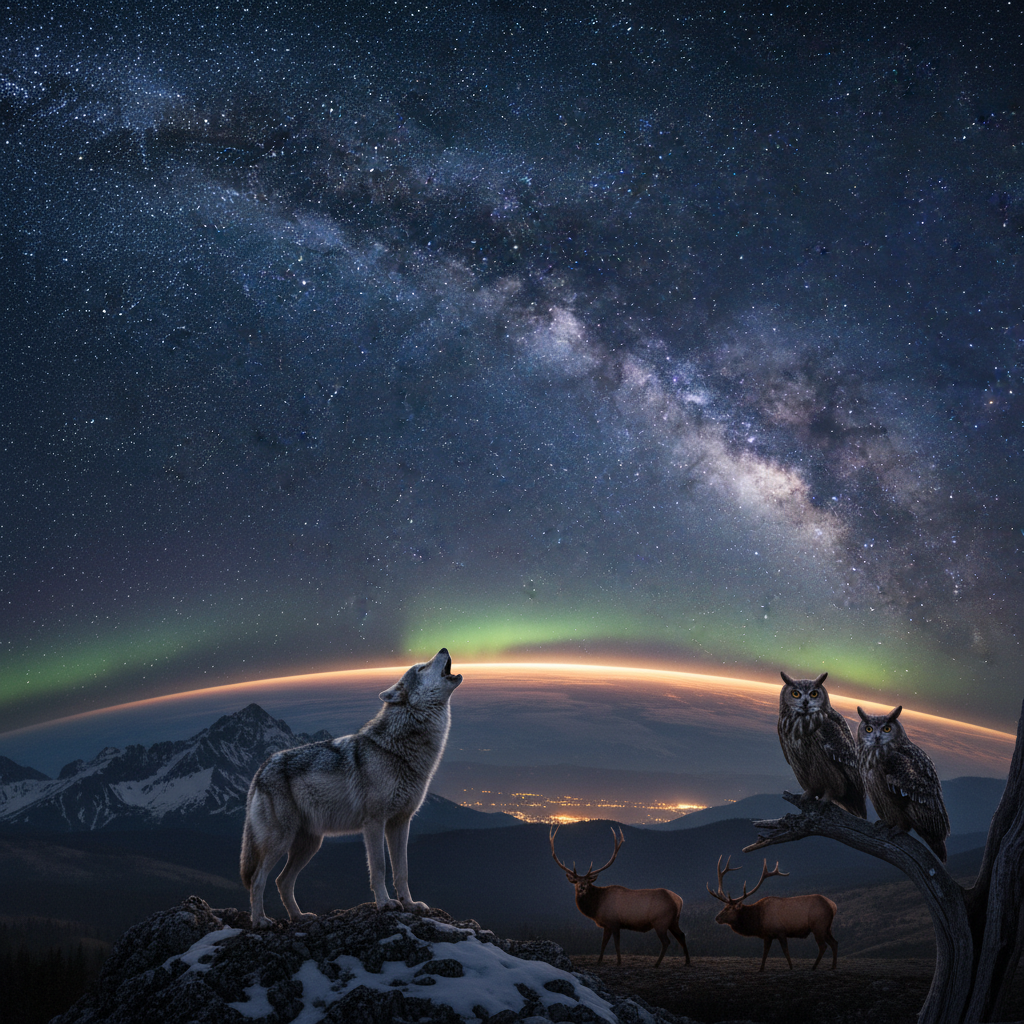
Key Takeaways
- A NASA image shows Earth's atmospheric glow and the Milky Way from space.
- This perspective sharply contrasts with increasing light pollution on Earth.
- Artificial light at night (ALAN) obscures the natural night sky for most of humanity.
- Light pollution severely disrupts nocturnal wildlife behaviors and ecosystems.
- It also contributes to energy waste and can negatively impact human health.
From the vast expanse of space, our planet often appears as a serene, glowing marble. A recent breathtaking image captured from a SpaceX Dragon spacecraft docked to the International Space Station reminds us of this ethereal beauty, showcasing the Milky Way arching majestically above Earth's delicate atmospheric glow. Yet, this celestial vista carries a profound, often overlooked message for us on the ground: the increasing disconnect between humanity and the natural night sky, a disconnection with far-reaching consequences for our environment and its wild inhabitants.
TL;DR: Key Facts
- A stunning NASA image from the International Space Station (ISS) captured the Milky Way rising above Earth's atmospheric glow.
- This pristine view from orbit highlights the stark contrast with the increasing light pollution experienced on most of Earth.
- Artificial light at night (ALAN) now obscures the natural night sky for over 80% of the global population, and nearly 99% in Europe and North America.
- Light pollution significantly impacts nocturnal wildlife, disrupting migration patterns, foraging, reproduction, and predator-prey dynamics.
- It also affects plant physiology, human health, and represents a significant waste of energy resources.
What Happened
High above our world, from a unique vantage point aboard a SpaceX Dragon spacecraft, astronauts captured an awe-inspiring photograph that has quickly become NASA's Image of the Day. This celestial masterpiece reveals our home planet bathed in a soft, ethereal atmospheric glow, with the brilliant band of the Milky Way stretching across the inky blackness of space above it. The image offers an unparalleled perspective of Earth's natural beauty and its cosmic context, a view that is increasingly rare for those of us living within its atmosphere.
The photograph was taken from a window while the Dragon spacecraft was docked to the International Space Station, providing a stable platform for this remarkable shot. It showcases not only the grandeur of our galaxy but also the delicate, vibrant layer of our atmosphere – a natural phenomenon often called airglow, created by various chemical reactions and solar radiation interacting with gases. This specific image serves as a powerful reminder of what a truly dark, star-filled sky looks like, unmarred by artificial light.
Why It Matters
While the image from space is undeniably beautiful, its true significance for GreenNest Living readers lies in the contrast it implicitly draws with our terrestrial reality. From this elevated perspective, one can observe Earth's natural atmospheric luminescence. But what's increasingly invisible to the naked eye from most populated areas on Earth is the Milky Way itself, swallowed by a growing sea of artificial light at night (ALAN). This phenomenon, known as light pollution, is a rapidly accelerating environmental concern with profound implications for wildlife and ecosystems.
Light pollution disrupts the most fundamental biological rhythms of countless species. Nocturnal animals, which constitute over 30% of vertebrates and over 60% of invertebrates, rely on natural cycles of light and dark for navigation, hunting, mating, and avoiding predators. Migratory birds, for instance, can become disoriented by bright city lights, leading to fatal collisions or exhausted detours. Sea turtle hatchlings, naturally guided by the brighter horizon over the ocean, are drawn inland by artificial coastal lights, often perishing before reaching the sea. Insects, vital pollinators and a base for many food webs, are attracted to and trapped by artificial lights, leading to population declines that ripple through entire ecosystems.
Beyond wildlife, light pollution can also alter plant physiology, delaying bud break and autumn leaf senescence, thereby affecting ecosystem productivity and food availability for herbivores. It impacts human health too, disrupting our circadian rhythms, which can lead to sleep disorders and other health issues. Ultimately, the loss of natural night skies represents a spiritual and cultural impoverishment, severing our connection to the cosmos and dimming our understanding of our place within it. This space-borne image, therefore, isn't just a pretty picture; it's a cosmic alarm bell urging us to safeguard our planet's natural darkness for all life.
What You Can Do
- Embrace "Dark Sky Friendly" Lighting: Opt for outdoor lighting fixtures that are fully shielded, directing light downwards to illuminate only the intended area, not the sky.
- Choose Warm-Toned LEDs: Select LEDs with a color temperature of 3000K or less. These emit less blue light, which is more disruptive to wildlife and human sleep.
- Turn Off Unnecessary Lights: Implement timers, motion sensors, or simply make a habit of turning off outdoor lights when they're not needed. Less light means less energy consumption and less pollution.
- Advocate for Dark Sky Ordinances: Support or lobby for local policies that promote responsible outdoor lighting in your community, protecting natural nightscapes.
- Support Dark Sky Parks and Reserves: Visit and contribute to efforts that preserve naturally dark areas, allowing both people and wildlife to experience pristine night skies.
- Educate and Inspire: Share information about light pollution and its impacts with friends, family, and local community groups. Awareness is the first step towards change.
Ciro's Take
As an environmental journalist, images like this NASA capture profoundly move me. To see the Milky Way so vibrantly, stretching across the infinite canvas above our Earth's delicate glow, is to glimpse a beauty most of us on the ground can only dream of. It’s a powerful, almost poignant reminder of what we are rapidly losing – not just the stars, but the very rhythm of life that depends on a natural cycle of light and dark. For wildlife, the loss of true night is an ecological catastrophe unfolding in slow motion, disrupting ancient patterns and jeopardizing survival. It personally reinforces for me that environmental advocacy isn't just about grand policy shifts; it's about preserving the fundamental elements of nature, even the unseen beauty of a dark night sky, for the health of our planet and the soul of humanity.
FAQs
Q: What is Earth's atmospheric glow, or airglow?
A: Airglow is a natural phenomenon where the Earth's upper atmosphere emits a faint light, even in the absence of sunlight. It's caused by various chemical reactions, primarily involving oxygen and nitrogen molecules, excited by solar radiation during the day and releasing that energy as light at night.
Q: How exactly does light pollution affect wildlife?
A: Artificial light at night (ALAN) can disorient migratory birds and sea turtles, disrupt the hunting and foraging patterns of nocturnal predators and prey, interfere with the reproductive cycles of amphibians and insects, and even alter plant growth and flowering times, leading to ecosystem imbalances.
Q: Is all artificial outdoor lighting considered light pollution?
A: Not necessarily. Light pollution specifically refers to excessive, misdirected, or obtrusive artificial light. Well-designed, shielded lighting that is only used when and where needed, with appropriate intensity and color temperature, can minimize its negative impacts. The goal is responsible lighting, not eliminating all artificial light.
Sources
This article is based on reporting by NASA.
Original source
NASA Image of the Day
Author, Digital Entrepreneur & AI Creator
More from Wildlife & Nature News
- The Silent Drain: Sand Scarcity Threatens Global Ecosystems — May 13, 2026
- Google's UK Datacentre Emissions Understated by Factor of Five — May 10, 2026
- Cosmic Beacon: Earth's Glow Inspires Global Stewardship — May 9, 2026
- Amazon Tipping Point: Deforestation, Warming Threaten Rainforest by 2040s — May 8, 2026