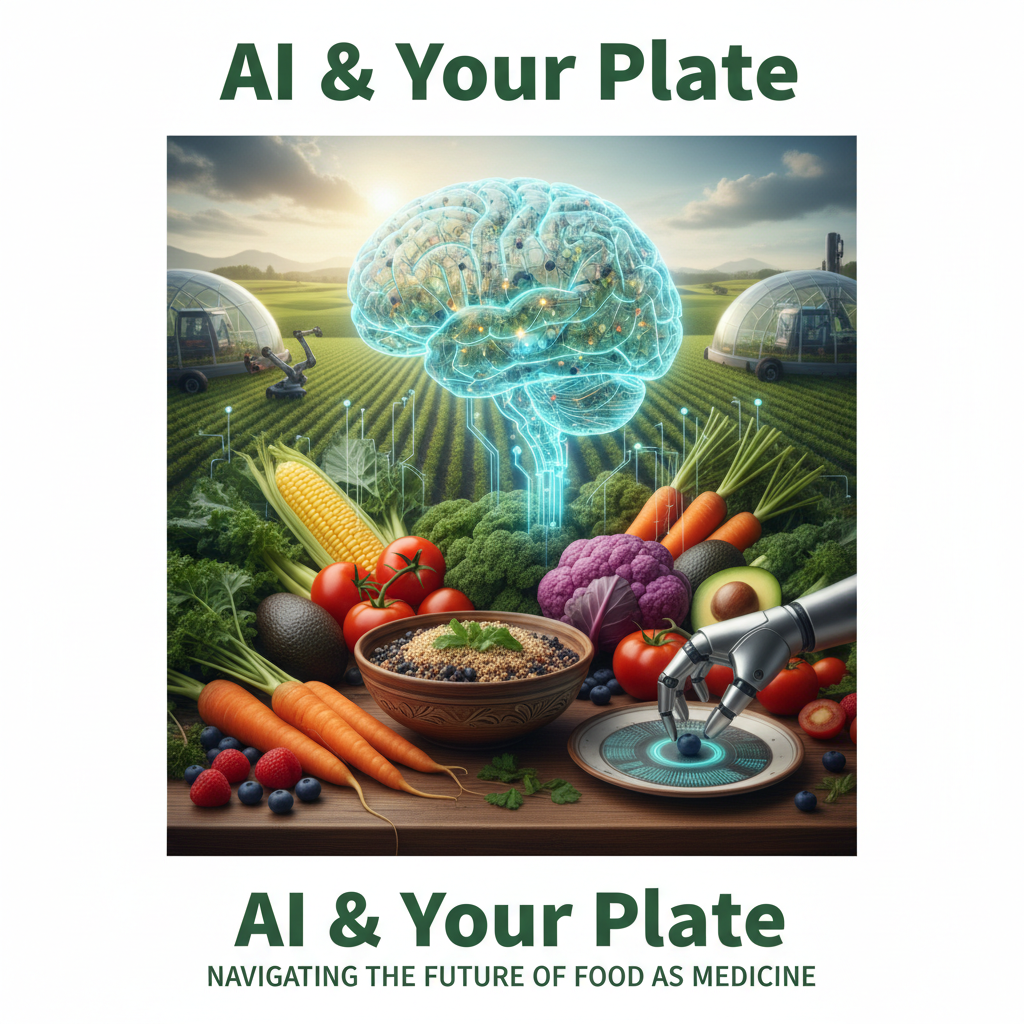
AI & Your Plate: Navigating the Future of Food as Medicine
Key Takeaways
- AI offers significant potential to personalize and scale "Food is Medicine" programs.
- Ethical challenges like data privacy and algorithmic bias require careful consideration.
- Equitable access to AI-driven health solutions is crucial to avoid widening health disparities.
- Readers should remain informed, advocate for responsible AI, and prioritize sustainable food choices.
- The long-term impact on food systems and environmental sustainability must be a core part of the discussion.
The convergence of artificial intelligence and healthcare is rapidly reshaping our understanding of wellness, with a critical new focus on "Food is Medicine." This isn't just about using technology to track diets; it's about AI's potential to fundamentally transform how food is prescribed, accessed, and integrated into personalized health strategies for millions. As this powerful technology enters our kitchens and clinics, understanding its profound implications for human health and environmental sustainability has never been more urgent.
TL;DR: Key Facts
- Artificial Intelligence is being explored for its potential to advance "Food is Medicine" programs.
- "Food is Medicine" refers to the practice of integrating nutritious food interventions into healthcare to prevent and treat disease.
- The integration of AI presents significant opportunities, such as personalized dietary recommendations and improved program efficiency.
- However, serious questions are being raised about the ethical and responsible use of AI in this sensitive area.
- Challenges include data privacy, algorithmic bias, equitable access, and ensuring human oversight in dietary recommendations.
What Happened
The concept of "Food is Medicine" — utilizing food and nutrition as a primary tool for health intervention and disease prevention — is gaining significant traction within healthcare systems and public health initiatives. Recently, discussions highlighted by Food Tank have shifted to explore the burgeoning role Artificial Intelligence (AI) could play in this critical field. This emerging discourse acknowledges that while AI presents a "major opportunity" to scale and personalize food-based health solutions, it simultaneously introduces "serious challenges" regarding its responsible implementation.
These conversations are not just theoretical; they reflect a growing recognition that AI's analytical power could revolutionize everything from precision nutrition to supply chain optimization for food prescriptions. However, the brief article from Food Tank underscores that alongside this excitement, there is a vital need to address complex ethical, practical, and societal considerations. The core message is clear: embracing AI in "Food is Medicine" requires asking serious questions about how we ensure its benefits are equitably distributed, its data handled with integrity, and its recommendations are sound and bias-free.
Why It Matters
For GreenNest Living readers, the intersection of AI and "Food is Medicine" holds profound significance, bridging the gap between personal well-being and broader environmental impacts. On one hand, AI offers an unprecedented ability to tailor dietary interventions to individual genetic profiles, health conditions, and cultural preferences, moving beyond one-size-fits-all advice. This personalized approach can lead to more effective disease management and prevention, potentially reducing the burden on conventional healthcare systems and improving quality of life. Imagine AI identifying specific nutrient deficiencies based on your health data and recommending locally sourced, sustainable foods that address them, simultaneously benefiting your body and the planet.
However, the "serious questions" about AI's responsible use are paramount. Without careful ethical frameworks, AI could exacerbate existing health disparities if access to its benefits is unequal, or if algorithms perpetuate biases present in training data. There are also concerns about data privacy, the potential for over-reliance on technology at the expense of human empathy and intuition, and the environmental footprint of AI itself (e.g., energy consumption for large models). For a sustainable lifestyle, understanding how AI-driven "Food is Medicine" initiatives procure and recommend food is crucial – will it prioritize sustainable agriculture, reduce food waste, and support local food systems, or simply optimize for convenience and cost, potentially at environmental detriment? This nascent field requires thoughtful engagement to ensure it aligns with our values of health, equity, and planetary stewardship.
What You Can Do
Here’s how you can engage with the evolving landscape of AI in Food is Medicine:
- Stay Informed: Follow reputable sources like GreenNest Living and Food Tank to understand the latest developments, ethical debates, and successful implementations of AI in nutrition and healthcare.
- Advocate for Ethical AI: Support organizations and policies that champion data privacy, algorithmic transparency, and equitable access in health technology. Your voice helps shape future regulations.
- Question AI Recommendations: If you encounter AI-driven dietary advice, always consult with a qualified human healthcare professional (doctor, registered dietitian) to ensure it aligns with your unique needs and values.
- Prioritize Sustainable Choices: Regardless of AI's role, continue to choose locally sourced, seasonal, and sustainably produced foods. Support food systems that benefit both human and planetary health.
- Support "Food is Medicine" Programs: Look for opportunities to volunteer with or donate to local initiatives that connect healthy food with healthcare, demonstrating community demand for these solutions.
- Engage in Local Discussions: Participate in community forums or discussions about technology and health. Share your perspective on how AI can be used for good in your local food environment.
Ciro's Take
As an environmental journalist deeply committed to sustainable living, the emerging conversation around AI's role in "Food is Medicine" strikes me as both thrilling and daunting. The promise of personalized nutrition, optimized for individual health and delivered through efficient systems, could be a game-changer for public health and reducing food waste. Imagine a world where every meal is precisely what your body needs, sourced sustainably. However, my excitement is tempered by a healthy skepticism. We must ensure that this technological leap doesn't inadvertently widen the health equity gap or lead to an over-reliance on algorithms that obscure the profound, interconnected wisdom of traditional food systems and community-based health. The true measure of AI's success here won't just be medical outcomes, but its ability to foster genuine human well-being alongside ecological harmony, without compromising either.
FAQs
Q: What is "Food is Medicine"?
A: "Food is Medicine" is a broad term for programs and policies that integrate nutritious food and nutrition services into healthcare, often to prevent, manage, or treat diet-related diseases. Examples include medically tailored meals, food pharmacies, and produce prescription programs.
Q: How can AI specifically help "Food is Medicine" initiatives?
A: AI can analyze vast amounts of health data (genomics, medical records, lifestyle), personalize dietary recommendations, optimize food supply chains for prescription programs, identify at-risk populations, and even provide real-time nutritional coaching, making these programs more efficient and tailored.
Q: What are the main ethical concerns with using AI in this field?
A: Key concerns include potential algorithmic bias (leading to unequal recommendations for different demographics), data privacy and security, ensuring equitable access to AI-driven services, maintaining human oversight, and avoiding the creation of a "digital divide" where some benefit more than others.
Sources
This article is based on reporting by Food Tank.
Original source
Food Tank
Author, Digital Entrepreneur & AI Creator
More from Food & Environment
- Agroforestry: Greener Farms, Stronger Ecosystems, Brighter Future — June 4, 2026
- Ocean's Untapped Riches: Iceland Pioneers Zero-Waste Seafood — June 3, 2026
- Poultry Farmers Left Vulnerable: USDA Delays Fair Pay Rule — June 2, 2026
- Trump Era: Local Food Systems & Small Farms Face Headwinds — June 1, 2026