Amazon Gold Crackdown: A Major Win for Nature
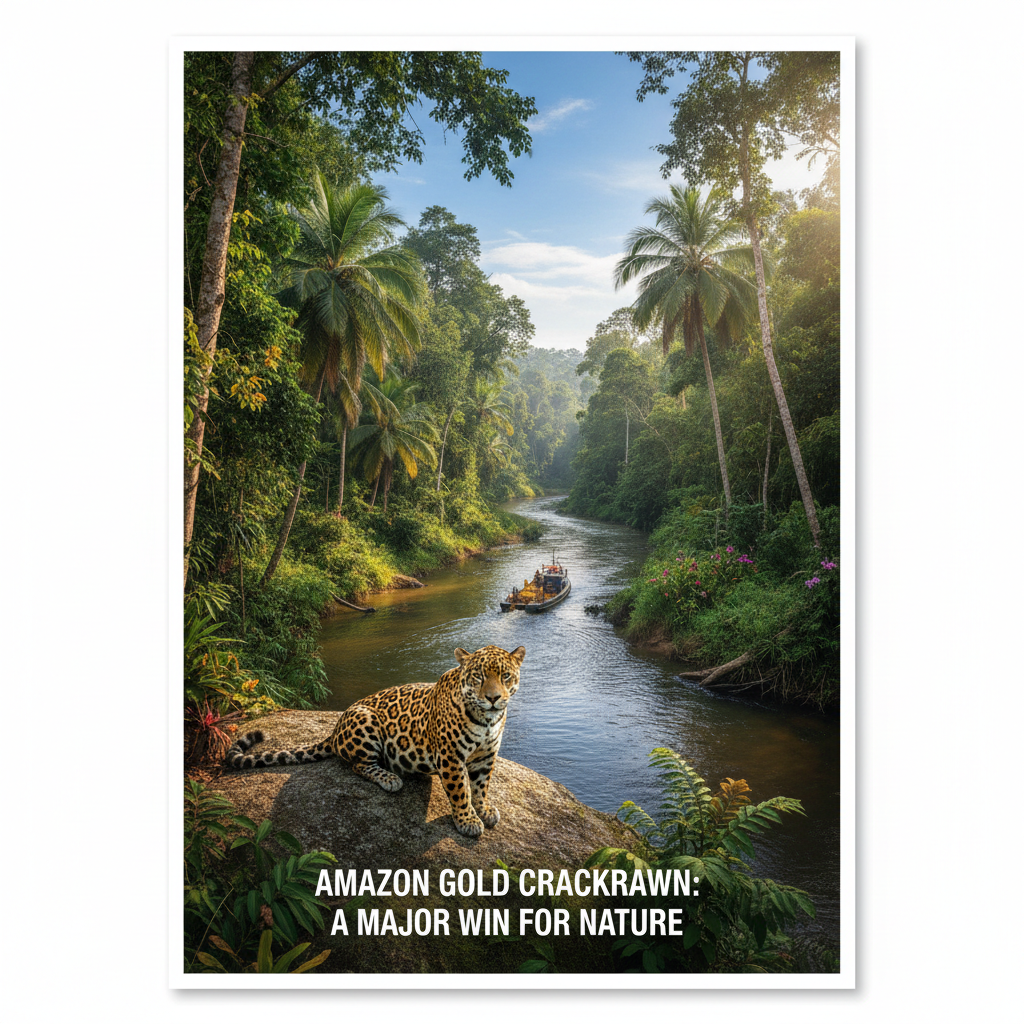
Key Takeaways
- Nearly 200 arrests made in a joint cross-border operation against illegal gold mining.
- Operation involved Brazil, French Guiana, Guyana, and Suriname, with Interpol's backing.
- First-ever joint cross-border enforcement action of its kind in the Amazon region.
- Targets a significant driver of deforestation and mercury pollution in the Amazon.
- Highlights crucial international cooperation to combat transnational environmental crime.
The Amazon rainforest, a vital lung of our planet, faces relentless threats, and illegal gold mining is among the most destructive. This week, a significant international law enforcement sweep delivered a powerful message: cross-border environmental crime will not go unchallenged. This coordinated action marks a crucial turning point in protecting one of Earth's most precious ecosystems right now.
TL;DR: Key Facts
- Nearly 200 arrests were made in a major cross-border operation targeting illegal gold mining in the Amazon.
- The operation involved police and prosecutors from Brazil, French Guiana, Guyana, and Suriname.
- It was the first-ever joint cross-border enforcement action of its kind in the Amazon region, backed by Interpol.
- The initiative directly confronts a significant driver of deforestation and mercury pollution in the Amazon.
- This collaborative effort highlights the global commitment to combating environmental crime in critical ecosystems.
What Happened
In an unprecedented display of international cooperation, law enforcement agencies across the Amazon basin launched a joint offensive against illegal gold mining, culminating in nearly 200 arrests. Police and prosecutors from four nations – Brazil, French Guiana, Guyana, and Suriname – spearheaded the operation. This collaborative effort, notably backed by Interpol, represents the first time these countries have united in a cross-border initiative specifically targeting the pervasive issue of illegal gold extraction.
The multi-national sweep aimed at dismantling the criminal networks and operations responsible for illicit mining activities, which are notorious for their devastating impact on the Amazon's delicate ecosystems. While specific details of the individual arrests and confiscated materials are still emerging, the sheer scale of the operation underscores the gravity of the problem and the commitment of regional authorities, supported by global bodies, to tackle it head-on. The concerted action sends a strong message to those profiting from environmental destruction in one of the world’s most biodiverse regions.
Why It Matters
This Interpol-backed crackdown on illegal gold mining in the Amazon is far more than just a series of arrests; it's a pivotal moment for wildlife and nature conservation, signaling a new era of enforcement against environmental crime. Illegal gold mining is a direct assault on the Amazon's biodiversity, leading to widespread deforestation as miners clear vast tracts of land for operations. This habitat destruction directly threatens countless species, many of which are endemic and endangered, from jaguars and tapirs to thousands of insect and plant species that form the intricate web of life in the rainforest. The loss of these unique ecosystems weakens the entire planetary life support system, impacting global climate regulation and carbon sequestration.
Beyond deforestation, the methods employed in illegal gold mining are acutely toxic. Miners frequently use mercury to separate gold from ore, a practice that releases the heavy metal directly into rivers. This mercury bioaccumulates in the food chain, poisoning fish, wildlife, and critically, the indigenous communities who rely on these waterways for sustenance. The long-term health consequences for both humans and animals are severe, affecting neurological development, reproductive health, and overall ecosystem function. This operation directly addresses the source of this widespread pollution, offering a glimmer of hope for the recovery of contaminated areas and the health of affected populations.
Furthermore, this joint, cross-border operation highlights the transnational nature of environmental crime. Illegal gold mining networks often operate across national boundaries, making individual country efforts insufficient. Interpol's involvement and the cooperation between Brazil, French Guiana, Guyana, and Suriname demonstrate a crucial understanding that protecting the Amazon requires a unified front. It sets a precedent for future international collaboration against other forms of environmental degradation, from illegal logging to wildlife trafficking. For GreenNest Living readers, this emphasizes that global problems demand global solutions, and that robust enforcement is an indispensable tool in the fight for a sustainable future for our planet's invaluable natural heritage.
What You Can Do
Protecting the Amazon and combating environmental crime requires collective action. Here's how you, as a conscious consumer and global citizen, can make a difference:
- Support Reputable Conservation Organizations: Donate to or volunteer with organizations actively working on the ground in the Amazon to monitor illegal activities, restore degraded lands, and support indigenous communities. Look for those with transparent financial reporting and proven impact.
- Educate Yourself and Others: Learn more about the impacts of illegal gold mining and other environmental crimes. Share this knowledge with your friends, family, and social networks to raise awareness and foster a collective sense of responsibility for these critical issues.
- Advocate for Stronger Policies: Contact your elected officials and express your support for policies that strengthen international cooperation against environmental crime, increase funding for enforcement agencies, and promote sustainable economic alternatives for communities in sensitive regions.
- Demand Responsibly Sourced Products: Be mindful of your consumption. While direct links to illegal gold are often obscured, supporting companies with transparent supply chains and ethical sourcing policies for all goods can indirectly reduce demand for illegally extracted resources.
- Reduce Overall Consumption: A more sustainable lifestyle that minimizes overall resource use puts less pressure on natural ecosystems worldwide. Consider the lifecycle of products you buy and opt for durable, reusable, and recycled items whenever possible.
- Support Indigenous Rights: Indigenous communities are often the frontline defenders of the Amazon. Support organizations that work to protect their land rights and traditional knowledge, as their presence is a proven deterrent to illegal activities.
FAQs
Q: What is illegal gold mining?
A: Illegal gold mining refers to the extraction of gold without proper legal authorization, often violating environmental regulations, labor laws, and indigenous land rights. It typically involves environmentally destructive methods, such as clearing forests and using toxic chemicals like mercury.
Q: Why is illegal gold mining such a problem in the Amazon?
A: The Amazon is a biodiversity hotspot and a critical climate regulator. Illegal gold mining causes massive deforestation, pollutes rivers with mercury, degrades soil, and disrupts the delicate balance of its ecosystems. It also threatens the health and livelihoods of indigenous communities, fuels organized crime, and contributes to human rights abuses.
Q: What does Interpol's involvement in this operation signify?
A: Interpol's backing signifies that illegal gold mining is recognized as a serious transnational organized crime. Their involvement facilitates crucial cross-border intelligence sharing and coordination, enabling multiple countries to work together effectively against criminal networks that often operate across national boundaries, making it much harder for them to evade justice.
Sources
This article is based on reporting by Mongabay.
Original source
Mongabay
Author, Digital Entrepreneur & AI Creator
More from Wildlife & Nature News
- The Silent Drain: Sand Scarcity Threatens Global Ecosystems — May 13, 2026
- Celestial Glimpse: Earth's Glow, Our Lost Night Skies — May 11, 2026
- Google's UK Datacentre Emissions Understated by Factor of Five — May 10, 2026
- Cosmic Beacon: Earth's Glow Inspires Global Stewardship — May 9, 2026
- Amazon Tipping Point: Deforestation, Warming Threaten Rainforest by 2040s — May 8, 2026