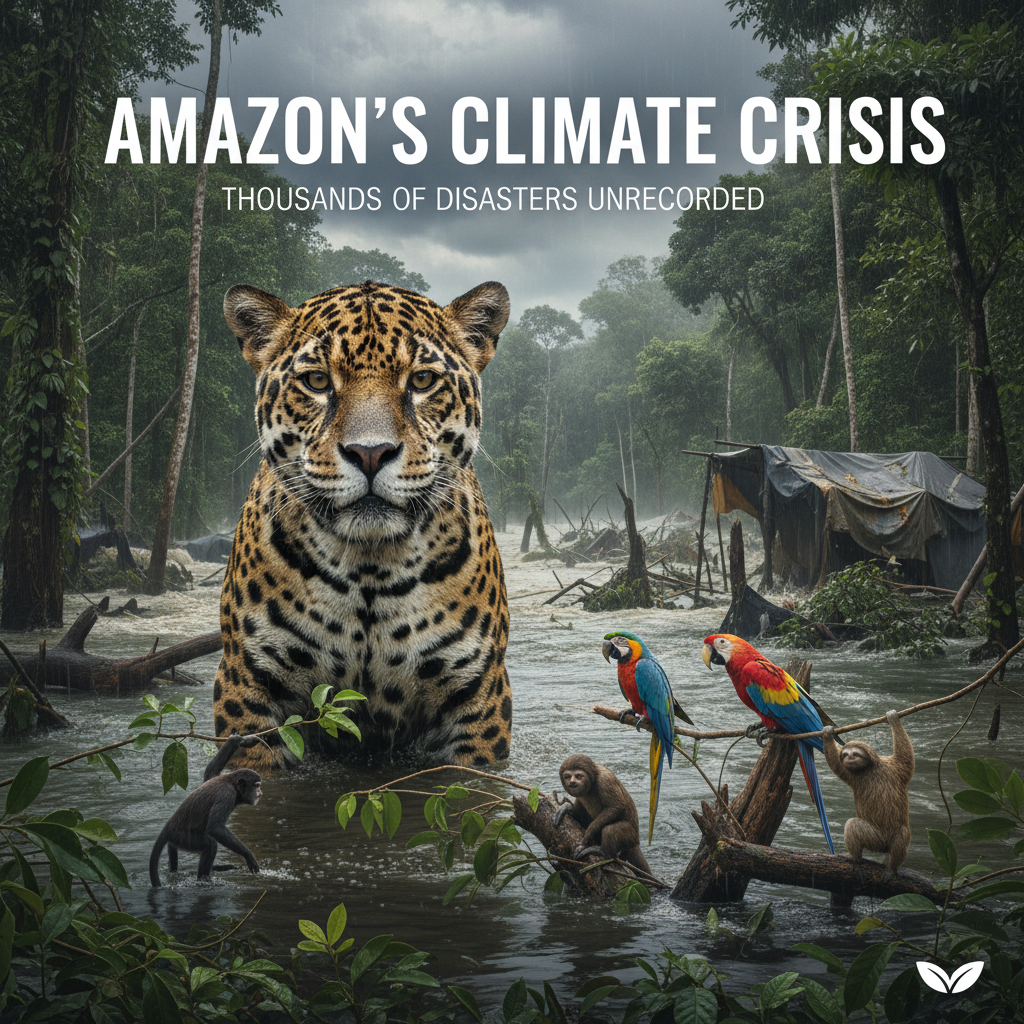
Amazon's Climate Crisis: Thousands of Disasters Unrecorded
Key Takeaways
- Over 12,500 extreme climate events hit the Amazon (2013-2023).
- Many more climate events went unrecorded in the Amazon.
- Data gaps are due to limited or no official reporting from some Amazonian countries.
- This underestimation impacts conservation efforts and global climate understanding.
- The Amazon's health is crucial for global biodiversity and climate regulation.
Amazon's Climate Crisis: Thousands of Disasters Unrecorded
The health of the Amazon rainforest is intrinsically linked to the stability of our global climate, yet a recent study reveals a startling blind spot in our understanding: countless extreme climate events across the Amazon biome are going unrecorded. This critical data gap means we are likely underestimating the true scale of environmental degradation and the escalating climate crisis in this vital ecosystem, demanding immediate attention from conservationists, policymakers, and global citizens alike.
TL;DR: Key Facts
- Over 12,500 extreme climate events were officially registered in the Amazon biome between 2013 and 2023.
- The study found that a significant number of additional extreme climate events were never recorded.
- This underreporting is largely due to some Amazonian countries providing no or limited official information.
- The findings highlight a critical gap in our understanding of climate change impacts in one of the world's most vital ecosystems.
- The information comes from aggregated study data, as reported by Gonzalo Ortuño López for Mongabay Latam.
What Happened
A new study sheds light on the daunting scale of environmental challenges facing the Amazon rainforest, revealing that between 2013 and 2023, more than 12,500 extreme climate events were officially registered across the biome. These events encompass a range of environmental disturbances, from severe droughts and widespread wildfires to unprecedented floods, each inflicting significant damage on the region's delicate ecosystems and the communities that depend on them.
However, the most alarming finding is not just the number of recorded incidents, but the realization that this figure represents only a fraction of the true total. The research indicates that a substantial number of additional extreme climate events went completely unrecorded or unreported. This critical data void stems from inconsistent and often insufficient reporting practices by several Amazonian countries, with some nations providing either limited or no official information on these devastating occurrences. As a result, the aggregated data, while extensive, presents an incomplete picture of the environmental stresses confronting the Amazon.
Why It Matters
For those passionate about wildlife and nature, this news is a stark reminder of the hidden pressures on the Amazon, arguably the planet's most biodiverse terrestrial ecosystem. An underestimation of climate disaster frequency means we are likely misjudging the rate of habitat loss, species extinction, and overall ecosystem degradation. Without accurate data, conservation efforts become akin to fighting a battle with incomplete intelligence – resources may be misallocated, vulnerable areas overlooked, and early warning systems ineffective, leaving countless species and their habitats exposed to escalating threats.
Beyond its unparalleled biodiversity, the Amazon plays a critical role in regulating global climate patterns, acting as a massive carbon sink and influencing rainfall far beyond its borders. When extreme climate events go undocumented, it impedes our ability to precisely track carbon emissions from deforestation and fires, and the corresponding loss of the forest’s capacity to absorb CO2. This data gap not only obscures the true impact of climate change on the Amazon but also hinders global efforts to meet climate targets, making effective policy-making and international cooperation far more challenging.
Ultimately, this discovery underscores a broader challenge in environmental monitoring and governance. The lack of comprehensive, standardized data collection across sovereign nations within shared biomes creates significant vulnerabilities. It highlights the urgent need for greater transparency, collaboration, and investment in robust monitoring systems to protect not just the Amazon's wildlife and natural beauty, but also its critical function in maintaining planetary health for generations to come. GreenNest Living readers understand that true sustainability hinges on accurate information, and right now, a crucial piece of that puzzle is missing.
What You Can Do
- Support Data Transparency: Advocate for governments and international bodies to invest in and demand robust environmental monitoring and public data reporting from Amazonian countries.
- Donate to Conservation: Contribute to reputable organizations actively working on Amazon conservation, indigenous land rights, and climate resilience projects, as they often fill data gaps with on-the-ground monitoring.
- Reduce Your Carbon Footprint: Take personal steps to lower your greenhouse gas emissions, such as reducing energy consumption, choosing sustainable transportation, and adopting a plant-rich diet, to mitigate global climate drivers impacting the Amazon.
- Stay Informed and Share: Follow reliable environmental news sources like Mongabay and GreenNest Living to stay updated on critical issues, and share accurate information to raise awareness within your community.
- Demand Sustainable Products: Support businesses committed to sustainable supply chains that do not contribute to Amazon deforestation or exploitation. Research where your food, wood products, and other goods come from.
- Engage with Policymakers: Contact your elected representatives to express concern about the Amazon's climate crisis and advocate for policies that promote international cooperation, climate action, and environmental protection.
FAQs
Q: What kind of extreme climate events are missing from official records?
A: While the snippet doesn't detail specific types, extreme climate events generally refer to occurrences like severe droughts, widespread wildfires, and major flooding, which significantly impact ecosystems and human populations.
Q: Why are these climate disasters not being recorded officially?
A: The study indicates that the primary reason is that some Amazonian countries are providing no or only limited official information regarding these events, leading to gaps in comprehensive data collection.
Q: What are the main consequences of having incomplete data on Amazonian climate disasters?
A: Incomplete data leads to an underestimation of the true scale of climate change impacts on the Amazon, hinders effective conservation planning, makes it difficult to allocate resources appropriately for disaster response, and undermines global efforts to track climate progress and protect biodiversity.
Sources
This article is based on reporting by Gonzalo Ortuño López for Mongabay Latam.
Original source
Mongabay
Author, Digital Entrepreneur & AI Creator
More from Wildlife & Nature News
- The Silent Drain: Sand Scarcity Threatens Global Ecosystems — May 13, 2026
- Celestial Glimpse: Earth's Glow, Our Lost Night Skies — May 11, 2026
- Google's UK Datacentre Emissions Understated by Factor of Five — May 10, 2026
- Cosmic Beacon: Earth's Glow Inspires Global Stewardship — May 9, 2026
- Amazon Tipping Point: Deforestation, Warming Threaten Rainforest by 2040s — May 8, 2026