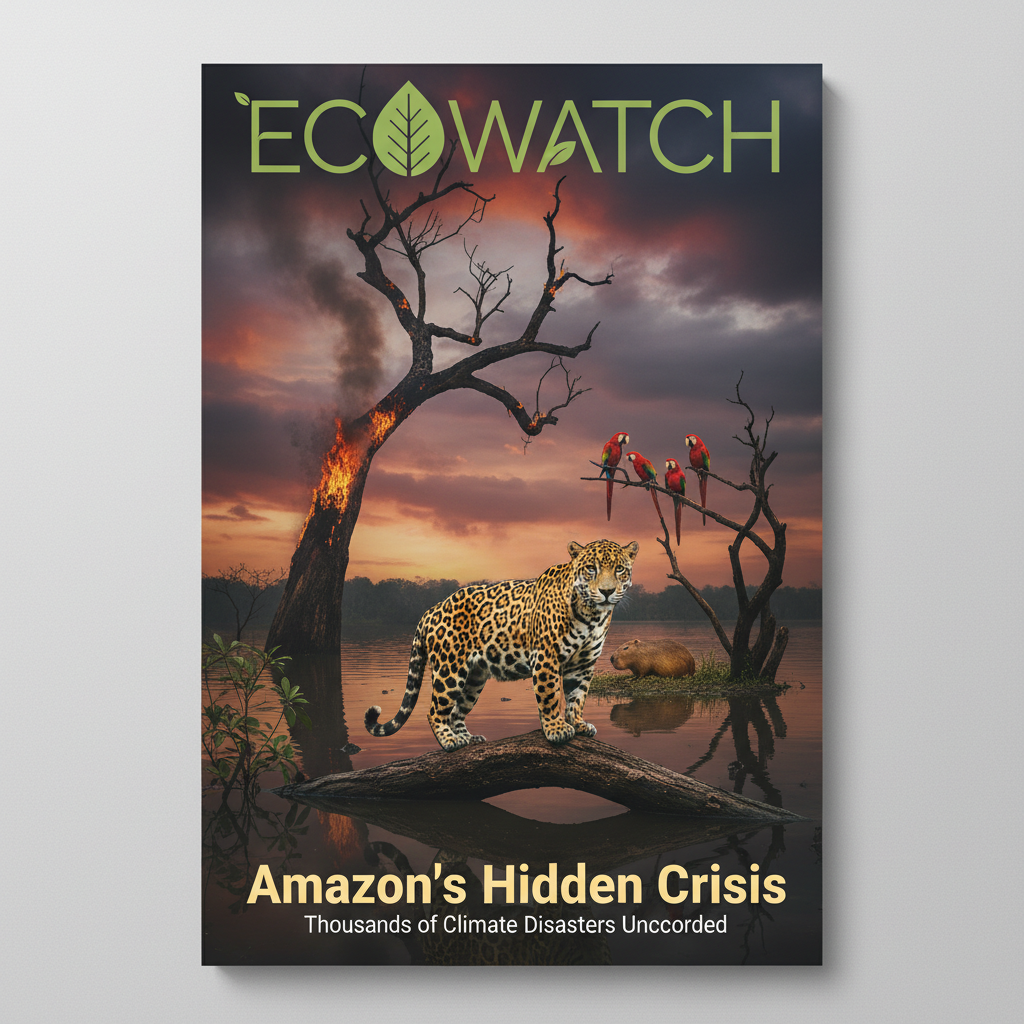
Amazon's Hidden Crisis: Thousands of Climate Disasters Unrecorded
Key Takeaways
- Over 12,500 extreme climate events occurred in the Amazon (2013-2023).
- Many events went unrecorded due to limited data from some Amazonian countries.
- The study aggregated diverse sources to uncover this hidden reality.
- Underreporting masks the true scale of environmental damage and human impact.
- This data gap impedes effective climate response, conservation, and policy.
The Amazon rainforest, a global beacon of biodiversity and a vital climate regulator, is facing a crisis far more severe than official records suggest. A recent investigation reveals a shocking gap in environmental data, exposing thousands of extreme climate events that have gone largely unnoticed and unaddressed. This hidden narrative not only jeopardizes critical ecosystems but fundamentally undermines global efforts to understand and combat climate change.
TL;DR: Key Facts
- More than 12,500 extreme climate events occurred in the Amazon biome between 2013 and 2023.
- A significant number of these events were never officially recorded due to limited or absent data from some Amazonian countries.
- The study aggregated information from various sources to uncover this underreported reality.
- This systemic underreporting means the true environmental damage and human impact are far greater than perceived.
- The lack of comprehensive data hinders effective climate response, conservation efforts, and policymaking.
What Happened
A comprehensive study has brought to light a disturbing reality regarding the Amazon biome's environmental health. Between 2013 and 2023, researchers identified over 12,500 extreme climate events within this crucial region. These events, ranging from severe droughts and unprecedented floods to intense heatwaves and destructive storms, have taken a heavy toll on the Amazon's delicate ecosystems and the communities that depend on them.
However, the most alarming finding is that this figure likely represents only a fraction of the actual occurrences. According to Gonzalo Ortuño López, reporting for Mongabay Latam, numerous events went unrecorded because several Amazonian nations provided either no information or only partial data. This significant gap in official reporting creates a distorted picture of the Amazon's vulnerability, leaving scientists, conservationists, and policymakers ill-equipped to grasp the full scope of the environmental degradation occurring.
Why It Matters
For readers of GreenNest Living, this revelation is not just a statistical anomaly; it's a profound challenge to our understanding of sustainable living and the health of our planet's most vital natural resources. When thousands of climate disasters in a biome as critical as the Amazon go unregistered, it means we are operating with incomplete and misleading information. This directly impacts "Wildlife & Nature News" because if we don't know the full extent of environmental stresses, we cannot effectively protect endangered species, preserve unique ecosystems, or implement targeted conservation strategies. The true vulnerability of the Amazon's incredible biodiversity, from jaguars to countless plant species, remains dangerously obscured.
Beyond the immediate impact on wildlife and specific ecosystems, this systemic underreporting has far-reaching implications for global climate stability and environmental justice. The Amazon is often called the 'lungs of the Earth,' playing a crucial role in regulating global climate patterns. An underestimation of the climate events it endure means we are likely underestimating the stress on this global system and its capacity to absorb carbon. Furthermore, indigenous communities, who are often the first to experience and report these extreme events, may find their pleas for assistance or recognition of environmental damage falling on deaf ears due to a lack of official documentation. This perpetuates a cycle of neglect and exacerbates their vulnerability.
Ultimately, this study underscores a critical need for transparency and robust environmental governance. Sustainable living is predicated on accurate data and informed decision-making. When key data is missing, it erodes trust, undermines advocacy efforts, and allows environmental crises to deepen silently. For those committed to a greener future, recognizing this data gap is the first step towards demanding better accountability and ensuring that the true state of our natural world is brought to light.
What You Can Do
- Advocate for Data Transparency: Support organizations and initiatives that push for better environmental monitoring, data collection, and public accessibility of ecological information from governments worldwide.
- Educate and Share: Inform your social circles, local community, and elected officials about the importance of accurate environmental reporting and the potential for hidden crises.
- Support Indigenous Communities: Many indigenous groups are frontline observers and guardians of the Amazon. Support organizations working directly with them to document environmental changes and protect their lands.
- Reduce Your Footprint: While large-scale data gaps require systemic solutions, individual actions still matter. Continue reducing your carbon footprint, consuming sustainably, and supporting ethical supply chains to lessen pressure on vulnerable biomes.
- Stay Informed: Continue to read and support independent environmental journalism, like Mongabay and GreenNest Living, which strives to uncover critical truths and provide in-depth analysis.
- Engage with Policy Makers: Contact your representatives to express concern about environmental data gaps and advocate for policies that prioritize robust environmental monitoring and international cooperation in climate reporting.
FAQs
Q: What types of 'extreme climate events' are being underreported in the Amazon?
A: These events encompass a range of natural phenomena intensified by climate change, including severe droughts that lead to widespread fires, devastating floods, prolonged heatwaves, and increasingly powerful storms that disrupt ecosystems and human livelihoods.
Q: Why are some Amazonian countries not reporting this critical data?
A: Reasons can vary but often include a lack of financial resources, insufficient scientific infrastructure, political instability or lack of political will, and sometimes deliberate obfuscation to avoid scrutiny or accountability for environmental degradation.
Q: How does this data gap impact global efforts to combat climate change?
A: An underestimation of climate events in a critical region like the Amazon leads to inaccurate climate models, misinformed policy decisions, and an underallocation of resources for mitigation and adaptation. It masks the true urgency and scale of the global climate crisis, making effective international cooperation more challenging.
Sources
This article is based on reporting by Mongabay.
Original source
Mongabay
Author, Digital Entrepreneur & AI Creator
More from Wildlife & Nature News
- The Silent Drain: Sand Scarcity Threatens Global Ecosystems — May 13, 2026
- Celestial Glimpse: Earth's Glow, Our Lost Night Skies — May 11, 2026
- Google's UK Datacentre Emissions Understated by Factor of Five — May 10, 2026
- Cosmic Beacon: Earth's Glow Inspires Global Stewardship — May 9, 2026
- Amazon Tipping Point: Deforestation, Warming Threaten Rainforest by 2040s — May 8, 2026