Amazon's Watchdog Under Threat: Brazil Eyes Satellite Ban
Key Takeaways
- A Brazilian bill aims to ban satellite tools crucial for Amazon conservation.
- These tools have successfully halved deforestation rates since 2023.
- The agribusiness caucus is driving the legislation, prioritizing economic expansion over environmental protection.
- Restricting monitoring could reverse conservation gains and accelerate climate change and biodiversity loss.
- The issue highlights the ongoing conflict between economic interests and ecological preservation in vital ecosystems.
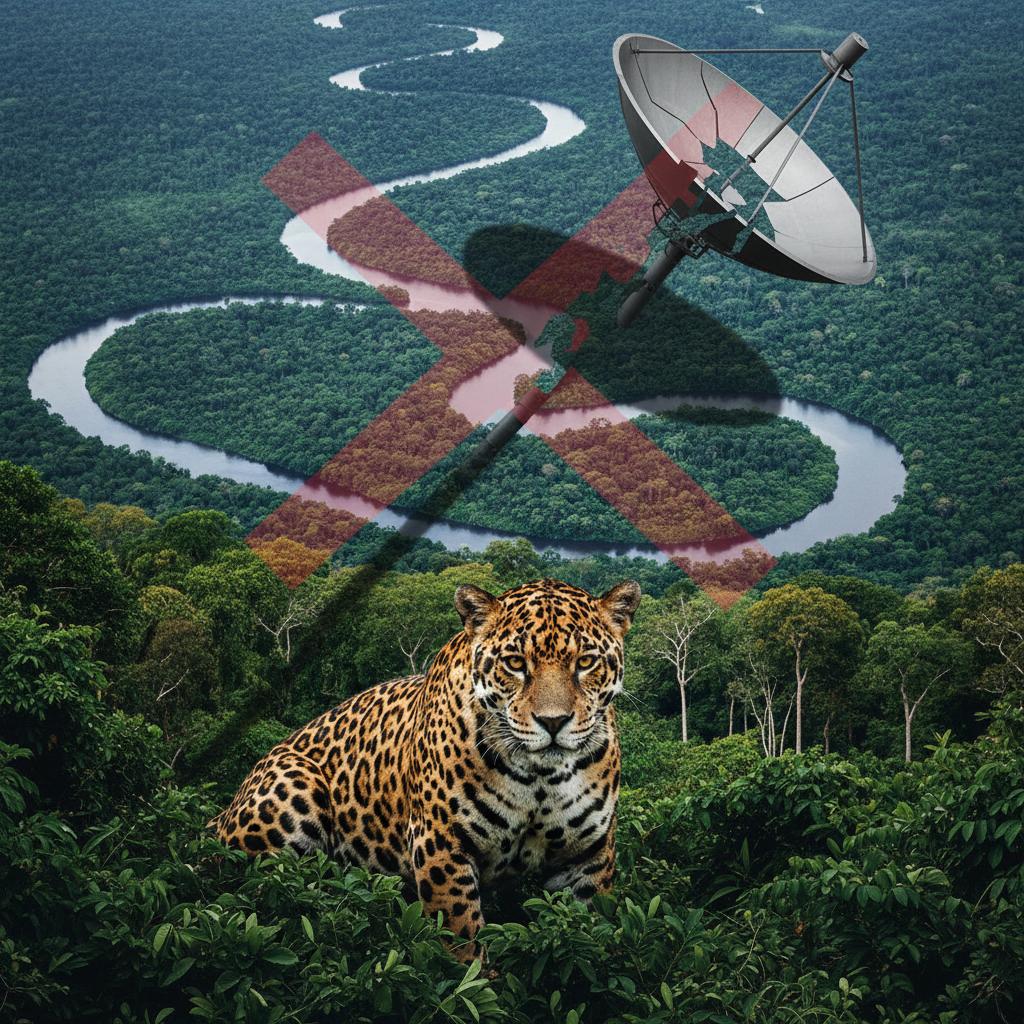
A critical tool in the fight against Amazon deforestation faces an alarming threat: a proposed Brazilian bill aims to restrict the very satellite technology that has been instrumental in preserving this vital rainforest. This move, pushed by the powerful agribusiness caucus, could reverse significant gains in conservation and have devastating global consequences.
TL;DR: Key Facts
- Brazil's agribusiness caucus is advocating for a bill to ban or restrict satellite monitoring tools.
- These satellite tools have been crucial in halving Amazon deforestation rates since 2023.
- The proposed legislation threatens to undermine successful conservation efforts in the world's largest rainforest.
- Experts warn that restricting this technology could lead to a resurgence in illegal deforestation.
- The bill represents a significant challenge to global climate stability and biodiversity protection.
What Happened
The Amazon rainforest, a beacon of biodiversity and a critical buffer against climate change, has seen a glimmer of hope in recent years thanks to advanced satellite monitoring. These sophisticated tools provide real-time data, enabling authorities to detect and respond to illegal deforestation activities with unprecedented speed and accuracy. This technological advantage has been a game-changer, credited with significantly reducing the rate of deforestation, reportedly halving it since 2023.
However, this success is now under direct threat. A powerful agribusiness caucus within the Brazilian legislature is pushing for a new bill that aims to restrict or outright ban the use of this essential satellite technology. The details of the proposed legislation suggest a deliberate attempt to cripple the oversight mechanisms that have proven effective in curbing illicit land clearing for agriculture and other economic activities. If passed, this bill would effectively blind environmental agencies and law enforcement, leaving vast swathes of the Amazon vulnerable once more.
This legislative maneuver highlights a deep-seated tension between economic expansion, particularly within the agricultural sector, and environmental preservation. While proponents of the bill may argue for less regulatory burden on industry, environmental experts and conservationists view it as a grave step backward, potentially undoing years of arduous work and sacrificing the planet's ecological future for short-term economic gains.
Why It Matters
For readers of GreenNest Living, this isn't just a distant political squabble; it's a direct assault on the very foundations of sustainable living and global ecological health. The Amazon is often called the 'lungs of the Earth,' producing a significant portion of the world's oxygen and regulating global weather patterns. Its dense forests absorb massive amounts of carbon dioxide, making it a critical player in mitigating climate change. Should deforestation escalate again due to the removal of monitoring tools, the consequences would reverberate far beyond Brazil's borders, accelerating global warming, increasing extreme weather events, and contributing to sea-level rise.
Beyond its climatic role, the Amazon is an unparalleled reservoir of biodiversity, home to an estimated 10% of the world's known species, many of which are yet to be discovered or fully understood. Unchecked deforestation would lead to an irreversible loss of countless species, disrupting complex ecosystems and potentially wiping out sources for new medicines, foods, and other vital resources. Furthermore, this move would betray the rights and ancestral lands of indigenous communities who depend directly on the forest for their survival and cultural identity, often serving as its most effective guardians.
This situation also sets a dangerous precedent. If a successful, data-driven approach to environmental protection can be dismantled by political will tied to specific economic interests, it sends a chilling message to conservation efforts worldwide. It underscores the constant vigilance required to protect natural resources and the critical importance of robust environmental governance. For anyone invested in the future of our planet, the potential disabling of this vital monitoring tool is an urgent call to action and a stark reminder that environmental victories are often fragile and perpetually contested.
What You Can Do
In the face of such significant threats, collective action can make a difference. Here are practical steps you can take:
- Stay Informed and Share Knowledge: Follow reputable environmental news sources like Mongabay and GreenNest Living. Share articles and information with your network to raise awareness about the Amazon's plight and the implications of this bill.
- Support Reputable Environmental NGOs: Donate to or volunteer with organizations actively working on Amazon conservation and indigenous rights, such as WWF, Amazon Watch, or Rainforest Alliance. Your contributions help fund on-the-ground efforts and advocacy.
- Make Conscious Consumer Choices: Research the origins of products you buy, especially those linked to deforestation like beef, soy (often found in processed foods and animal feed), palm oil, and certain hardwoods. Opt for certified sustainable products whenever possible.
- Advocate for Stronger Environmental Policies: Contact your local political representatives and express your concern about global deforestation and the need for international support for Amazon protection. Sign petitions and participate in campaigns calling for robust environmental governance.
- Reduce Your Carbon Footprint: While direct action in Brazil is limited, reducing your personal carbon footprint through energy efficiency, sustainable transport, and plant-rich diets contributes to mitigating climate change, thereby lessening pressure on critical ecosystems like the Amazon.
- Educate the Next Generation: Talk to children and young people about the importance of rainforests, biodiversity, and sustainable living. Instill in them a sense of responsibility for environmental stewardship.
FAQs
Q: What exactly is this satellite tool?
A: The satellite tool refers to advanced remote sensing technology and associated data analysis platforms used by environmental agencies in Brazil. These systems monitor the Amazon rainforest in near real-time, detecting changes in forest cover, identifying illegal logging, and tracking deforestation hotspots, which allows for rapid intervention.
Q: Why would the agribusiness caucus want to ban it?
A: The agribusiness sector often views environmental regulations and monitoring as impediments to their expansion and profitability. They may argue that such tools hinder economic development by restricting land use for agriculture and ranching, even if those activities contribute to illegal deforestation.
Q: What are the broader global impacts if Amazon deforestation increases?
A: An increase in Amazon deforestation would severely exacerbate climate change by releasing vast amounts of stored carbon dioxide and reducing the planet's capacity to absorb CO2. It would also lead to irreparable biodiversity loss, disrupt rainfall patterns globally, affect atmospheric circulation, and potentially accelerate the Amazon's tipping point into a drier, savanna-like ecosystem.
Sources
This article is based on reporting by Mongabay.
Original source
Mongabay
Author, Digital Entrepreneur & AI Creator
More from Wildlife & Nature News
- The Silent Drain: Sand Scarcity Threatens Global Ecosystems — May 13, 2026
- Celestial Glimpse: Earth's Glow, Our Lost Night Skies — May 11, 2026
- Google's UK Datacentre Emissions Understated by Factor of Five — May 10, 2026
- Cosmic Beacon: Earth's Glow Inspires Global Stewardship — May 9, 2026
- Amazon Tipping Point: Deforestation, Warming Threaten Rainforest by 2040s — May 8, 2026