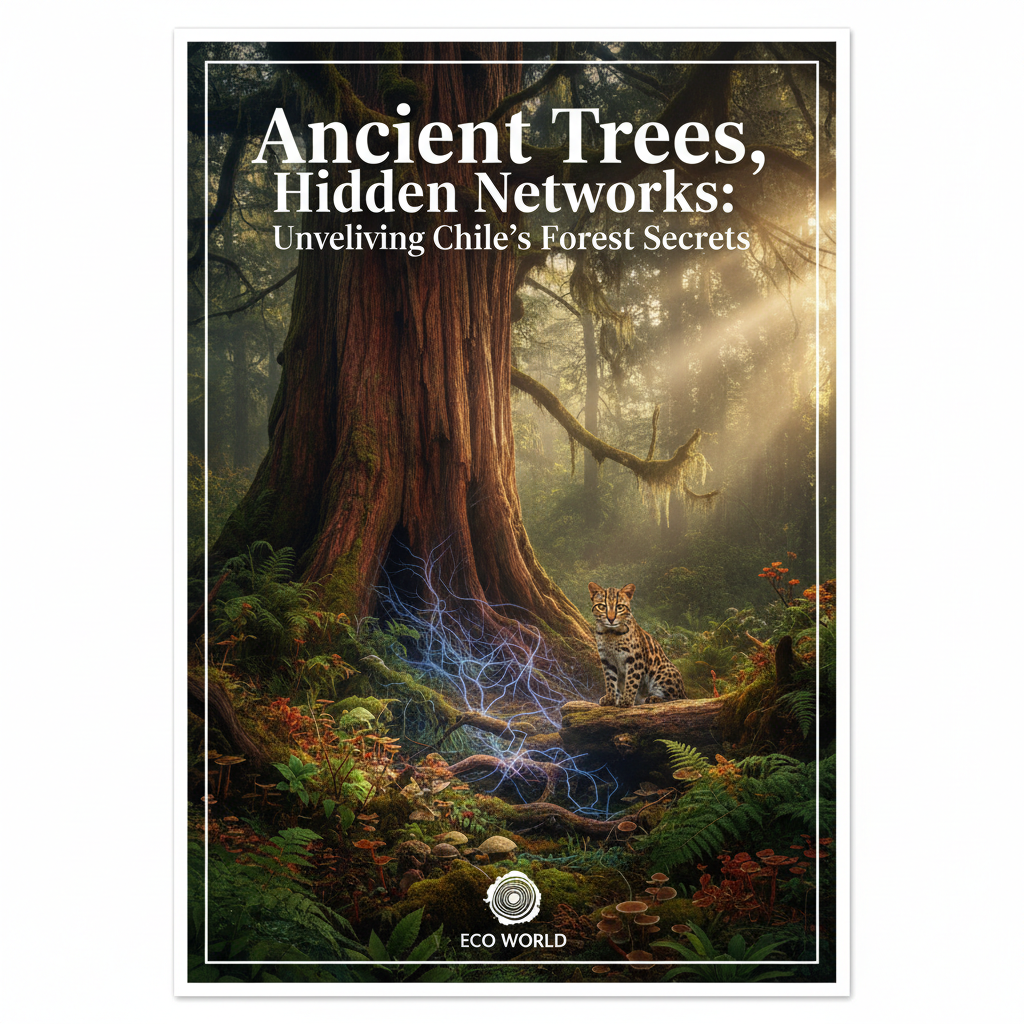
Ancient Trees, Hidden Networks: Unveiling Chile's Forest Secrets
Key Takeaways
- Chile's ancient alerce trees are sustained by a vital underground fungal and microbial network.
- This "wood wide web" enables nutrient exchange, water, and communication among trees.
- The study highlights that forest longevity and resilience are linked to complex soil ecosystems.
- Conservation efforts must extend to protecting these unseen subterranean biomes.
- Understanding these networks is crucial for effective restoration and climate change mitigation.
Deep within Chile's ancient forests, a groundbreaking study has just unveiled a secret world beneath our feet – an intricate underground web of life that sustains the planet's oldest trees. This discovery isn't just a scientific marvel; it's a vital reminder of the complex, hidden interdependencies that underpin healthy ecosystems and our own survival.
TL;DR: Key Facts
- Ancient alerce trees in Chile, like the 2,400-year-old "grandpa alerce," rely on a vast underground fungal and microbial network for survival.
- This subterranean biome facilitates nutrient exchange, water distribution, and communication among trees, acting as the forest's hidden support system.
- The study highlights that the true age and resilience of these ancient forests are intrinsically linked to their complex soil ecosystems.
- Understanding these hidden networks is critical for effective conservation strategies, especially in the face of climate change and deforestation.
- The findings emphasize that protecting individual trees is insufficient without safeguarding the entire interconnected ecosystem below ground.
What Happened
Researchers exploring Alerce Costero National Park in southern Chile have uncovered compelling evidence that the region’s ancient alerce conifers, some dating back over two millennia, are supported by a complex and extensive underground network of fungi and microorganisms. This hidden 'web of life' is not merely present; it is foundational to the survival and resilience of these venerable trees, including the renowned 'grandpa alerce,' estimated to be more than 2,400 years old.
The study, focusing on these towering, 30-meter-high giants, reveals that what we see above ground – the massive trunks, the lichen-draped branches – is only part of the story. Below the surface, an intricate biome operates, facilitating crucial ecological processes. These networks are believed to be instrumental in nutrient cycling, water uptake, and even inter-tree communication, essentially acting as the forest's circulatory and nervous system.
This research challenges previous understandings of how ancient forests thrive, suggesting that their longevity and stability are not solely due to the trees' physical robustness but are deeply intertwined with the health and complexity of their subterranean partners. The alerce forests, often described as 'living fossils,' provide a unique laboratory for understanding long-term ecological dynamics, and this new insight into their underground architecture adds a critical layer to that understanding.
Why It Matters
This discovery fundamentally shifts our perspective on what constitutes a healthy forest, especially in ancient ecosystems. For too long, conservation efforts have often focused primarily on visible flora and fauna, or individual tree populations. This study unequivocally demonstrates that the true resilience and longevity of magnificent trees like the alerce abuelo are rooted not just in their woody structures but in the unseen, vibrant communities beneath the soil.
For sustainable living, this means embracing a holistic view of nature. We cannot protect our forests by simply counting trees; we must preserve the entire ecosystem, from the tallest canopy to the deepest fungal filament. Climate change, deforestation, and agricultural practices all threaten these delicate underground networks, which are crucial carbon sinks and biodiversity hotspots. Disrupting them can unravel the entire system, weakening the very foundations that allow forests to adapt and survive environmental stresses.
Understanding these 'wood wide webs' offers powerful insights for restoration ecology. Instead of merely replanting saplings, we must consider inoculating soils with appropriate microbial communities, ensuring the foundational support for future forests. This research from Chile serves as a global call to action: to protect our planet's green lungs, we must first nurture the hidden lifeblood flowing beneath them, recognizing that all life, seen and unseen, is interconnected and interdependent.
What You Can Do
- Support Holistic Conservation: Seek out and contribute to organizations that prioritize ecosystem-wide conservation, focusing on soil health, biodiversity, and indigenous knowledge alongside tree planting.
- Advocate for Sustainable Land Use: Urge policymakers and local leaders to implement sustainable forestry practices that minimize soil disturbance and protect old-growth forests and their associated microbial communities.
- Educate Yourself and Others: Learn more about the critical role of soil microbes, fungi, and mycelial networks in ecosystem health, and share this knowledge with your community.
- Reduce Your Carbon Footprint: By reducing greenhouse gas emissions, you help mitigate climate change, which poses a significant threat to delicate underground ecosystems globally.
- Choose Sustainable Products: Opt for products from sustainably managed forests (e.g., FSC certified) and minimize consumption of products that contribute to deforestation or destructive land use.
- Compost and Garden Mindfully: If you have a garden, enrich your soil with organic matter and avoid harsh chemical pesticides or fertilizers that can harm beneficial soil life.
FAQs
Q: What is an "alerce abuelo"?
A: "Alerce abuelo" translates to "grandpa alerce," referring to particularly ancient and large specimens of alerce trees (Fitzroya cupressoides), a conifer species native to Chile and Argentina. These trees are among the longest-lived on Earth.
Q: How do underground fungal networks help trees?
A: Fungal networks, particularly mycorrhizal fungi, form symbiotic relationships with tree roots. They extend far beyond the roots, greatly increasing the tree's access to water and nutrients (like phosphorus and nitrogen) in the soil, and can also facilitate chemical communication between trees.
Q: Why is this discovery important for conservation?
A: It highlights that protecting forests requires more than just preserving visible trees; it means safeguarding the entire ecosystem, especially the critical, often unseen, soil microbial and fungal communities that underpin forest health, resilience, and carbon sequestration.
Sources
This article is based on reporting by Mongabay.
Original source
Mongabay
Author, Digital Entrepreneur & AI Creator
More from Wildlife & Nature News
- The Silent Drain: Sand Scarcity Threatens Global Ecosystems — May 13, 2026
- Celestial Glimpse: Earth's Glow, Our Lost Night Skies — May 11, 2026
- Google's UK Datacentre Emissions Understated by Factor of Five — May 10, 2026
- Cosmic Beacon: Earth's Glow Inspires Global Stewardship — May 9, 2026
- Amazon Tipping Point: Deforestation, Warming Threaten Rainforest by 2040s — May 8, 2026