Artemis II Returns: A New View for Earth's Green Future
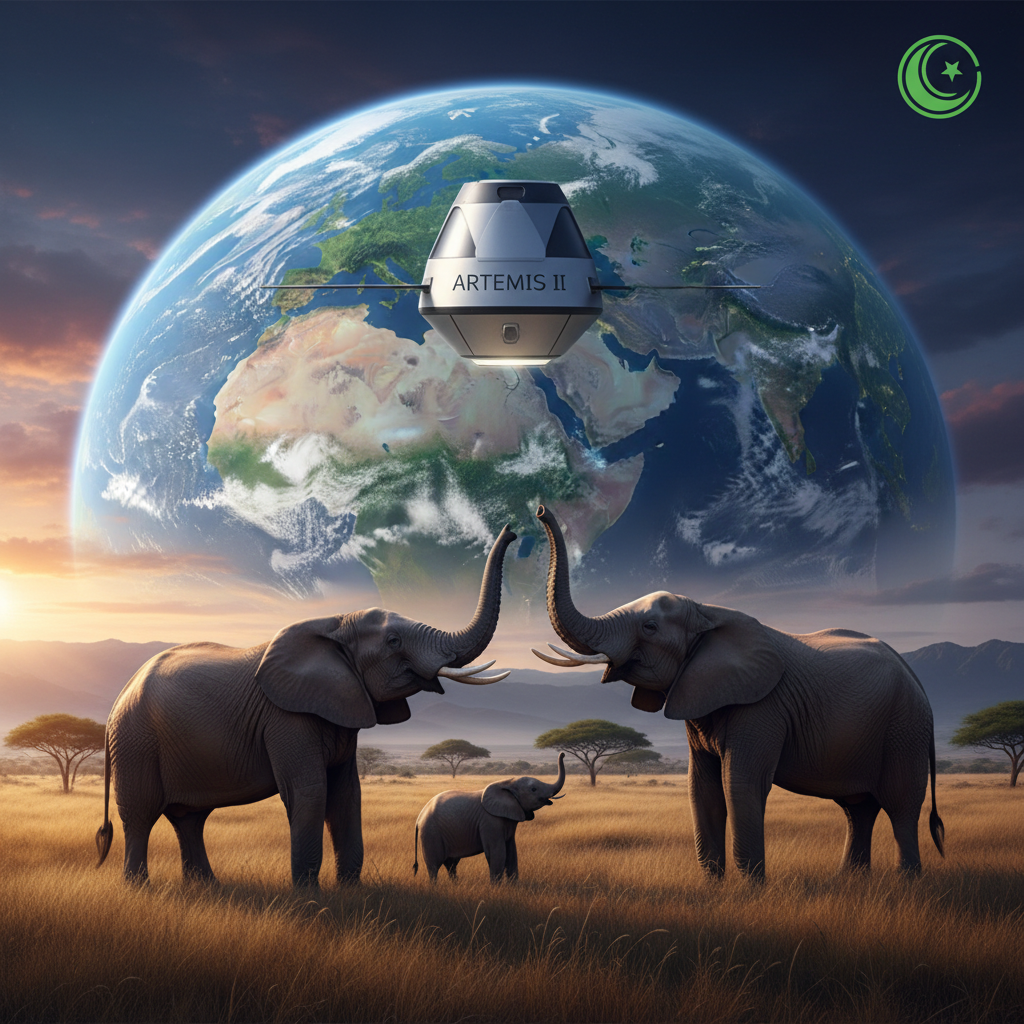
Key Takeaways
- NASA's Artemis II crew successfully returned to Houston after a 10-day lunar journey.
- The mission marks a critical step towards future human presence on the Moon.
- Space exploration provides a unique perspective on Earth's fragility, fostering environmental awareness.
- Technologies developed for space have significant spin-off benefits for Earth observation and climate monitoring.
- Artemis II inspires future generations in STEM, vital for developing sustainable environmental solutions.
The successful return of NASA's Artemis II crew marks not just a triumph for space exploration, but a profound moment for our understanding and appreciation of Earth. As humanity ventures further into the cosmos, this journey underscores the unique fragility and preciousness of our home planet, urging us to redouble our efforts in environmental stewardship right here, right now.
TL;DR: Key Facts
- NASA’s Artemis II crew returned to Houston on Saturday, April 11, 2026.
- The mission involved a nearly 10-day journey around the Moon and back to Earth.
- Crew members shared brief remarks with friends, family, and colleagues at Ellington Airport.
- Astronaut Christina Koch was identified as one of the mission specialists.
- This mission was a critical step in humanity's renewed lunar exploration program.
What Happened
On Saturday, April 11, 2026, NASA’s Artemis II crew successfully concluded their historic mission, returning to Earth after a journey that took them around the Moon. The four astronauts — Reid Wiseman, Victor Glover, Christina Koch, and Jeremy Hansen — touched down safely, bringing to an end their nearly 10-day voyage through deep space. This monumental achievement marks a critical milestone in humanity’s renewed push for lunar exploration, paving the way for future crewed missions to the lunar surface.
Upon their return, the crew was greeted by friends, family, and colleagues at Ellington Airport, located near NASA’s Johnson Space Center in Houston. The brief remarks shared by the astronauts provided a glimpse into their extraordinary experience, highlighting the successful completion of a mission designed to test the Orion spacecraft and critical mission operations before Artemis III lands humans on the Moon. Earlier the same day, mission specialist Christina Koch was seen embracing the Orion spacecraft within the well deck of the USS John P. Murtha, a poignant moment symbolizing the completion of their long journey.
The successful recovery of the Orion capsule and its crew, after traversing hundreds of thousands of miles, demonstrates the robust capabilities of NASA's deep space exploration systems. This journey around the Moon not only validated crucial technologies but also provided invaluable data on human performance in the deep space environment. The collective relief and triumph were palpable as the crew rejoined their loved ones, marking the culmination of years of training and dedicated effort to expand human presence beyond low-Earth orbit.
Why It Matters
While space exploration might seem distant from the immediate concerns of wildlife and nature conservation, the perspective gained from venturing beyond Earth profoundly impacts our understanding and appreciation for our home planet. Astronauts often describe the “Overview Effect” — a cognitive shift in awareness reported by some astronauts when viewing Earth from space. From this vantage point, national borders vanish, the atmosphere appears as a thin, fragile veil, and the interconnectedness of all life becomes strikingly apparent. This profound realization reinforces the urgent need for global cooperation in environmental stewardship, reminding us that Earth is a singular, vibrant oasis in a vast, cold cosmos.
Furthermore, the technological advancements driven by space exploration frequently yield invaluable tools for environmental monitoring and protection here on Earth. Innovations in remote sensing, satellite imaging, and data analysis — initially developed for understanding other celestial bodies or for astronaut safety — are now critical for tracking climate change, monitoring deforestation, assessing ocean health, and predicting natural disasters. Satellites like those used by NASA and other agencies provide the global view necessary to understand complex Earth systems, allowing scientists to monitor ecological shifts, track migrating wildlife, and manage natural resources more effectively. These “eyes in the sky” are direct descendants of the pioneering spirit embodied by missions like Artemis, providing essential data for our planet's ongoing health.
Ultimately, the Artemis program, and human spaceflight in general, serve as a powerful catalyst for inspiring scientific curiosity and innovation in the next generation. By pushing the boundaries of human achievement, these missions encourage young minds to pursue careers in STEM (Science, Technology, Engineering, and Mathematics), which are vital fields for developing sustainable solutions to our planet's most pressing environmental challenges. Protecting Earth is not merely about managing resources; it’s about fostering a culture of innovation, scientific understanding, and a deep-seated respect for our unique biosphere—qualities that space exploration inherently cultivates. It reminds us that while we reach for the stars, our most precious resource remains the blue marble we call home.
What You Can Do
Inspired by the Artemis II crew's journey and the unique perspective it offers on our planet, here are actionable steps you can take to contribute to Earth's well-being:
- Explore Local Ecosystems: Just as astronauts explore new frontiers, take time to explore and understand the natural world in your local community. Visit parks, nature reserves, or even your own backyard to observe wildlife and learn about local biodiversity.
- Support STEM Education: Encourage young people to engage with science, technology, engineering, and mathematics. These fields are crucial for developing innovative solutions to environmental challenges and advancing our understanding of both Earth and space.
- Reduce Your Environmental Footprint: Consciously reduce your consumption, reuse items, and recycle. Every effort to conserve resources helps protect our finite planet, mirroring the careful resource management required for space missions.
- Stay Informed About Earth Science: Follow updates from organizations like NASA that use space-based technologies to monitor our planet's health. Understanding the data helps inform actionable change and advocacy.
- Advocate for Conservation: Use your voice to support policies and initiatives that protect natural habitats, combat climate change, and promote sustainable practices in your community and beyond.
- Participate in Citizen Science: Contribute to environmental research projects by reporting observations of wildlife, weather patterns, or pollution. Many apps and organizations offer easy ways to get involved in real-world data collection.
FAQs
Q: What is the Artemis II mission?
A: Artemis II is NASA's second mission in the Artemis program, and the first crewed test flight of the Orion spacecraft with astronauts. Its primary goal was to send a crew of four on a nearly 10-day journey around the Moon and back to Earth, testing critical systems and operations before future missions land humans on the lunar surface.
Q: How does space exploration relate to environmental conservation on Earth?
A: Space exploration inspires a unique perspective known as the "Overview Effect," where astronauts see Earth as a fragile, interconnected system, fostering a strong sense of environmental stewardship. Additionally, technologies developed for space (like advanced sensors and remote imaging) are crucial for monitoring climate change, tracking deforestation, and managing natural resources on Earth.
Q: What’s next for the Artemis program?
A: Following the successful test flight of Artemis II, the next major milestone is Artemis III, which aims to land the first woman and first person of color on the Moon's south pole. This mission will pave the way for a sustained human presence on the Moon and serve as a stepping stone for future crewed missions to Mars.
Sources
This article is based on reporting by NASA Image of the Day, Category: "Wildlife & Nature News."
Original source
NASA Image of the Day
Author, Digital Entrepreneur & AI Creator
More from Wildlife & Nature News
- The Silent Drain: Sand Scarcity Threatens Global Ecosystems — May 13, 2026
- Celestial Glimpse: Earth's Glow, Our Lost Night Skies — May 11, 2026
- Google's UK Datacentre Emissions Understated by Factor of Five — May 10, 2026
- Cosmic Beacon: Earth's Glow Inspires Global Stewardship — May 9, 2026
- Amazon Tipping Point: Deforestation, Warming Threaten Rainforest by 2040s — May 8, 2026