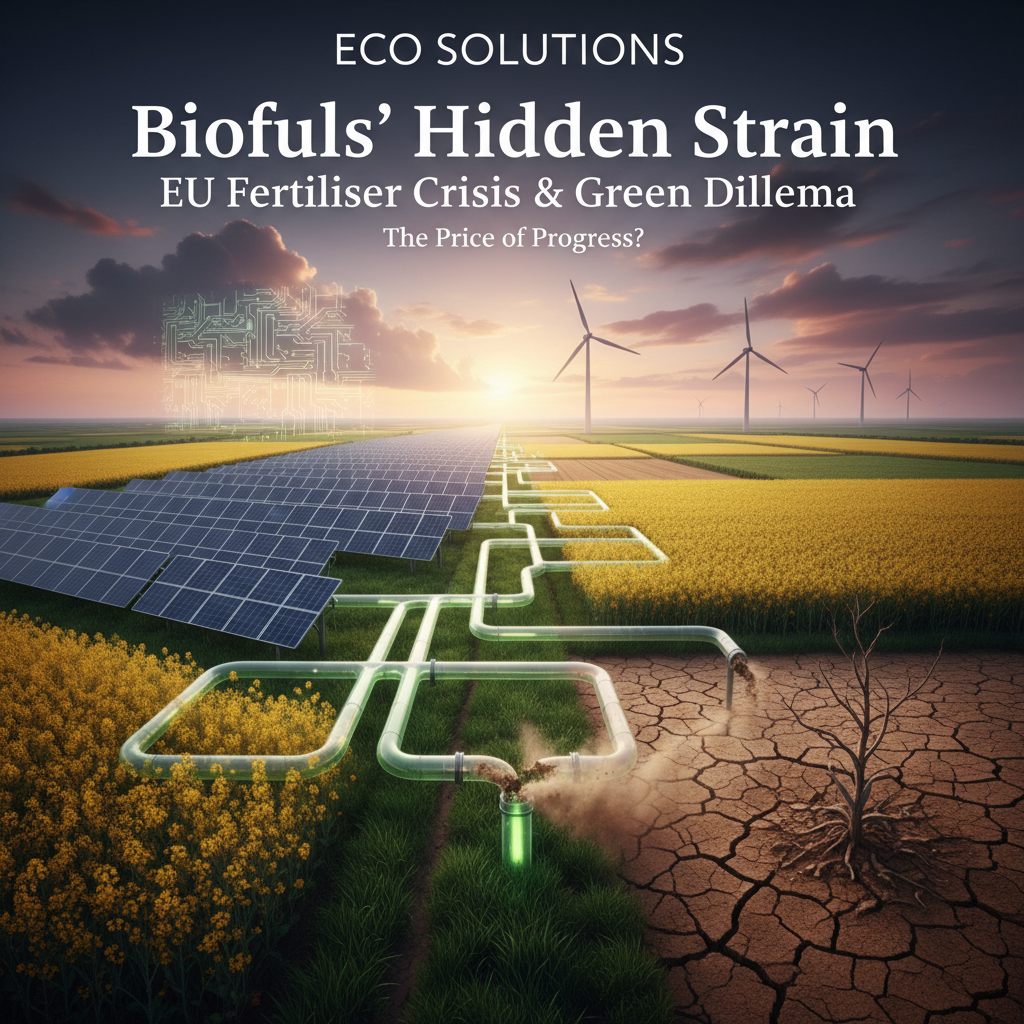
Biofuels' Hidden Strain: EU Fertiliser Crisis & Green Dilemma
Key Takeaways
- The EU Commission proposes stockpiling fertilisers due to global tensions.
- Crop-based biofuels increase demand for fertilisers, straining supplies.
- Around half of EU biofuels are still derived from food crops despite policies.
- This creates direct competition between food production and energy needs.
- The issue underscores complex links between energy, agriculture, and geopolitics.
The delicate balance between feeding people and fueling vehicles is under unprecedented strain. As geopolitical tensions highlight the fragility of global supply chains, a recent proposal from the EU Commission to stockpile fertilisers unearths a deeper, often overlooked issue: how our push for biofuels is inadvertently jeopardizing essential resources and environmental health right now.
TL;DR: Key Facts
- The EU Commission proposes stockpiling fertilisers to secure supplies amid global tensions.
- Expanding crop-based biofuel production significantly increases demand for these fertilisers.
- Despite policies to limit their use, nearly half of all biofuels consumed in the EU are still derived from food crops.
- This reliance on crop-based biofuels creates a direct competition between food production and energy needs.
- The situation underscores the complex interdependencies between energy policy, agriculture, and geopolitical stability.
What Happened
In the wake of ongoing geopolitical instability, particularly the conflict in the Middle East, the European Union Commission has put forward a strategic plan to create a reserve of fertilisers. This proactive measure aims to safeguard the continent's agricultural sector from potential supply chain disruptions, ensuring food security for its citizens. Fertiliser production is highly energy-intensive and often relies on resources, like natural gas, whose supply can be volatile.
However, this critical move brings into sharp focus a long-standing debate within sustainable energy circles: the role of crop-based biofuels. The proposed stockpiling is complicated by the fact that a significant portion of current biofuel production relies on agricultural crops, which in turn require substantial amounts of fertiliser to grow. Expanding the cultivation of crops specifically for biofuel would inevitably place an even greater burden on already stretched fertiliser supplies, potentially exacerbating the very problem the EU seeks to mitigate for food production.
Despite concerted efforts and policy adjustments by the European Union to limit the use of crop-based biofuels – recognizing their controversial impact on land use and food prices – an alarming statistic persists: around half of all biofuels currently consumed within the EU are still derived from food crops. This continued reliance means that a substantial portion of the EU's agricultural output is being diverted from directly feeding its population towards powering its transportation sector, creating a direct competition for resources like land, water, and crucially, fertilisers.
Why It Matters
This news isn't just about fertilisers; it's a stark reminder of the intricate web connecting our energy choices, food systems, and environmental health, directly impacting the "Green Tech" landscape. While biofuels were initially hailed as a green tech solution to reduce reliance on fossil fuels, the current situation reveals a critical flaw in their implementation: the unsustainable demand they place on agricultural resources. This "Green Dilemma" forces us to confront whether our quest for renewable energy is inadvertently creating new pressures on food security and agricultural sustainability.
For GreenNest Living readers, this signals a need to critically evaluate green technologies beyond their stated purpose. Biofuel policies, when not carefully calibrated, can have cascading negative effects, from increased deforestation and land-use change to the substantial carbon footprint associated with fertiliser production and use. Fertiliser overuse contributes to soil degradation, water pollution (eutrophication), and greenhouse gas emissions, undermining the very environmental goals biofuels are meant to achieve. This also highlights the importance of truly sustainable agricultural practices and the development of next-generation biofuels that do not compete with food crops, or even better, embrace electrification where viable.
Ultimately, this situation challenges the narrative of a simple "green" solution. It underscores that truly sustainable green tech requires a holistic approach, considering the entire lifecycle and all potential externalities. It calls for innovation not just in fuel production, but in farming practices, waste management (for advanced biofuels), and comprehensive policy-making that prioritizes long-term ecological and societal well-being over short-term energy fixes. It emphasizes that green tech isn't just about replacing fossil fuels, but doing so in a way that doesn't create new, equally pressing, environmental and social crises.
What You Can Do
- Demand Transparency in Biofuel Sourcing: Inquire about the origin of biofuels used in your region and advocate for policies that prioritize advanced biofuels derived from non-food sources like algae or waste products.
- Support Sustainable Agriculture: Choose food products from farms that employ sustainable practices, minimizing synthetic fertiliser use and promoting soil health. Look for certifications that reflect this commitment.
- Reduce Food Waste: Less food waste means less demand on agricultural systems, indirectly reducing the need for fertiliser and land, freeing up resources that might otherwise go to biofuel crops.
- Advocate for Smarter Policy: Contact your elected officials to express concern about policies that favor crop-based biofuels and encourage investment in truly sustainable energy solutions and agricultural practices.
- Consider Your Consumption: Reflect on your personal transportation habits. Where possible, choose walking, cycling, or electric vehicles (when powered by truly renewable sources) over internal combustion engines to reduce overall fuel demand.
- Educate Yourself and Others: Stay informed about the lifecycle impacts of different energy sources and share this knowledge to foster more informed discussions within your community.
Ciro's Take
As an environmental advocate, news like this truly hits home. We often champion "green" solutions with the best intentions, only to find complex, unintended consequences lurking beneath the surface. The biofuel dilemma, particularly its entanglement with fertiliser supply and food security, is a perfect illustration of why we must always demand a holistic view. It's not enough to simply replace one fuel source with another; we must analyze the entire supply chain, from seed to pump, and ask whether our solutions are truly regenerative or simply shifting the burden elsewhere. My hope is that this challenge spurs greater innovation in sustainable agriculture and advanced biofuels, pushing us towards truly circular economies where our energy needs don't compete with our most fundamental need: feeding the world. This isn't just a policy debate; it's about our planet's future and ensuring equity for all its inhabitants.
FAQs
Q: What are crop-based biofuels?
A: Crop-based biofuels are fuels produced from agricultural crops, such as corn, sugarcane, palm oil, or rapeseed, which are specifically grown for energy production rather than food or feed.
Q: Why is fertiliser production an environmental concern?
A: Fertiliser production is energy-intensive, contributing to greenhouse gas emissions. Additionally, excessive or improper use can lead to nutrient runoff, polluting waterways, harming aquatic ecosystems through eutrophication, and emitting potent greenhouse gases like nitrous oxide.
Q: Are all biofuels unsustainable?
A: No. While crop-based biofuels face significant sustainability challenges, advanced biofuels derived from non-food sources like agricultural waste, municipal solid waste, algae, or cellulosic materials offer a more promising path as they don't compete with food production and can have a lower environmental footprint.
Sources
This article is based on reporting by CleanTechnica.
Original source
CleanTechnica
Author, Digital Entrepreneur & AI Creator
More from Green Tech
- Northeast States Fight to Revive Offshore Wind Power — June 3, 2026
- Underwater Data Centers: Cool Tech, Realistic Expectations — June 2, 2026
- Electric Revolution on Wheels: Latin America's Bus Fleet Goes Green — June 1, 2026
- CT Greenlights Plug-In Solar: A Game Changer for Homeowners — May 31, 2026