Earthset: A Cosmic Reminder of Our Fragile Blue Planet
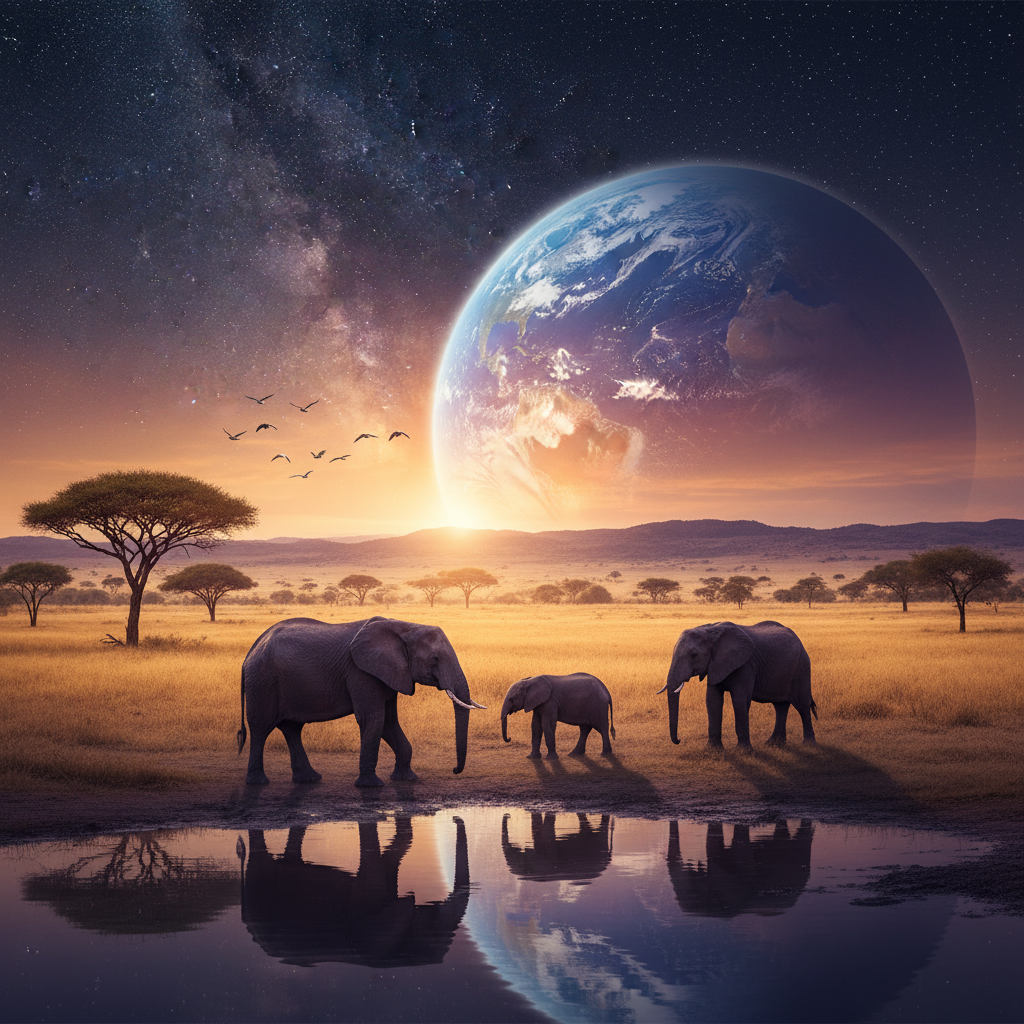
Key Takeaways
- Artemis II crew captured an 'Earthset' image.
- The photo was taken on April 6, 2026, at 6:41 p.m. EDT.
- It was photographed through the Orion spacecraft window.
- The event occurred during the Artemis II crew's flyby of the Moon.
- The image profoundly highlights Earth's isolation and fragility in space.
OPENING PARAGRAPH
In an age where environmental concerns loom large, a recent image from NASA's Artemis II mission offers a powerful, humbling perspective. This breathtaking 'Earthset' serves as an urgent reminder of our planet's singular beauty and delicate balance, compelling us to reflect on our role as its guardians right now.
TL;DR: Key Facts
- Artemis II crew captured a profound 'Earthset' image.
- The photo was taken on April 6, 2026, at 6:41 p.m. EDT.
- It was photographed through the Orion spacecraft window.
- The celestial event occurred during the Artemis II crew's flyby of the Moon.
- The image profoundly highlights Earth's isolation and fragility in the vastness of space.
What Happened
As humanity looks to the stars, the Artemis II mission recently turned its gaze back towards home, offering a profound perspective on our planet. On April 6, 2026, at precisely 6:41 p.m. EDT, the crew aboard the Orion spacecraft witnessed and documented a celestial event known as 'Earthset.' This captivating phenomenon, akin to a sunset but with our home planet dipping below the lunar horizon, was captured through the spacecraft's window during their critical flyby of the Moon.
The image portrays our vibrant blue and white marble receding into the cosmic blackness, framed by the cold, unforgiving vacuum of space. It's a stark visual testament to Earth's isolation and its unique position as a haven for life. The perspective from the Orion spacecraft, a vessel designed to push the boundaries of human exploration, inadvertently delivered one of the most potent environmental messages of our time.
The Artemis II mission itself is a significant step in NASA's ambitious plans to return humans to the Moon and eventually to Mars. This particular leg of the journey involved the crew conducting a lunar flyby, a crucial test of the Orion spacecraft's systems and capabilities in deep space before future lunar landings. During this momentous pass, as the Moon's gravity pulled Orion around, the Earth momentarily disappeared from view behind the lunar limb, creating the 'Earthset' moment that was immortalized by the crew's camera. This image is not just a scientific record; it's a poignant artistic capture of our home planet as seen from an unprecedented vantage point, making it a critical piece of visual storytelling for our shared environmental narrative.
Why It Matters
This 'Earthset' image transcends mere astronomical photography; it’s a powerful catalyst for environmental consciousness, deeply resonating with the core principles of Wildlife & Nature News. From the vastness of space, Earth appears not as an inexhaustible resource, but as a fragile, vibrant oasis, suspended precariously in the cosmic void. This perspective, often termed the 'Overview Effect' by astronauts, is known to engender a profound sense of interconnectedness with all life on Earth and a renewed commitment to its preservation. It strips away national borders and human-made divisions, revealing a single, unified ecosystem that demands our collective stewardship.
For readers of GreenNest Living, this image underscores the urgency of sustainable living and conservation efforts. It reminds us that every drop of water, every breath of air, and every thriving species on our planet is part of an intricate, irreplaceable web of life. When viewed from the Moon, the devastating impacts of climate change, habitat destruction, and pollution, though invisible in the photo itself, become implicitly magnified by the sheer isolation of our blue marble. It compels us to ask: what kind of planet are we sending into this cosmic ballet? Are we preserving its natural wonders and biodiversity, or are we chipping away at its life-sustaining capabilities?
Ultimately, this image is a call to action. It inspires us to protect not just individual species or specific natural parks, but the entire planetary ecosystem. It reinforces the idea that environmental responsibility is not just a local issue, but a global imperative. By fostering a deeper appreciation for Earth's unique place in the universe, the 'Earthset' encourages us to make conscious choices – from reducing our carbon footprint to supporting conservation initiatives – ensuring that future generations can also marvel at the splendor of our planet, whether from its surface or from the distant reaches of space.
What You Can Do
Witnessing Earth from afar can be profoundly motivating. Here's how you can translate that inspiration into actionable steps for a greener planet:
- Embrace Mindful Consumption: Reduce your personal consumption of goods, especially those with high environmental footprints. Prioritize durability, repair, and reuse, choosing products that support sustainable practices and minimize waste.
- Support Conservation Organizations: Research and donate to reputable organizations working on wildlife protection, habitat restoration, and climate action. Your financial support empowers them to conduct vital research and implement conservation strategies.
- Advocate for Policy Change: Engage with your local and national representatives to support policies that promote renewable energy, protect natural spaces, and mitigate climate change. Your voice can contribute to systemic change.
- Connect with Local Nature: Spend time in local parks, forests, or waterways. Fostering a personal connection with nature deepens your appreciation for its value and reinforces your commitment to protecting it.
- Reduce Your Carbon Footprint: Make conscious choices regarding transportation, energy use, and diet. Opt for public transport, bike, or walk; switch to renewable energy providers; and consider a more plant-rich diet.
- Educate and Inspire Others: Share the importance of environmental stewardship with friends, family, and community members. Simple conversations and leading by example can have a ripple effect, encouraging wider sustainable living practices.
FAQs
Q: What is an 'Earthset'?
A: An 'Earthset' is a phenomenon similar to a sunset, but observed from a celestial body like the Moon, where Earth appears to dip below the horizon of that body. It's the inverse of an 'Earthrise,' which is Earth appearing to rise above the horizon.
Q: What is the Artemis II mission?
A: Artemis II is the first crewed test flight of NASA's Artemis program, designed to orbit the Moon. It's a critical step in preparing for future human landings on the lunar surface and eventually missions to Mars, testing Orion spacecraft systems and procedures with astronauts aboard.
Q: Why is seeing Earth from space important for environmental awareness?
A: Seeing Earth from space, often associated with the 'Overview Effect,' provides a powerful, unifying perspective. It highlights our planet's isolation, beauty, and fragility, fostering a profound sense of responsibility for its preservation and inspiring a global approach to environmental stewardship.
Sources
This article is based on reporting by NASA Image of the Day.
Original source
NASA Image of the Day
Author, Digital Entrepreneur & AI Creator
More from Wildlife & Nature News
- The Silent Drain: Sand Scarcity Threatens Global Ecosystems — May 13, 2026
- Celestial Glimpse: Earth's Glow, Our Lost Night Skies — May 11, 2026
- Google's UK Datacentre Emissions Understated by Factor of Five — May 10, 2026
- Cosmic Beacon: Earth's Glow Inspires Global Stewardship — May 9, 2026
- Amazon Tipping Point: Deforestation, Warming Threaten Rainforest by 2040s — May 8, 2026