Indonesia Whale Stranding: A Troubling Signal for Ocean Health
Key Takeaways
- A mass stranding of 55 pilot whales occurred in central Indonesia, resulting in 21 fatalities.
- Local villagers mounted an overnight rescue, successfully saving 34 whales.
- Mass strandings often signal underlying environmental stressors in marine ecosystems.
- Potential contributing factors include ocean noise, pollution, climate change, and disease.
- Individual actions towards sustainable living are crucial for global ocean health.
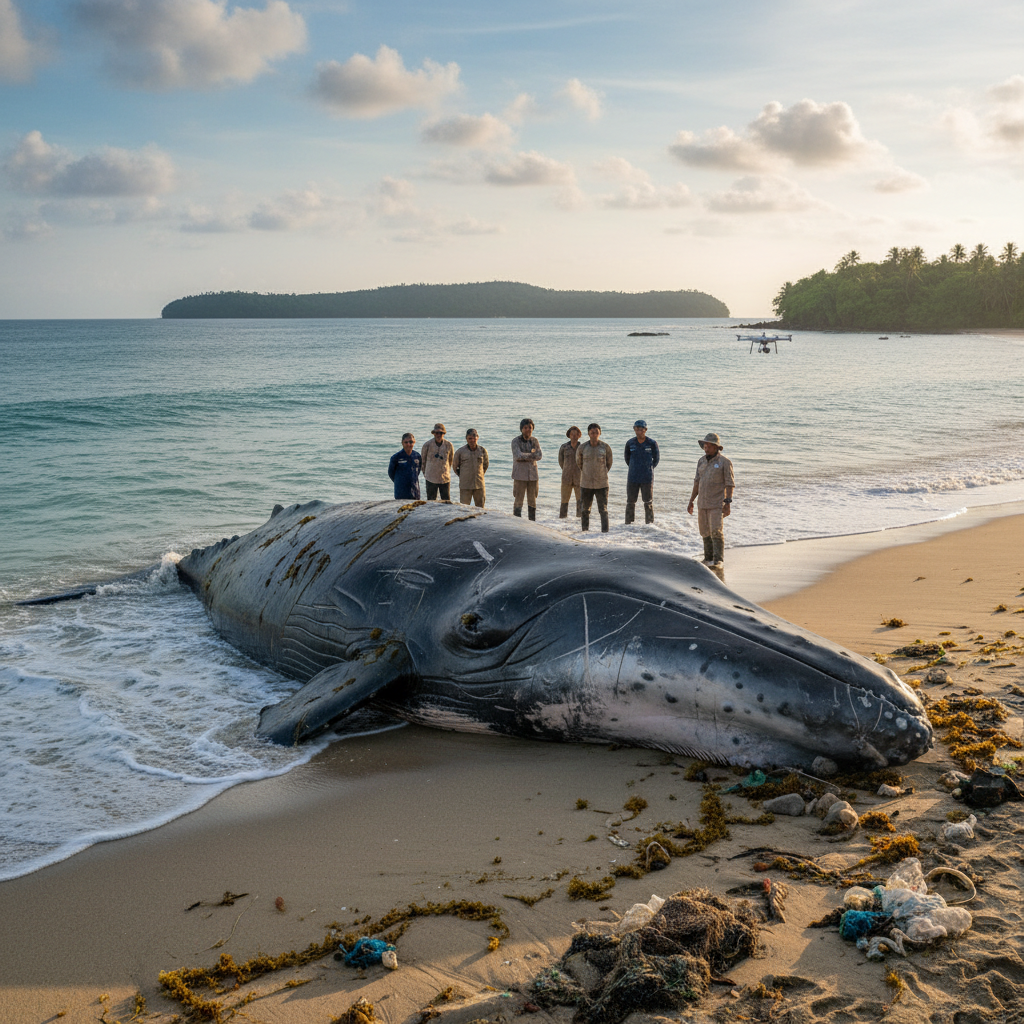
In a heart-wrenching display of nature's vulnerability and community resilience, a recent mass stranding of short-finned pilot whales in central Indonesia serves as a stark reminder of the delicate balance within our oceans. This tragic event, where despite valiant local efforts, over a third of the pod perished, compels us to look beyond the immediate rescue and delve into the deeper questions it raises about the health of our marine environments and our collective responsibility.
TL;DR: Key Facts
- On March 9, 2024, 55 short-finned pilot whales were discovered stranded in shallow waters off Deranitan village, central Indonesia.
- Local villagers launched an overnight rescue operation, managing to save 34 of the whales by guiding them back to deeper waters.
- Tragically, 21 pilot whales succumbed to the stranding and died despite rescue efforts.
- The event occurred in the waters near Deranitan village, highlighting localized environmental stress.
- This mass stranding has prompted significant questions and concerns regarding the overall health of Indonesia's, and by extension, the world's oceans.
What Happened
On the morning of March 9, local residents in central Indonesia were confronted with a distressing sight: a large pod of short-finned pilot whales stranded in the shallow waters off Deranitan village. The discovery involved 55 individuals of the highly social marine mammal species, all vulnerable and unable to return to the safety of the open sea on their own. The community, demonstrating remarkable compassion and determination, immediately mobilized a rescue effort.
Throughout the day and into the night, villagers worked tirelessly, wading through the shallows to physically assist the distressed whales. Their concerted efforts involved guiding the massive animals, often weighing several tons, back into deeper waters where they had a chance of survival. Thanks to these heroic actions, 34 of the short-finned pilot whales were successfully rescued and managed to swim away from the dangerous coastline.
However, despite the community's profound dedication and overnight vigil, the severity of the stranding proved too overwhelming for many of the animals. Tragically, 21 members of the pod did not survive the ordeal, succumbing to the stress, injuries, or dehydration inherent in such an event. The loss of these magnificent creatures underscores the profound challenges faced by marine wildlife and the complex factors that contribute to mass strandings, leaving the community and observers with pressing questions about the state of the ocean.
Why It Matters
Mass whale strandings, while sometimes natural occurrences, are increasingly viewed by scientists and conservationists as potential distress signals from our marine ecosystems. When such a significant number of social animals like pilot whales strand simultaneously, it often points to an underlying environmental issue rather than just a navigational error by one individual. This Indonesian incident, tragically resulting in the death of 21 animals, compels us to consider the bigger picture: what is happening to our oceans that might lead to such events?
Several factors, often interlinked, can contribute to mass strandings. These include disruptions to sonar navigation caused by human-generated underwater noise from shipping, seismic surveys, or military sonar; changes in ocean currents and temperatures due to climate change affecting prey distribution; outbreaks of disease; ingestion of plastic pollution; or even chemical contamination. While the specific cause of this particular stranding has not been identified, its occurrence in central Indonesia – a region known for its rich biodiversity but also increasingly impacted by human activity – casts a shadow over the health of these vital waters. The loss of these pilot whales represents not just a numerical reduction in a species but potentially an indicator of broader ecological imbalances that affect countless other marine organisms.
For GreenNest Living readers, this isn't just a sad news item from afar; it's a direct call to recognize our interconnectedness with the natural world. Our daily choices, from the products we consume to the energy sources we rely on, have a ripple effect that ultimately reaches the deepest parts of the ocean. The health of the oceans directly impacts global climate patterns, food security, and the very air we breathe. This stranding serves as a powerful, albeit tragic, reminder that the stewardship of our planet, especially its vast marine environments, is a shared and urgent responsibility, fundamental to fostering sustainable living for all.
What You Can Do
While the scale of ocean conservation can feel daunting, every individual action contributes to a healthier planet. Here are specific steps you can take to help protect marine life and promote ocean health:
- Reduce Plastic Consumption: Opt for reusable bags, water bottles, and containers. Support businesses that minimize plastic packaging. Plastic pollution is a major threat to marine life, often mistaken for food or causing entanglement.
- Make Sustainable Seafood Choices: Educate yourself on sustainable fishing practices. Use guides like those from the Marine Stewardship Council (MSC) or Monterey Bay Aquarium's Seafood Watch to choose seafood that is fished or farmed responsibly, minimizing harm to marine ecosystems and bycatch.
- Minimize Your Carbon Footprint: Climate change is warming oceans, altering currents, and increasing ocean acidification, all of which stress marine life. Reduce energy consumption, use public transport, or choose renewable energy sources to lessen your impact.
- Support Marine Conservation Organizations: Donate time or resources to reputable organizations dedicated to marine research, habitat protection, and anti-pollution efforts. These groups often lead scientific studies and advocacy for stronger marine protections.
- Participate in Coastal Cleanups: Join local beach or river cleanups. Removing litter before it reaches the ocean directly prevents harm to marine animals and helps raise awareness about pollution.
- Advocate for Ocean Protection: Contact your elected officials to express your support for marine protected areas, stricter anti-pollution regulations, and policies that address climate change and sustainable resource management.
FAQs
Q: What are short-finned pilot whales?
A: Short-finned pilot whales (Globicephala macrorhynchus) are large oceanic dolphins known for their distinctive bulbous foreheads and social behavior. They live in large, stable pods and are found in tropical and temperate waters worldwide.
Q: What typically causes mass whale strandings like this?
A: Mass strandings are complex events with no single cause. Factors can include navigational errors (sometimes due to a sick or disoriented leader), underwater noise pollution (from sonar or seismic surveys), entanglement in fishing gear, injury, disease, changes in prey distribution, or even geomagnetic anomalies affecting their navigation systems.
Q: How does a stranding in Indonesia affect me?
A: Ocean health is global health. Marine ecosystems regulate our climate, produce a significant portion of the oxygen we breathe, and are a critical food source. A decline in ocean health, signaled by events like mass strandings, indicates environmental degradation that ultimately impacts everyone, regardless of geographic location.
Sources
This article is based on reporting by Mongabay.
Original source
Mongabay
Author, Digital Entrepreneur & AI Creator
More from Wildlife & Nature News
- The Silent Drain: Sand Scarcity Threatens Global Ecosystems — May 13, 2026
- Celestial Glimpse: Earth's Glow, Our Lost Night Skies — May 11, 2026
- Google's UK Datacentre Emissions Understated by Factor of Five — May 10, 2026
- Cosmic Beacon: Earth's Glow Inspires Global Stewardship — May 9, 2026
- Amazon Tipping Point: Deforestation, Warming Threaten Rainforest by 2040s — May 8, 2026