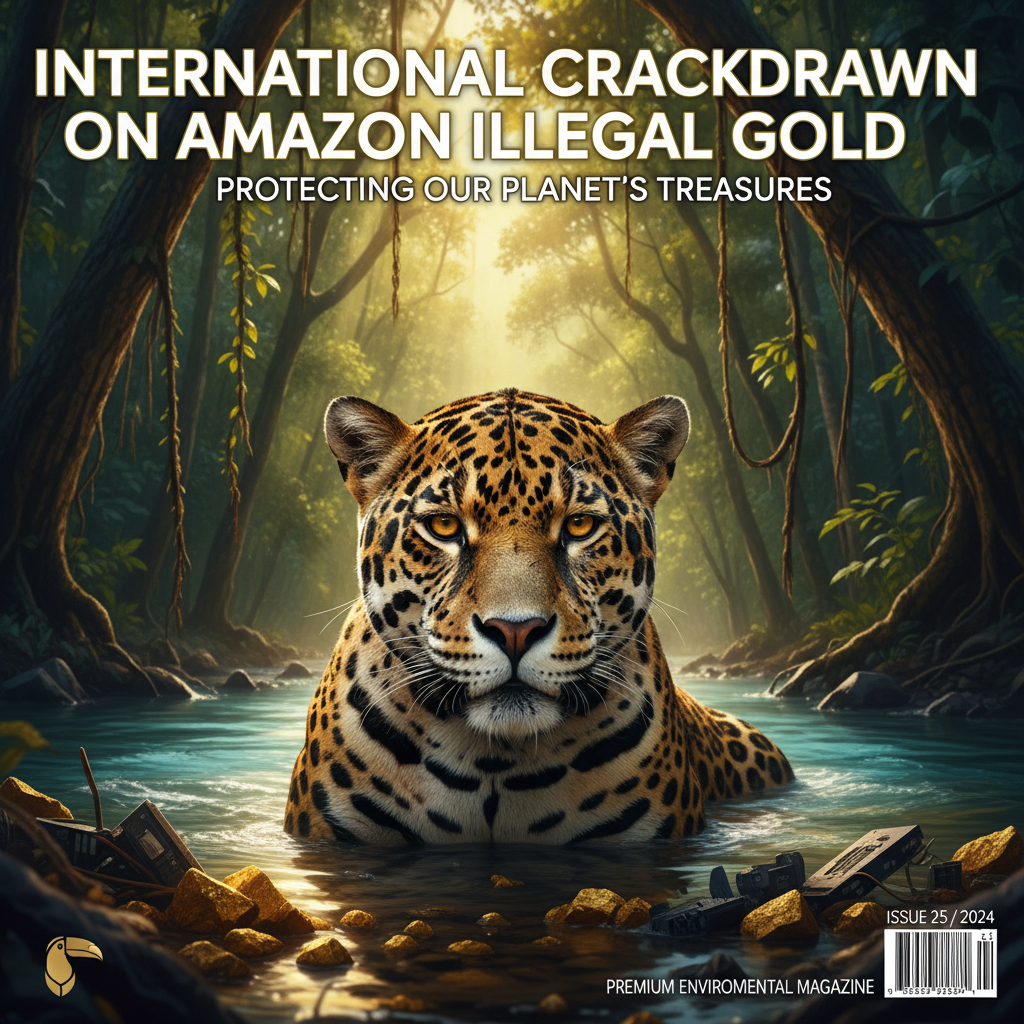
International Crackdown on Amazon Illegal Gold
Key Takeaways
- Nearly 200 arrests made in Amazon gold mining sweep
- First-ever joint cross-border operation by Amazonian nations
- Operation backed by Interpol
- Targets illegal gold mining in Brazil, French Guiana, Guyana, Suriname
- Significant step in protecting the Amazon rainforest from environmental crime
The Amazon rainforest, a global treasure vital for biodiversity and climate regulation, faces relentless threats from illegal activities. In a significant victory for environmental protection and law enforcement, an unprecedented international operation has brought nearly 200 alleged illegal gold miners to justice. This coordinated sweep signals a powerful new front in the battle to safeguard the planet's most critical natural resources from exploitation.
TL;DR: Key Facts
- Police in Brazil, French Guiana, Guyana, and Suriname launched their first joint cross-border operation.
- The initiative, backed by Interpol, targeted illegal gold mining networks across the Amazon region.
- Nearly 200 individuals were arrested, dealing a substantial blow to illicit mining activities.
- This represents a landmark effort to protect the Amazon from widespread environmental destruction and criminal enterprise.
- The coordinated approach highlights a growing international commitment to combating eco-crimes.
What Happened
In a historic display of international cooperation, law enforcement agencies and prosecutors from four Amazonian nations – Brazil, French Guiana, Guyana, and Suriname – executed their first-ever joint cross-border operation targeting illegal gold mining. This massive sweep, conducted with the crucial support of Interpol, led to the arrests of nearly 200 individuals suspected of involvement in these illicit activities. The operation spanned vast territories across the Amazon basin, an ecosystem critical to global biodiversity and climate stability.
The coordinated action marks a pivotal moment in the fight against environmental crime in one of the world's most vulnerable and vital regions. For decades, illegal gold mining has plagued the Amazon, fueling deforestation, mercury pollution, and social instability. By pooling resources and intelligence, the participating countries aimed to dismantle the extensive networks that facilitate this destructive trade, sending a clear message that such crimes will no longer be tolerated as isolated incidents within national borders.
Authorities involved in the operation emphasized the complexity of these criminal enterprises, which often involve organized crime, human trafficking, and other illegal activities. The arrests are expected to disrupt significant portions of these networks, impacting both the immediate mining sites and the logistical and financial support systems that sustain them. This collaborative effort underscores a growing recognition of environmental crime as a serious transnational issue requiring a unified international response.
Why It Matters
For our readers at GreenNest Living, this operation is more than just a news headline; it's a critical moment for wildlife and nature conservation, offering a glimmer of hope amidst ongoing environmental crises. Illegal gold mining is a catastrophic force in the Amazon, directly leading to extensive deforestation as vast tracts of rainforest are cleared to access gold deposits. This habitat destruction decimates biodiversity, pushing countless species towards extinction and disrupting intricate ecological balances vital for the planet's health. The Amazon is home to an unparalleled array of flora and fauna, and every acre lost to mining represents an irreplaceable loss.
Beyond deforestation, the methods used in illegal gold mining are notoriously toxic. Mercury, a potent neurotoxin, is commonly used to separate gold from ore, and much of it ends up in rivers and streams. This contaminates water sources, impacting aquatic life, poisoning fish that are a primary food source for local communities, and accumulating in the food chain, posing severe health risks to indigenous populations and wildlife. The long-term effects of mercury poisoning on neurological development and overall health are devastating, leaving a lasting legacy of suffering. Furthermore, the erosion caused by mining activities silts up rivers, alters water flow, and degrades soil quality, making ecosystem recovery incredibly challenging.
The significance of this Interpol-backed, cross-border operation cannot be overstated. It demonstrates a crucial shift from localized, often ineffective responses to a unified, international strategy against transnational environmental crime. By treating illegal gold mining as a serious, interconnected criminal enterprise rather than just a national issue, authorities are beginning to address the problem at the systemic level. This sets a powerful precedent for future coordinated efforts against other forms of eco-crime, such as illegal logging and wildlife trafficking. It sends a strong message to criminal networks that borders will not protect them, and that environmental destruction will be met with decisive, collective action. For the resilience of the Amazon and the future of global biodiversity, this collaborative approach is not just welcome, but absolutely essential.
What You Can Do
- Support Reputable Conservation Organizations: Donate to or volunteer with NGOs actively working on the ground in the Amazon to combat illegal mining, reforest degraded areas, and protect indigenous lands.
- Demand Sustainably Sourced Products: When purchasing gold, jewelry, or electronics, inquire about their origin. Opt for certified fair-trade, recycled, or ethically sourced materials to avoid inadvertently supporting illegal mining operations.
- Educate and Advocate: Share information about the impacts of illegal gold mining and the importance of the Amazon. Write to your elected officials, urging them to support international agreements and funding for environmental law enforcement.
- Reduce Overall Consumption: Recognize that the demand for various products, including precious metals, can drive unsustainable extraction practices. Embrace a more minimalist lifestyle and consider the environmental footprint of your purchases.
- Support Indigenous Rights: Indigenous communities are often the frontline defenders of the Amazon. Learn about their struggles and support organizations that empower them to protect their traditional territories and ways of life.
- Stay Informed: Follow credible environmental news sources to understand ongoing threats and successes in conservation. Knowledge is power in advocating for change.
FAQs
Q: What are the main environmental impacts of illegal gold mining?
A: Illegal gold mining leads to severe deforestation, extensive mercury pollution of rivers and soil, habitat destruction, and significant biodiversity loss, severely impacting both ecosystems and human health.
Q: Why is this Interpol-backed operation considered so significant?
A: It's the first-ever joint cross-border operation of its kind in the Amazon, demonstrating a new level of international cooperation and commitment to dismantle sophisticated criminal networks responsible for environmental destruction, setting a precedent for future eco-crime enforcement.
Q: How does illegal gold mining typically affect local communities, particularly indigenous groups?
A: Local and indigenous communities suffer from polluted water sources, forced displacement, loss of traditional livelihoods, increased crime rates, and serious health issues due to mercury exposure and other environmental contaminants.
Sources
This article is based on reporting by Mongabay.
Original source
Mongabay
Author, Digital Entrepreneur & AI Creator
More from Wildlife & Nature News
- The Silent Drain: Sand Scarcity Threatens Global Ecosystems — May 13, 2026
- Celestial Glimpse: Earth's Glow, Our Lost Night Skies — May 11, 2026
- Google's UK Datacentre Emissions Understated by Factor of Five — May 10, 2026
- Cosmic Beacon: Earth's Glow Inspires Global Stewardship — May 9, 2026
- Amazon Tipping Point: Deforestation, Warming Threaten Rainforest by 2040s — May 8, 2026