Microbes in Space: NASA Unlocks Biofilm Secrets for Earth & Beyond
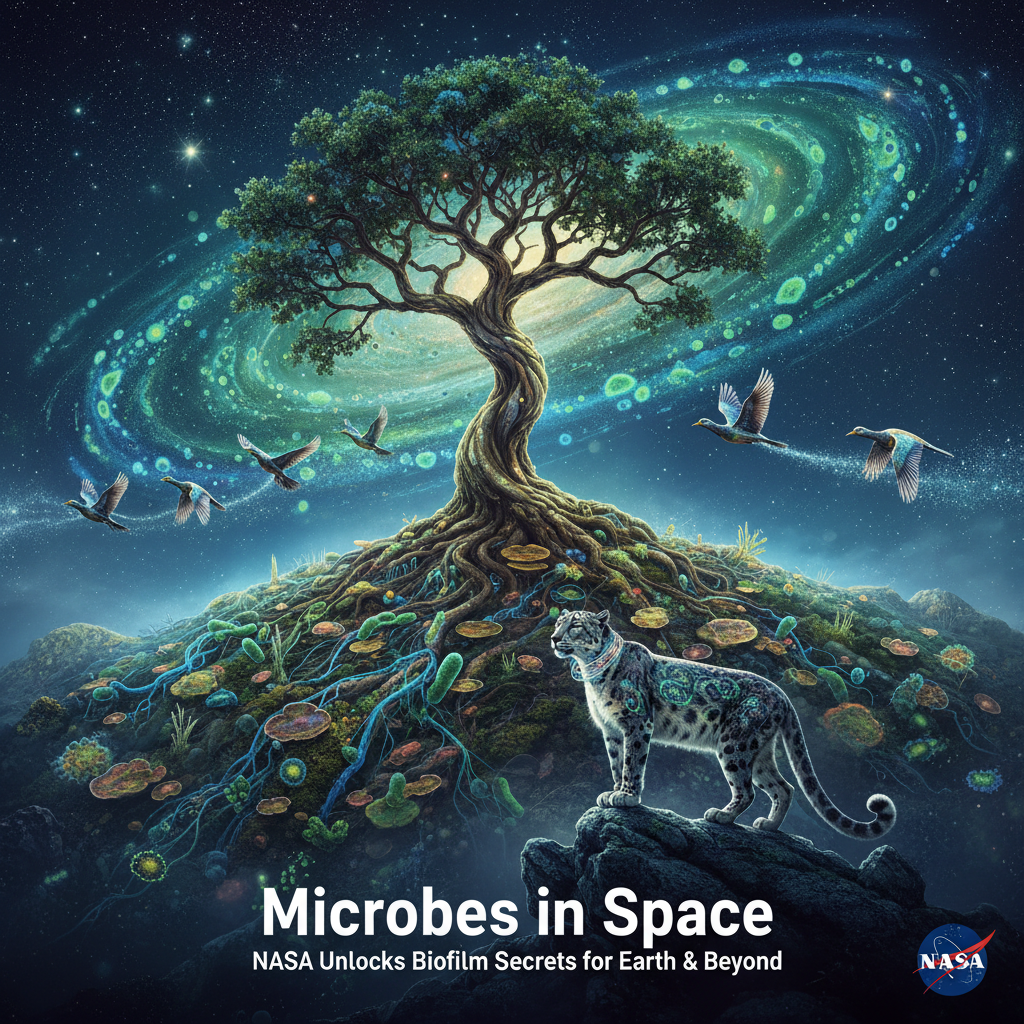
Key Takeaways
- NASA volunteers are researching biofilms in space environments.
- Biofilms are microbial communities crucial for life on Earth, supporting human and plant systems.
- The study aims to understand how these microorganisms adapt to extreme space conditions.
- Insights gained can inform sustainable practices on Earth and future space habitation.
- This research highlights the fundamental role of microscopic life in all ecosystems.
In an era where our planet's natural systems face unprecedented challenges, understanding the fundamental building blocks of life has never been more critical. The latest insights from NASA's volunteer initiatives, focusing on microscopic biofilm communities adapting to the harsh environment of space, are poised to reveal groundbreaking information about life's resilience—information that could significantly shape our approach to sustainable living and environmental stewardship right here on Earth.
TL;DR: Key Facts
- NASA volunteers are actively studying the adaptability of biofilms, communities of microorganisms, in space.
- Biofilms are fundamental to life on Earth, performing essential functions within human, plant, and broader ecological systems.
- The research aims to uncover how these microbial communities survive and thrive under extreme extraterrestrial conditions.
- Understanding biofilm adaptability in space offers vital clues for designing sustainable closed-loop systems for future space habitation.
- This study underscores the crucial, often overlooked, role of microorganisms in supporting all complex life and maintaining ecological balance.
What Happened
NASA has engaged volunteers in a significant research endeavor focused on biofilms. These are intricate communities of microorganisms that adhere to one another and to surfaces, forming resilient structures that are ubiquitous in nature. On Earth, biofilms are incredibly diverse and perform a vast array of functions, from nutrient cycling in soils and oceans to protecting plants and aiding human digestion. They are, in essence, the silent engineers of many of our planet's vital life-support systems.
The core of this research involves studying the adaptability of these biofilm communities in the unique, extreme environment of space. By observing how these fundamental life forms cope with microgravity, radiation, and other extraterrestrial stressors, scientists aim to gain a deeper understanding of their survival mechanisms. This knowledge is not only critical for long-duration space missions, where biofilms could play roles in life support or, conversely, pose contamination risks, but it also provides an unparalleled natural laboratory for understanding life's inherent robustness.
Why It Matters
For us at GreenNest Living, this NASA research isn't just about what's happening light-years away; it's profoundly relevant to the wildlife and nature news unfolding in our own backyards. Biofilms, though microscopic, are the bedrock of nearly every ecosystem on Earth. They are integral to soil fertility, breaking down organic matter and cycling nutrients essential for plant growth. They purify water in natural filtration systems, form the basis of oceanic food webs, and even help protect plants from disease. Without healthy, adaptable microbial communities, the larger, more visible wildlife and natural landscapes we cherish simply couldn't thrive.
Studying how these essential communities adapt to the incredibly harsh, isolated conditions of space provides invaluable insights into their resilience. It's like a stress test for life itself. If we can understand the genetic and physiological mechanisms that allow biofilms to survive and adapt in such extreme environments, we gain crucial knowledge about how Earth's microbial populations might respond to rapidly changing environmental conditions, such as climate shifts, pollution, or habitat loss. This research offers a scientific lens through which to view the adaptability of life's foundational elements, strengthening our understanding of ecological resilience and fragility.
Moreover, the quest to build sustainable, closed-loop ecosystems for space habitats—where waste is recycled, food is grown, and air and water are purified—directly mirrors the challenges and aspirations of sustainable living on Earth. By learning how to harness beneficial biofilms for waste management, bioremediation, or supporting plant growth in space, we can refine similar sustainable technologies and practices to better manage resources and protect natural systems here on our home planet. This intersection of space exploration and earthly sustainability offers exciting pathways to a greener future.
What You Can Do
- Support Citizen Science: Engage with or donate to citizen science projects (like NASA's 'Daily Minor Planet' mentioned in other news) that often rely on volunteer contributions, helping advance scientific understanding across various fields.
- Learn About Your Local Microbiome: Explore the microbial life in your garden soil, compost pile, or local waterways. Understanding their roles fosters appreciation for these unseen ecosystem engineers.
- Champion Healthy Soil Practices: Support organic farming, composting, and reduced pesticide use. These practices protect the vital soil microbes that sustain plant life and broader ecosystems.
- Mind Your Microbiome: Recognize the importance of your own gut microbiome for health. A balanced diet rich in fiber and diverse foods supports these internal 'biofilms' crucial for your well-being.
- Advocate for Environmental Research: Support funding and policies that promote scientific research into ecological resilience, biodiversity, and the role of microorganisms in environmental health.
- Educate Others: Share the fascinating world of microbes with friends and family, highlighting their indispensable role in maintaining a healthy planet and fostering appreciation for all forms of life.
FAQs
Q: What exactly are biofilms?
A: Biofilms are communities of microorganisms, such as bacteria and fungi, that stick to each other and to surfaces. They often form a protective matrix, allowing them to survive and thrive in diverse environments.
Q: Why is NASA studying Earth-related biology in space?
A: Studying biology in the extreme conditions of space provides a unique laboratory to understand fundamental questions about life's adaptability, evolution, and resilience, which has direct applications for understanding and protecting life on Earth, as well as for future space exploration.
Q: How do biofilms connect to sustainable living on Earth?
A: Biofilms are critical for countless ecological processes essential for sustainability, including nutrient cycling, waste decomposition, water purification, and supporting plant health. Understanding their function and adaptability helps us develop better sustainable practices and manage our natural resources more effectively.
Sources
This article is based on reporting by NASA Breaking News.
Original source
NASA Breaking News
Author, Digital Entrepreneur & AI Creator
More from Wildlife & Nature News
- The Silent Drain: Sand Scarcity Threatens Global Ecosystems — May 13, 2026
- Celestial Glimpse: Earth's Glow, Our Lost Night Skies — May 11, 2026
- Google's UK Datacentre Emissions Understated by Factor of Five — May 10, 2026
- Cosmic Beacon: Earth's Glow Inspires Global Stewardship — May 9, 2026
- Amazon Tipping Point: Deforestation, Warming Threaten Rainforest by 2040s — May 8, 2026