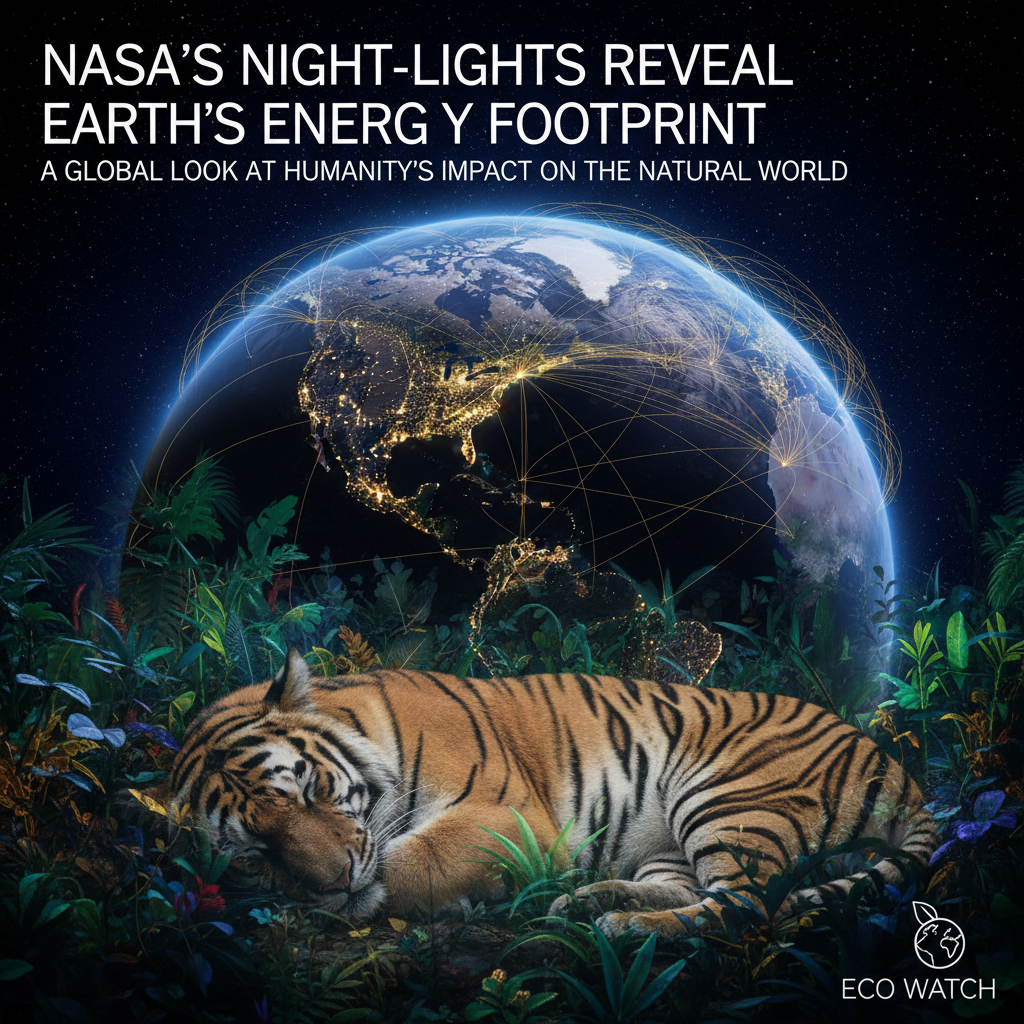
NASA's Night-Lights Reveal Earth's Energy Footprint
Key Takeaways
- NASA satellite maps reveal a decade of global artificial light changes.
- Intense light flaring observed over US oil and gas fields.
- Findings challenge previous energy consumption assumptions worldwide.
- Data reflects global economic volatility and rural electrification trends.
- Imagery highlights human impact, including the growing issue of light pollution.
From the silent expanse of space, our planet tells a story of constant change, and new NASA satellite imagery is providing an unprecedented, decade-long visual narrative of humanity's evolving energy footprint. These aren't just shimmering dots on a dark canvas; they are critical data points revealing profound shifts in how we light and power our world, with significant implications for both sustainable living and the delicate balance of our natural ecosystems.
TL;DR: Key Facts
- NASA's new nighttime maps track significant global shifts in artificial lighting over the last decade.
- Intense light flaring is notably observed over major U.S. oil and gas fields, indicating active resource extraction.
- The data challenges long-held assumptions about energy consumption patterns and economic development worldwide.
- Insights reveal trends in rural electrification, global economic volatility, and evolving energy landscapes.
- This imagery offers a crucial perspective on human environmental impact, including the growing issue of light pollution.
What Happened
NASA has unveiled a groundbreaking set of nighttime maps derived from its satellite imagery, illustrating a dynamic and rapidly changing global landscape of artificial light over the past decade. These high-resolution visuals provide a unique 'before-and-after' look at Earth's nocturnal glow, offering scientists and policymakers an unparalleled tool to monitor human activity and its environmental consequences.
The findings are particularly illuminating, revealing intense and persistent light flaring over major oil and gas fields across the United States. This indicates a high level of industrial activity and energy production. Beyond this, the maps capture a broader narrative of global volatility and progress, tracking phenomena such as the expansion of rural electrification in developing regions, which brings essential services but also contributes to light emissions, alongside shifts reflecting economic downturns or booms in various parts of the world. The overall picture painted by this satellite data suggests that our assumptions about global energy transition and environmental impact might need a significant re-evaluation, as the interplay of economic forces, development goals, and energy choices creates an ever-changing canvas of light visible from space.
Why It Matters
For readers of GreenNest Living, these glowing maps are far more than scientific curiosities; they are a stark visual reminder of humanity's profound and accelerating impact on the natural world, directly linking to our 'Wildlife & Nature News' category. The intensification of artificial light, while often a sign of progress or economic activity, comes with a significant environmental cost – light pollution. This insidious form of pollution disrupts the delicate rhythms of countless species, from the smallest insects to migrating birds and marine life.
Nocturnal animals rely on natural darkness for navigation, hunting, reproduction, and evading predators. Artificial lights can disorient migratory birds, causing them to collide with buildings or deplete their energy reserves. Sea turtle hatchlings, naturally guided to the ocean by the brighter horizon over the water, become disoriented by beachfront lighting, often heading inland where they face dehydration or predation. Insect populations, crucial for pollination and as a food source, are dramatically affected by light traps. Furthermore, excessive light alters the natural day-night cycles (circadian rhythms) in both wildlife and humans, potentially impacting health and behavior. The NASA imagery provides a powerful diagnostic tool, helping us pinpoint areas where light pollution is most prevalent and thus where conservation efforts, smart urban planning, and energy efficiency initiatives are most urgently needed to protect biodiversity and natural ecosystems.
What You Can Do
Understanding the impact of artificial light empowers us to make smarter, more sustainable choices:
- Assess Your Outdoor Lighting: Ensure all outdoor lights are necessary, directed downwards, shielded to prevent light spill, and use warm-colored bulbs (under 3000K). Consider motion sensors for security lighting.
- Support Dark Sky Initiatives: Get involved with local or national efforts to protect natural dark environments, such as those promoted by the International Dark-Sky Association (IDA).
- Advocate for Responsible Development: Encourage your local government and community planners to adopt dark-sky friendly ordinances and energy-efficient, environmentally conscious lighting standards.
- Reduce Overall Energy Consumption: Turn off lights when not in use, unplug electronics, and seek out energy-efficient appliances. Less overall energy demand means less strain on resources and potentially less light emitted.
- Educate Others: Share the knowledge about light pollution's effects on wildlife, human health, and energy waste with friends, family, and your community.
- Choose Renewable Energy: Whenever possible, opt for renewable energy sources for your home or support policies that promote their development, reducing reliance on fossil fuels that generate light flares seen from space.
FAQs
Q: What exactly is light pollution?
A: Light pollution is the excessive or inappropriate use of artificial light, disrupting natural darkness and negatively impacting ecosystems, human health, and astronomical observation.
Q: How does this NASA data specifically help wildlife conservation?
A: By providing high-resolution maps of light intensity and change over time, conservationists can identify critical habitats threatened by light pollution, track its spread, and measure the effectiveness of mitigation efforts, informing targeted preservation strategies.
Q: Are there environmental benefits to rural electrification, even if it adds to light emissions?
A: Yes, rural electrification can significantly improve quality of life, provide access to education and healthcare, and reduce reliance on dirtier energy sources like kerosene lamps. The challenge lies in implementing these developments with energy-efficient, dark-sky friendly lighting solutions.
Sources
This article is based on reporting by NASA Breaking News.
Original source
NASA Breaking News
Author, Digital Entrepreneur & AI Creator
More from Wildlife & Nature News
- The Silent Drain: Sand Scarcity Threatens Global Ecosystems — May 13, 2026
- Celestial Glimpse: Earth's Glow, Our Lost Night Skies — May 11, 2026
- Google's UK Datacentre Emissions Understated by Factor of Five — May 10, 2026
- Cosmic Beacon: Earth's Glow Inspires Global Stewardship — May 9, 2026
- Amazon Tipping Point: Deforestation, Warming Threaten Rainforest by 2040s — May 8, 2026