Norway's Fjords Choking: Fish Farm Waste a 'Raw Sewage' Crisis
Key Takeaways
- Norwegian fish farms produce waste equivalent to raw sewage of tens of millions of people.
- Nutrient pollution levels in coastal waters are comparable to untreated effluent from a country the size of Australia.
- The pollution directly impacts delicate fjord ecosystems, threatening marine life.
- The findings challenge Norway's environmental reputation and highlight global aquaculture sustainability issues.
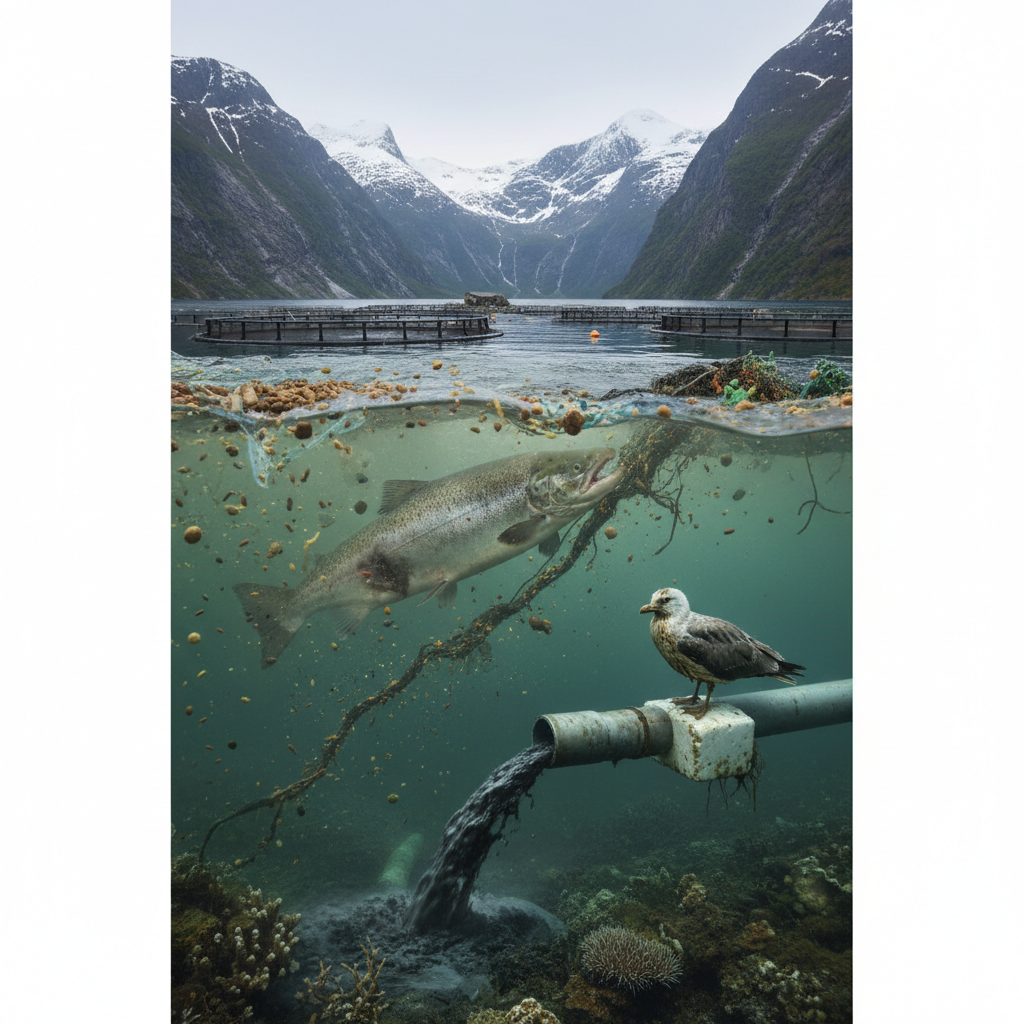
Norway, a nation celebrated for its pristine natural beauty and progressive environmental policies, is facing an alarming crisis beneath the surface of its iconic fjords. A new report exposes the shocking scale of pollution from its booming aquaculture industry, likening the waste to the raw sewage of millions of people. This news demands immediate attention, not just for the health of Norway's unique marine environments, but as a stark warning for the global pursuit of sustainable food production.
TL;DR: Key Facts
- Norwegian fish farms are generating nutrient pollution levels in coastal waters equivalent to the raw sewage of tens of millions of people.
- This 'fish sludge' is causing nutrient levels comparable to those found in the untreated effluent of a country the size of Australia.
- The pollution poses a significant threat to the delicate ecosystems of Norway's fjords, impacting marine life and water quality.
- The findings come from an exclusive report, highlighting a major environmental challenge for one of the world's leading salmon producers.
What Happened
An exclusive investigation has unveiled the severe environmental impact of Norway's extensive fish farming industry on its coastal waters and fjords. The report details that the volume of nutrient pollution, specifically referred to as 'fish sludge,' being discharged into these marine environments is on par with the raw sewage produced by tens of millions of people. This is a staggering comparison, painting a vivid picture of the scale of the problem.
The analysis found that the nutrient levels in these coastal waters are now equivalent to those present in the untreated effluent of a nation the size of Australia. This immense biological load includes uneaten feed, fish faeces, and other organic matter, which can drastically alter the delicate balance of marine ecosystems. The findings challenge Norway's reputation as an environmental leader and raise urgent questions about the sustainability of its aquaculture practices.
Why It Matters
For readers of GreenNest Living, this news resonates deeply within the 'Wildlife & Nature News' theme because it exposes a critical threat to marine biodiversity and ecosystem health in one of the world's most beautiful and biologically significant regions. Fjords are unique geological formations, often with limited water exchange, making them particularly vulnerable to pollution. The influx of such vast quantities of nutrients can lead to eutrophication – excessive growth of algae and aquatic plants – which depletes oxygen levels in the water, creating 'dead zones' where fish and other marine life cannot survive. This can decimate local fish populations, invertebrates, and even impact seabirds and marine mammals that rely on these ecosystems.
Furthermore, this issue highlights a pervasive challenge within the global food system: how to produce food sustainably without degrading the natural environment. While aquaculture is often touted as a more sustainable alternative to wild-caught fish, this report underscores that its environmental footprint can be substantial if not properly managed. The implications extend beyond Norway, serving as a cautionary tale for other nations investing heavily in fish farming. It forces us to confront the true cost of our seafood consumption and demand greater transparency and accountability from industry and regulators to protect our precious marine habitats.
What You Can Do
Here are practical steps you can take to contribute to more sustainable aquaculture and marine health:
- Research Your Seafood Choices: Utilize sustainable seafood guides (e.g., Monterey Bay Aquarium Seafood Watch) to make informed decisions about farmed fish, opting for species and farms with responsible practices.
- Support Stronger Regulations: Advocate for policies that demand stricter environmental controls, waste management, and site selection for aquaculture operations in your region and globally.
- Choose Certified Sustainable Products: Look for certifications like ASC (Aquaculture Stewardship Council) or BAP (Best Aquaculture Practices) when purchasing farmed seafood, as these indicate adherence to environmental and social standards.
- Reduce Overall Seafood Consumption: Consider incorporating more plant-based meals into your diet to lessen the overall demand for animal protein, including farmed fish, reducing pressure on marine ecosystems.
- Support Marine Conservation Groups: Donate to or volunteer with organizations actively working to protect marine environments, combat ocean pollution, and promote responsible aquaculture.
Ciro's Take
As an environmental advocate, seeing a nation like Norway, often held up as a beacon of green progress, grapple with such a fundamental environmental failure in its fjords is deeply disheartening. It underscores a persistent dilemma: the tension between economic growth, food production, and ecological preservation. This isn't just about fish waste; it's about the very soul of a country and the health of our shared global oceans. We must demand better from industries that claim to feed the world, ensuring they truly nourish it, not poison it. Our marine ecosystems are too precious to be sacrificed for short-term gains, and transparency, as this report shows, is the first step towards true sustainability.
FAQs
Q: What is 'fish sludge' and how is it formed?
A: 'Fish sludge' refers to the accumulation of waste products from fish farms, primarily composed of uneaten fish feed, fish faeces, and other organic matter. It's essentially the biological waste generated by farmed fish as they eat and excrete.
Q: How does this pollution impact the fjords and marine life?
A: The high levels of nutrients in the 'fish sludge' can lead to eutrophication. This process causes excessive algal blooms, which then consume large amounts of oxygen when they decompose. This oxygen depletion creates 'dead zones' that can suffocate fish, shellfish, and other marine organisms, severely disrupting the entire ecosystem.
Q: Is all farmed fish unsustainable?
A: No, not all farmed fish is unsustainable. Aquaculture practices vary widely, and some operations are significantly more environmentally responsible than others. Factors like species farmed, feed source, waste management, and site selection all play a role in a farm's sustainability footprint. This report highlights the need for stringent regulation and best practices across the industry.
Sources
This article is based on reporting by The Guardian Environment.
Original source
The Guardian Environment
Author, Digital Entrepreneur & AI Creator
More from Wildlife & Nature News
- The Silent Drain: Sand Scarcity Threatens Global Ecosystems — May 13, 2026
- Celestial Glimpse: Earth's Glow, Our Lost Night Skies — May 11, 2026
- Google's UK Datacentre Emissions Understated by Factor of Five — May 10, 2026
- Cosmic Beacon: Earth's Glow Inspires Global Stewardship — May 9, 2026
- Amazon Tipping Point: Deforestation, Warming Threaten Rainforest by 2040s — May 8, 2026