Peru's Amazon: A New Oil Frontier Threatens Global Climate
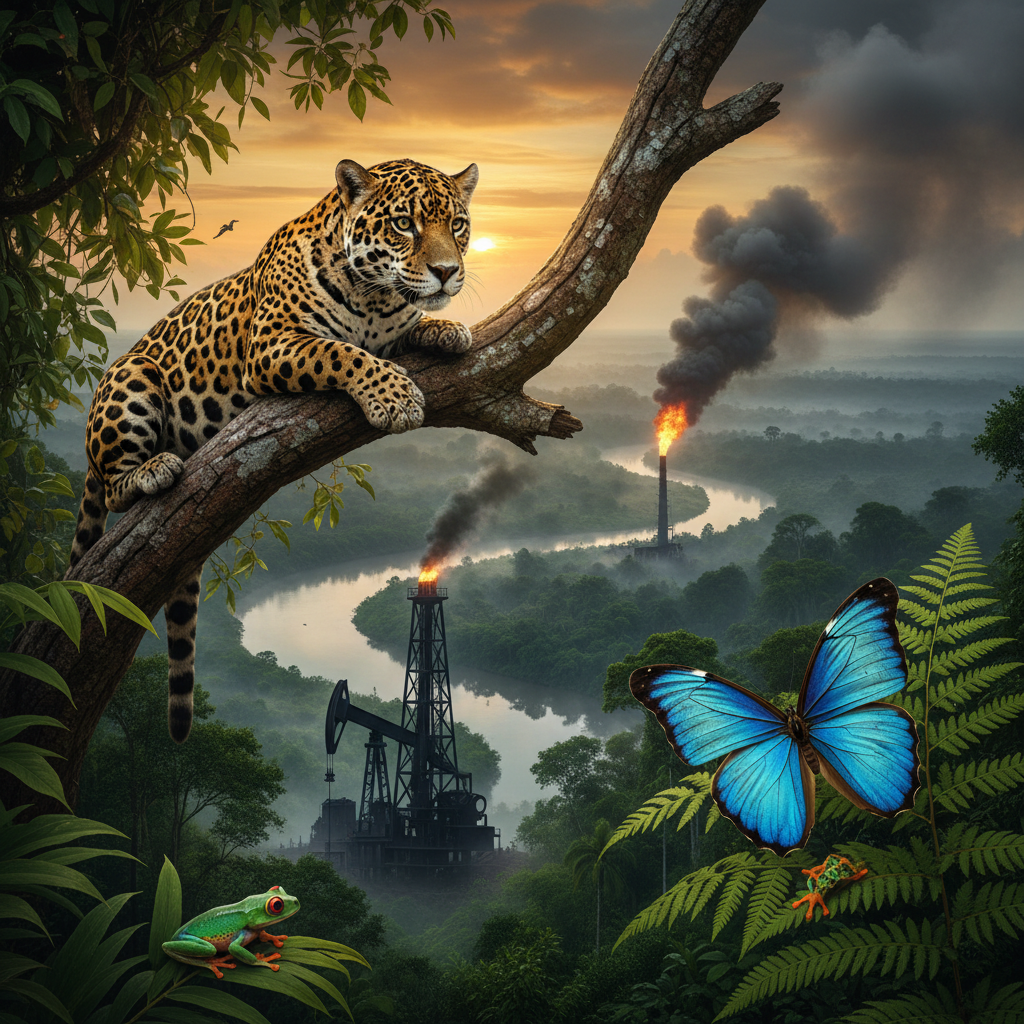
Key Takeaways
- Peru leads Amazonian nations in oil and gas projects heading into production.
- 85 blocks are in pre-production in the Peruvian Amazon.
- The expansion threatens the Amazon's role as a vital carbon sink and biodiversity hotspot.
- This development could have significant global climate implications.
- Indigenous communities and ecosystems face direct risks from pollution and habitat destruction.
The Amazon rainforest, a global beacon of biodiversity and a critical climate regulator, faces an alarming new threat. Recent data reveals that Peru is rapidly emerging as the epicenter of oil and gas expansion within this irreplaceable ecosystem, jeopardizing its future and our planet's stability. This aggressive push for fossil fuel extraction casts a long shadow over sustainable living efforts worldwide.
TL;DR: Key Facts
- Peru is now leading Amazonian nations in the number of new oil and gas projects, with 85 blocks in pre-production.
- Overall, Peru holds 173 oil and gas lease blocks within the Amazon rainforest.
- This expansion threatens the Amazon, a vital carbon sink and global biodiversity hotspot.
- New data from the Stockholm Environment Institute highlights the scale of this impending industrial footprint.
- The development poses significant risks to indigenous communities, unique ecosystems, and global climate goals.
What Happened
A recent dataset published by the Stockholm Environment Institute has shed stark light on the escalating fossil fuel frontier within the Amazon basin, identifying Peru as the leading nation for new oil and gas ventures. The data indicates that Peru currently has 85 oil and gas blocks in the pre-production phase within the rainforest. This figure surpasses its Amazonian neighbors, with Colombia having 68 such blocks and Brazil 53, marking Peru as a new flashpoint for industrial expansion in the region.
Beyond pre-production, the sheer scale of Peru’s ambitions becomes even clearer: the nation has a total of 173 oil and gas lease blocks allocated across its Amazonian territory. These leases represent areas granted to companies for exploration and potential extraction, covering vast swathes of the world’s largest rainforest. This extensive footprint signifies a substantial and proactive governmental and corporate push to capitalize on hydrocarbon reserves deep within a globally vital ecosystem.
The "pre-production" designation means these projects are past the initial exploration phase and are actively moving towards development and extraction. This signals a more immediate and tangible threat, as infrastructure like roads, pipelines, and drilling sites will soon be established, leading to direct habitat destruction, increased deforestation, and potential for environmental contamination. The data underscores a strategic shift towards heightened resource extraction in Peru's Amazon, with profound implications for both the local environment and global climate.
Why It Matters
This burgeoning oil and gas footprint in Peru's Amazon is not merely a regional issue; it's a global environmental crisis in the making, directly impacting GreenNest Living’s core mission of promoting sustainable living. The Amazon rainforest is an ecological marvel, serving as a critical carbon sink that absorbs vast amounts of atmospheric carbon dioxide, playing an indispensable role in regulating global climate patterns. Its degradation through industrial activity directly undermines international efforts to combat climate change and transition to a sustainable future.
From a biodiversity perspective, the Amazon is unparalleled, housing an estimated 10% of the world's known species, many of which are endemic and yet to be fully discovered. Oil and gas exploration and extraction bring with them roads, seismic testing, drilling platforms, and pipelines – all of which lead to habitat fragmentation, deforestation, and severe pollution. Spills of crude oil or toxic wastewater can devastate rivers and soil, poisoning wildlife and disrupting delicate ecological balances for decades. This loss of habitat and direct contamination accelerates species extinction, diminishing the planet's natural heritage and the very ecosystems that sustain us.
Furthermore, this expansion often encroaches upon the ancestral lands of indigenous communities, who are the traditional guardians of the forest. Their way of life, cultural identity, and health are inextricably linked to the integrity of their territories. Oil and gas operations can lead to forced displacement, introduce diseases, and spark social conflicts, eroding the rights and livelihoods of those who have coexisted sustainably with the Amazon for millennia. For readers committed to sustainable living, understanding this interconnected web of threats – climate impact, biodiversity loss, and social injustice – is crucial for informed action. This news serves as a stark reminder that our global consumption patterns have direct, devastating consequences on remote, yet vital, ecosystems.
What You Can Do
- Support Amazonian Conservation: Donate to and champion non-profit organizations actively working on the ground to protect the Amazon, support indigenous land rights, and monitor illegal activities.
- Advocate for Policy Change: Contact your elected officials and urge them to support international agreements and domestic policies that condemn destructive resource extraction in critical ecosystems like the Amazon.
- Reduce Your Carbon Footprint: Actively seek ways to lower your personal consumption of fossil fuels – whether through transportation choices, energy efficiency at home, or supporting renewable energy.
- Educate and Share: Inform your friends, family, and social networks about the threats facing the Amazon. Awareness is the first step towards collective action.
- Choose Sustainable Products: Prioritize products from companies with transparent supply chains that commit to deforestation-free practices and ethical sourcing, especially for goods originating from South America.
- Support Indigenous Rights: Learn about and amplify the voices of indigenous communities fighting for their land rights and environmental protection, as they are often the front-line defenders of the Amazon.
FAQs
Q: Why is the Amazon rainforest so critical for the planet?
A: The Amazon is globally vital for its immense biodiversity, housing millions of species, and for its role as a massive carbon sink. It absorbs vast amounts of CO2, helping to regulate global climate and influencing rainfall patterns far beyond its borders.
Q: What are the immediate environmental impacts of oil and gas drilling in the Amazon?
A: Immediate impacts include deforestation for infrastructure (roads, pipelines), seismic testing that disrupts wildlife, water and soil pollution from spills and waste, and the potential displacement and health impacts on indigenous communities.
Q: Does Peru's government have the right to develop these oil and gas projects?
A: Legally, national governments often claim sovereignty over natural resources within their borders. However, these developments often face ethical and human rights challenges, particularly regarding the Free, Prior, and Informed Consent (FPIC) of indigenous communities whose lands are affected, and the broader global responsibility to protect critical ecosystems.
Sources
This article is based on reporting by Mongabay.
Original source
Mongabay
Author, Digital Entrepreneur & AI Creator
More from Wildlife & Nature News
- The Silent Drain: Sand Scarcity Threatens Global Ecosystems — May 13, 2026
- Celestial Glimpse: Earth's Glow, Our Lost Night Skies — May 11, 2026
- Google's UK Datacentre Emissions Understated by Factor of Five — May 10, 2026
- Cosmic Beacon: Earth's Glow Inspires Global Stewardship — May 9, 2026
- Amazon Tipping Point: Deforestation, Warming Threaten Rainforest by 2040s — May 8, 2026