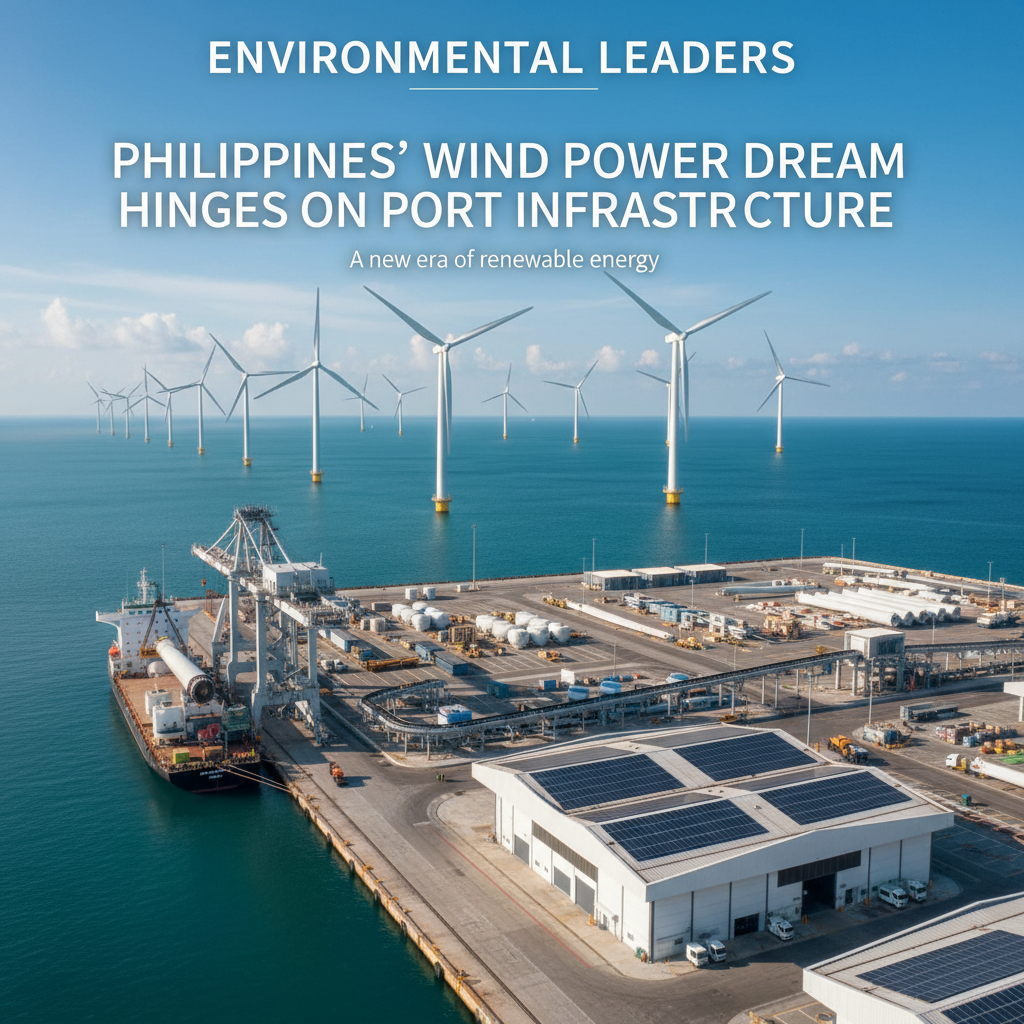
Philippines' Wind Power Dream Hinges on Port Infrastructure
Key Takeaways
- Philippines' offshore wind potential is 11 TWh/year.
- Lack of specialized port infrastructure is a critical barrier.
- San Miguel Bay and Guimaras Strait are key development zones.
- Existing ports cannot handle large turbine components.
- Infrastructure investment is essential for clean energy deployment.
Philippines' Wind Power Dream Hinges on Port Infrastructure
The Philippines stands on the cusp of a green energy revolution, with vast offshore wind resources that could power millions of homes. However, this exciting future isn't just about turbines and technology; it's about the often-overlooked foundations – the ports. Without strategic investment in specialized infrastructure, the nation's ambitious renewable energy goals could remain just a whisper in the wind.
TL;DR: Key Facts
- The Philippines has significant untapped offshore wind potential, capable of generating an estimated 11 TWh annually.
- Despite this potential and clear development pipelines in areas like San Miguel Bay and Guimaras Strait, actual electricity on the grid is far from guaranteed.
- A critical bottleneck for deploying offshore wind is the severe lack of specialized port infrastructure needed to handle massive turbine components.
- Existing ports are largely inadequate, requiring substantial upgrades or new construction before large-scale projects can proceed.
- Unlocking this clean energy source requires not just policy and technology, but also foundational industrial and logistical support.
What Happened
For years, the Philippines has possessed considerable wind viability, both onshore and offshore, yet this potential remained largely untapped. Now, with a clearer energy transition roadmap, the nation is actively looking to harness its offshore wind resources, with identified zones promising up to 11 terawatt-hours (TWh) of clean electricity annually. This figure represents a substantial portion of the country's current energy demand and could dramatically shift its energy landscape away from fossil fuels.
Advanced offshore wind zones, particularly in San Miguel Bay in Bicol and the Guimaras Strait in Western Visayas, are at the forefront of this development. However, as these projects move from planning to execution, a hard truth is emerging: the Philippines lacks the foundational infrastructure to support such large-scale endeavors. Specifically, the country's ports are not equipped to handle the enormous components required for modern offshore wind farms, such as massive turbine blades, towers, and foundations. Without these specialized ports, the ambitious plans for clean energy generation cannot materialize, creating a significant hurdle for the nation's green future.
Why It Matters
This situation in the Philippines perfectly illustrates a crucial, yet often underestimated, aspect of the global clean energy transition: Green Tech isn't just about innovative turbines or efficient solar panels; it's fundamentally about the entire logistical and industrial ecosystem that enables their deployment. For GreenNest Living readers, this isn't merely a localized problem; it's a powerful case study in the real-world complexities of scaling up renewable energy. The absence of adequate port facilities highlights that even with abundant natural resources and strong political will, a nation's journey towards sustainable living can be stalled by foundational infrastructure gaps.
For the Philippines, unlocking its offshore wind potential translates directly into energy independence, job creation, and a significant reduction in carbon emissions, leading to cleaner air and a more stable climate for its citizens. For the global fight against climate change, it serves as a stark reminder that ambitious renewable energy targets require parallel investments in supporting infrastructure. Without specialized ports capable of fabricating, assembling, and shipping colossal wind farm components, the promise of massive clean energy generation will remain just that – a promise. This challenge underscores that truly sustainable development means looking beyond the immediate technology to the entire supply chain and industrial base required to bring it to fruition.
What You Can Do
- Educate Yourself on Local Infrastructure Needs: Understand what green energy projects are planned in your region and what infrastructure (like specialized ports, grid upgrades, or manufacturing facilities) they require.
- Advocate for Green Infrastructure Investment: Support policies and political leaders who prioritize funding for the foundational infrastructure essential for renewable energy deployment.
- Engage with Community Planning: Participate in local discussions about new energy projects to ensure they are developed responsibly and sustainably, considering logistical impacts.
- Support Businesses in the Green Supply Chain: Look for and support companies that are investing in or developing the industrial backbone for renewable energy, from component manufacturing to logistics.
- Reduce Your Energy Consumption: While we build out new energy sources, reducing demand lightens the load and makes the transition easier and more effective.
- Share the Story: Help raise awareness about the complex, often unseen, challenges of building a clean energy future, fostering a more informed public discourse.
Ciro's Take
As an environmental advocate, it's both inspiring and frustrating to witness the Philippines' offshore wind dilemma. The sheer potential – 11 TWh annually – is a beacon of hope for clean energy and climate resilience. Yet, the realization that this colossal clean energy source could be stalled by something as fundamental as port infrastructure is a sobering reminder. It underscores my belief that 'green energy' isn't just about innovation; it's a holistic, industrial-scale endeavor requiring foresight and investment in every link of the chain. These ports are the unsung heroes, the bedrock upon which our sustainable future must be built. The Philippines' challenge isn't unique; it's a mirror reflecting the global need to invest in the groundwork as much as the groundbreaking. We can't just wish for a greener world; we must build it, brick by massive turbine-bearing dock, by brick.
FAQs
Q: What is offshore wind power?
A: Offshore wind power harnesses the kinetic energy of wind over large bodies of water, typically oceans, to generate electricity. Turbines are installed on foundations anchored to the seabed or on floating platforms, offering stronger and more consistent winds than onshore locations.
Q: Why are specialized ports needed for offshore wind projects?
A: Offshore wind turbines and their components (like blades, towers, and foundations) are massive. Specialized ports are required to handle their immense size and weight, offering vast laydown areas, heavy-lift cranes, deepwater berths, and often facilities for component fabrication and assembly before transport to sea.
Q: What other countries face similar offshore wind infrastructure challenges?
A: Many emerging offshore wind markets, particularly in Southeast Asia and other regions new to large-scale deployment, face similar challenges regarding port infrastructure, grid upgrades, and supply chain development. Even established markets like the US East Coast are investing heavily in port upgrades to support their growing offshore wind ambitions.
Sources
This article is based on reporting by CleanTechnica.
Original source
CleanTechnica
Author, Digital Entrepreneur & AI Creator
More from Green Tech
- UK Electric Buses Transform into Grid Powerhouses with V2G — May 13, 2026
- Ocean-Powered AI: Panthalassa's Bold Vision for Sustainable Compute — May 12, 2026
- Winnipeg Powers Up: 250 EV Chargers Accelerate Sustainable Living — May 11, 2026
- Aviation's Carbon Blind Spot: Ryanair's Soaring Emissions Exposed — May 9, 2026