Rio Carnival Honors Orelha: A Call for Urban Animal Welfare
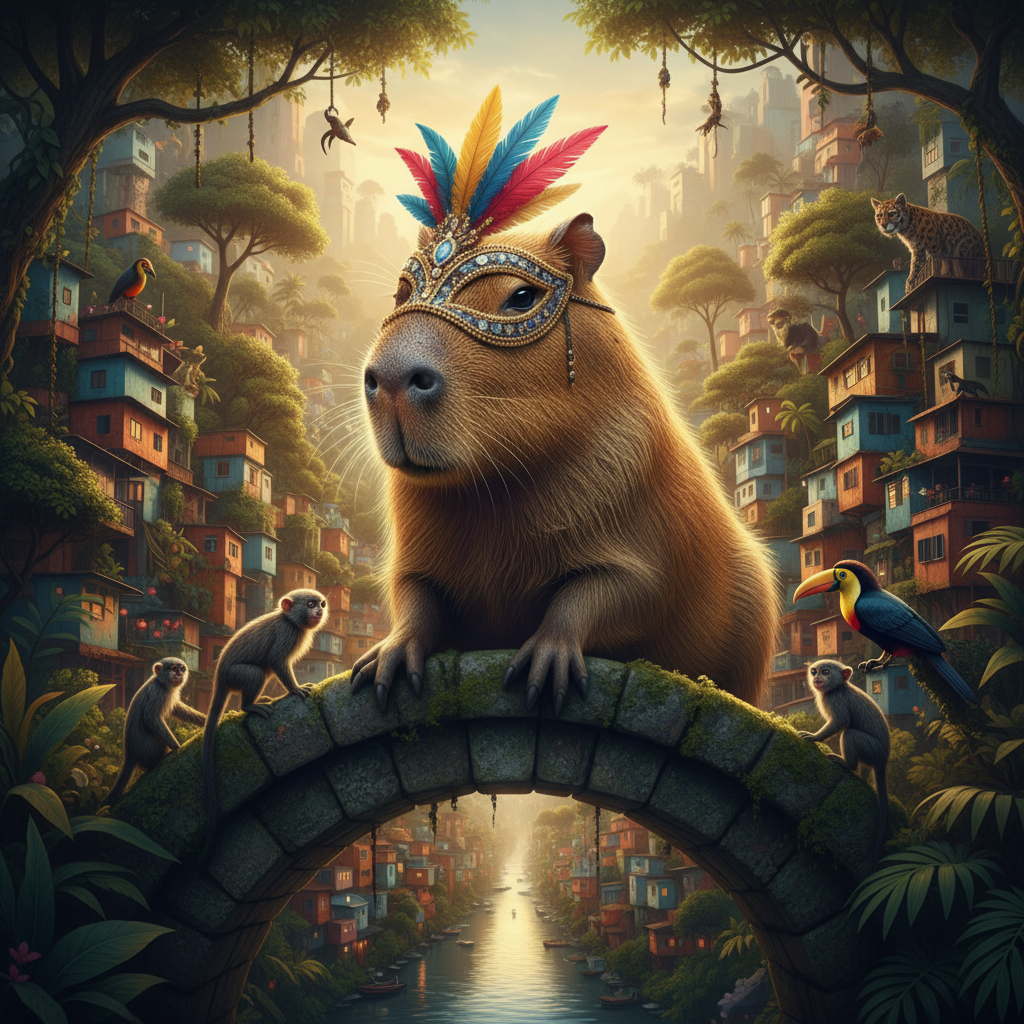
Key Takeaways
- Mocidade Independente de Padre Miguel samba school will pay tribute to a community dog.
- The tribute is dedicated to Orelha, a beloved community dog.
- This special event is planned for the 2026 Rio de Janeiro Carnival.
- The homage follows the tragic killing of Orelha.
- It highlights the profound emotional bond between communities and their animal residents.
As the vibrant energy of Rio's Carnival gears up for 2026, an unexpected and profoundly moving tribute is set to take center stage. This isn't about a historical figure or a national hero, but a community dog named Orelha, whose story now resonates as a powerful reminder of the deep connections we forge with the animals sharing our urban landscapes, and why their well-being is a critical pillar of sustainable living.
TL;DR: Key Facts
- The Mocidade Independente de Padre Miguel samba school will pay tribute to a community dog.
- The tribute is dedicated to Orelha, a beloved dog known within his local community.
- This special event is scheduled to take place at the 2026 Rio de Janeiro Carnival.
- The homage is a direct response to the tragic killing of Orelha.
- It underscores the profound emotional bond between urban communities and their animal residents.
What Happened
The vibrant spectacle of the Rio de Janeiro Carnival is renowned globally for its elaborate parades, pulsating samba rhythms, and deep cultural narratives. For the 2026 celebration, one of the city’s prominent samba schools, Mocidade Independente de Padre Miguel, has announced an unusual yet deeply meaningful theme: a tribute to a community dog named Orelha. This decision elevates Orelha from a local fixture to a symbol recognized on one of the world's grandest stages.
Orelha was a well-known and beloved fixture within his community, living as a free-roaming, or 'community,' dog. His presence brought joy and a sense of connection to many residents. The decision by Mocidade Independente de Padre Miguel to honor Orelha stems from a tragic event: his killing. While the exact details of the incident are not fully disclosed in the initial report, the act of a Carnival school choosing to dedicate its entire parade to an animal, particularly one whose life was unjustly cut short, speaks volumes about the impact Orelha had on his community and the collective grief and desire for remembrance that followed.
Why It Matters
At GreenNest Living, we often explore the intricate tapestry of life on Earth, from sprawling wildernesses to our own backyards. While Orelha was not a wild animal in the traditional sense, his story is undeniably relevant to the 'Wildlife & Nature News' category, particularly when we consider the broader scope of animal welfare, urban ecology, and the essential human-animal bond. Community dogs like Orelha exist in a liminal space, part of the urban fabric yet often relying on human kindness for survival, navigating environments designed primarily for people. Their lives offer a microcosm of how humans and other species intersect daily.
This tribute transcends a simple act of remembrance; it's a powerful public declaration of the value placed on an individual animal's life within an urban ecosystem. It underscores that environmental consciousness isn't solely about conserving remote forests or endangered species, but also about fostering respectful coexistence with the animals — domestic or wild — that share our immediate surroundings. When a community rallies to honor an animal, especially one who met a tragic end, it reflects a collective awakening to our ethical responsibilities towards all sentient beings and challenges us to consider how our actions impact the lives around us, even those without a voice.
Furthermore, Orelha's story, culminating in a Carnival tribute, serves as a poignant reminder that compassion for animals is a universal language, capable of inspiring large-scale cultural expressions. It compels us to reflect on urban planning, responsible pet ownership, community animal care, and the prevention of cruelty, all of which are vital components of a truly sustainable and harmonious living environment. It teaches us that every life holds value, and the protection of vulnerable beings, whether in the wild or on our streets, is a benchmark of a truly evolved society.
What You Can Do
Orelha’s story is a profound call to action, reminding us that protecting and respecting animals, whether wild or domestic, begins in our own communities. Here’s how you can contribute to a more compassionate world for all creatures:
- Support Local Animal Shelters and Rescues: Volunteer your time, donate supplies, or provide financial assistance to organizations working tirelessly to care for abandoned, injured, or neglected animals. Many community dogs rely on these networks.
- Advocate for Responsible Pet Ownership: Educate yourself and others on the importance of spaying/neutering, microchipping, and providing proper identification for pets. This reduces stray populations and increases the chances of lost animals being reunited with their families.
- Be a Voice Against Animal Cruelty: Report any suspected cases of animal neglect or abuse to local authorities or animal welfare organizations. Silence only perpetuates suffering.
- Participate in Community Animal Programs: Join or initiate programs like Trap-Neuter-Return (TNR) for stray cat populations or volunteer for neighborhood dog-walking groups. These efforts improve the lives of community animals and foster better human-animal coexistence.
- Educate the Next Generation: Teach children about empathy, respect for animals, and the interconnectedness of all living things. Instilling these values early helps build a more compassionate future.
- Support Animal-Friendly Urban Planning: Advocate for public spaces that consider animals, such as dog parks, wildlife corridors, and regulations that protect urban wildlife and community pets. A sustainable city is one that accommodates all its inhabitants.
FAQs
Q: What is a "community dog"?
A: A community dog, often referred to as a street dog or stray, is an unowned dog living in a particular area, often cared for by multiple residents who provide food, water, and sometimes shelter. They are distinct from wild animals but not strictly domestic pets with a single owner.
Q: Why is a Carnival tribute significant for animal welfare?
A: A Carnival tribute, particularly in a global event like Rio's, amplifies the message of animal welfare to a massive international audience. It transforms a local tragedy into a powerful cultural statement, encouraging widespread discussion and empathy for animals.
Q: How does this connect to GreenNest Living's focus on sustainable living?
A: Sustainable living encompasses harmonious coexistence with all life forms. Orelha's story highlights the need for ethical treatment of animals in shared urban spaces, promoting responsible community engagement and demonstrating that compassion for animals is integral to a truly sustainable and equitable environment.
Sources
This article is based on reporting by The Animal Reader.
Original source
The Animal Reader
Author, Digital Entrepreneur & AI Creator
More from Wildlife & Nature News
- The Silent Drain: Sand Scarcity Threatens Global Ecosystems — May 13, 2026
- Celestial Glimpse: Earth's Glow, Our Lost Night Skies — May 11, 2026
- Google's UK Datacentre Emissions Understated by Factor of Five — May 10, 2026
- Cosmic Beacon: Earth's Glow Inspires Global Stewardship — May 9, 2026
- Amazon Tipping Point: Deforestation, Warming Threaten Rainforest by 2040s — May 8, 2026